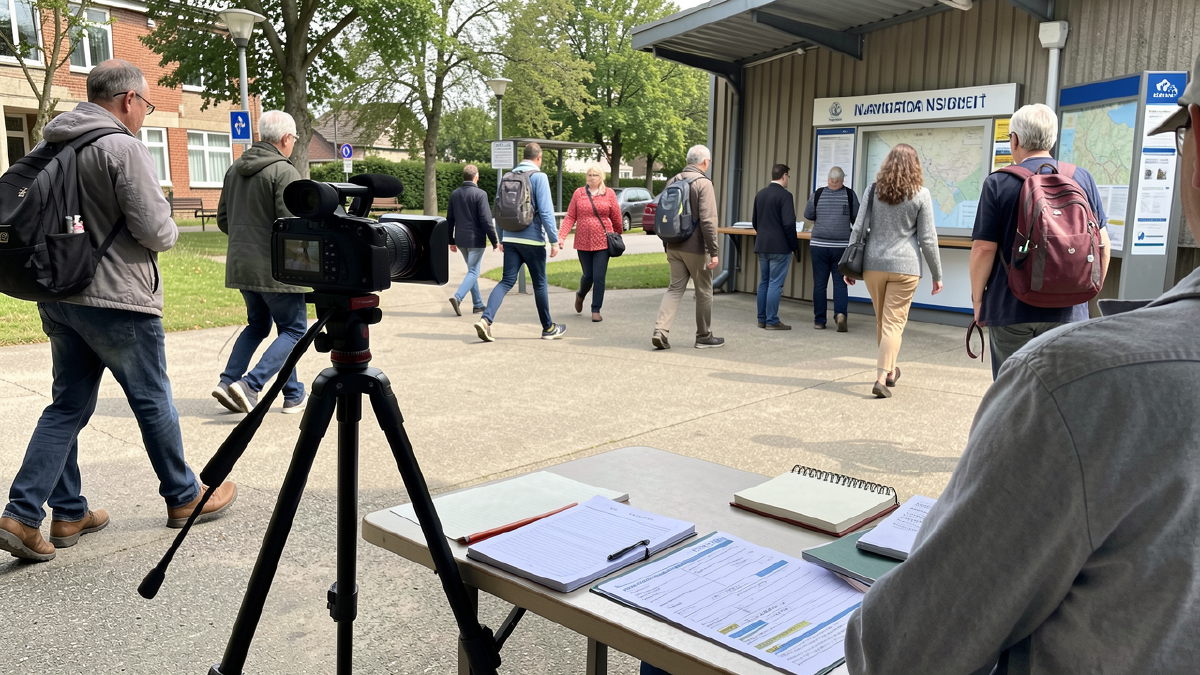
Policy analysis asks whether work requirements achieve their objectives. Ethnography asks a different question: what are people actually doing? What meanings do they construct? What strategies do they develop? What does compliance look like from inside the experience rather than from administrative datasets? These questions matter for work requirements because the gap between policy design and lived reality often determines who maintains coverage and who loses it.
The county benefits office waiting room at 8:15 AM contains seventeen people who have learned the system: arrive before opening or you will not be seen today. An older woman helps a younger one understand forms. “Give them this one first,” she says. “Don’t give them the second page until they ask for it. If you give them everything at once, they’ll lose something.” Two men compare notes about what employers will provide in writing. One does construction, boss pays cash, won’t acknowledge him on paper. The other does warehouse work through a temp agency that never returns calls. A mother manages two children while scrolling through phone screenshots looking for something important, unclear which documents the notice requested.
None of this appears in administrative data. The official system will record seventeen appointments. What it won’t record is the community of practice formed in this waiting room, the accumulated knowledge about surviving bureaucracy, the informal teaching between strangers who recognize themselves in each other, the strategies developed through trial and error and shared across acquaintance networks. The anthropologist sees not individuals navigating alone but a culture adapting to an environment.
Folk theories develop to fill informational gaps policy creates. People construct explanations for why things work the way they do, explanations that may not match official rationales. Some believe the system is designed to make people fail, creating justifications for terminating coverage. Others believe individual caseworkers have vast discretion and success depends on being assigned a sympathetic one. Still others believe persistence pays, that showing up repeatedly demonstrates the worthiness that unlocks assistance. These vernacular interpretations shape behavior. Someone who believes the system is adversarial approaches interactions defensively, volunteering nothing that might be used against them. Someone who believes caseworkers have discretion invests energy in relationship-building rather than documentation. Someone who believes persistence matters returns again and again, consuming time they cannot afford but believing it necessary.
The official system sees only outputs: application submitted, documents received, compliance verified or unverified. It doesn’t see the interpretive work that precedes each interaction, the theories of the system that guide behavior, the social learning that happens in waiting rooms and across kitchen tables and in text messages between people trying to figure out what the government wants from them. Policy assumes rational actors responding to clear incentives. Ethnography reveals confusion, incomplete information, competing priorities, distrust, resignation, and constant improvisation.
Consider how people understand what is asked of them. Work requirement regulations specify activities counting toward 80-hour monthly obligations: employment, job search, education, training, community service, caregiving. These categories seem clear in regulatory text. In lived experience, they are anything but. A woman works 30 hours weekly at a restaurant but picks up irregular shifts at a second job when available. Does irregular work count? How does she document hours that vary week to week? Her cousin was told one thing by a caseworker. She heard something different from a friend who went through the process last year. The official guidance she found online uses language she doesn’t fully understand. She’s working, but she’s not certain she’s complying.
Cultural models of work, deservingness, and obligation shape how people interpret requirements and respond to them. People don’t encounter work requirements in a cultural vacuum. They bring frameworks for understanding work, government, and their own worthiness. A grandmother raising grandchildren while their mother recovers from addiction is working constantly but may not qualify for caregiving exemption because she lacks formal custody. A man who helps neighbors with car repairs in exchange for meals is engaging in productive activity the verification system cannot recognize. A woman managing her mother’s healthcare is performing labor that is real but invisible to systems designed around formal employment.
The gap between how policy defines work and how people experience their own labor creates moral friction. When requirements treat only documented formal work as legitimate, they communicate something about whose contributions count. This is not edge case experience. This is the modal experience of populations whose economic lives do not fit wage employment categories. Joe Soss’s research on welfare participation documented how different programs teach different lessons about citizenship. Means-tested programs like AFDC communicated to recipients that they were suspected of laziness or fraud, that their claims required constant verification, that they existed under surveillance. Social insurance programs communicated different messages: that recipients had earned their benefits, that their claims deserved respect.
Work requirement verification carries similar communicative content. The requirement to document hours through employer attestation says something about trust. The penalties for documentation failure say something about presumed disposition of recipients. The verification processes themselves communicate moral messages about who is believed and who is suspected. People read these messages and respond strategically. They learn what caseworkers want to hear, what presentations succeed and what presentations fail, how to perform worthiness even when they question whether they should have to.
Informal support systems adapt to fill gaps formal systems create. A woman who lost coverage for missing a deadline she didn’t know existed shares what she learned so others won’t make the same mistake. Knowledge circulates through informal channels because official channels failed. Communities develop their own information networks, their own strategies, their own collective intelligence about bureaucratic survival. The expertise is distributed across people rather than located in any individual. The woman who just lost coverage will help someone else maintain theirs. The knowledge generated by her failure becomes a resource for others.
Carol Stack’s classic ethnography All Our Kin documented how poor Black communities developed elaborate kinship networks sharing resources no individual household could sustain. Similar adaptation occurs in response to work requirements. The official system assumes individuals navigating independently. The lived reality involves communities pooling knowledge, sharing childcare enabling appointment attendance, providing transportation to county offices, translating forms for those with limited English, and teaching each other what caseworkers expect. The system sees individuals. The culture sees relationships.
Kathryn Edin and Laura Lein’s Making Ends Meet documented the survival strategies of single mothers combining welfare, work, and support from partners and family members. Their budgets appeared simple in TANF data. Ethnography revealed complexity invisible to administrative systems. Similarly, work requirement compliance will involve strategies that administrative data cannot capture. People will work jobs that don’t generate pay stubs. They will navigate exemptions they don’t know exist. They will lose coverage for reasons having nothing to do with willingness to work. They will develop folk wisdom about gaming the system or surviving its failures. The official record will miss all of this.
Evaluation will measure employment statistics and coverage numbers. These measurements matter. But they will not capture everything that matters. They will not show the waiting room at 8:15, the grandmother translating forms for strangers, the fear that keeps people from engaging, the terminations that result from chaos rather than choice. An ethnographic imagination would design systems with attention to how people actually live rather than how policy assumes they live. It would recognize that compliance capacity is socially distributed, that community infrastructure matters as much as individual motivation, that the meanings systems communicate shape the behaviors they elicit. It would take seriously what people know about their own lives rather than assuming policy designers know better.
The seventeen people in line at 8:15 are not waiting to be processed. They are working, in a sense the verification system cannot recognize, to maintain connection to healthcare they need. Their labor is real. Their expertise is valuable. Their community is a resource. Whether policy will recognize any of this remains to be seen. Anthropology provides ways of seeing that complicate simple answers. Ethnographic attention to what people actually do, how they make meaning, what strategies they develop, reveals dimensions of policy implementation that administrative data cannot capture.