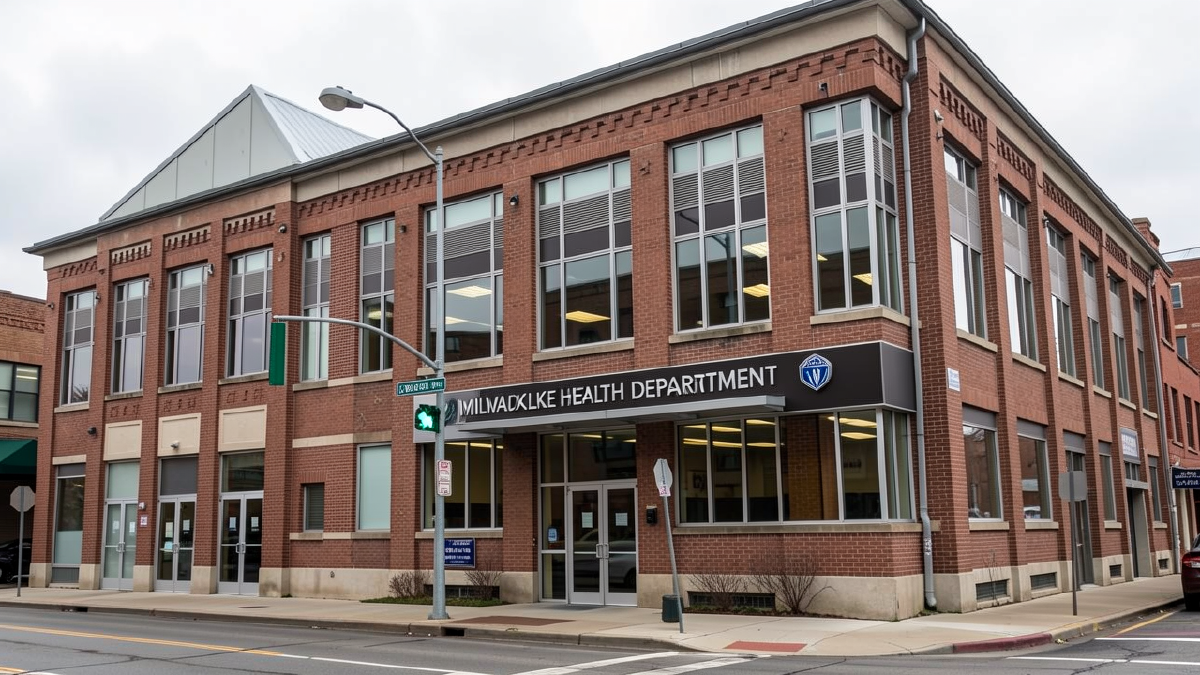
On the Wisconsin Department of Health Services website, updated in late 2025, a page titled “Federal Changes” opens with measured bureaucratic language: “The budget reconciliation act (known as the ‘One Big Beautiful Bill Act’) passed July 4, 2025, included provisions that directly affect Wisconsin’s Medicaid and FoodShare programs.” Below it, a link to Governor Tony Evers’ impact analysis delivers the numbers in blunter terms. DHS estimates that 63,000 Wisconsinites are at high risk of losing coverage due to work requirements alone. The administrative cost to implement them: $74.2 million annually in new systems, staffing, and training. The expected return on that investment in workforce participation: effectively zero, based on Congressional Budget Office findings that Medicaid work requirements do not meaningfully increase employment.
Wisconsin occupies a position in the work requirements landscape that no other state shares. It never expanded Medicaid under the Affordable Care Act, yet it covers childless adults up to 100 percent of the federal poverty level through a Section 1115 demonstration waiver. It has no coverage gap. It received federal approval for work requirements in 2018 but never implemented them. Its Democratic governor has proposed Medicaid expansion in every budget since 2019; its Republican legislature has rejected expansion every time. And now H.R.1 requires it to build a compliance infrastructure for a population earning below the poverty line, at a cost that full expansion would have rendered unnecessary, while the enhanced federal matching funds that expansion would provide sit unclaimed at $1.6 billion over the biennium.
The paradox is structural, not incidental. Wisconsin will spend tens of millions verifying whether its poorest residents work enough hours to deserve healthcare, while declining federal funds that would extend coverage to residents earning 38 percent more. The politics that produced this outcome are Wisconsin’s defining feature, and they will shape every implementation decision between now and December 2026.
Work Requirement History#
Wisconsin’s relationship with Medicaid work requirements stretches back nearly a decade and involves every branch of state government plus two presidential administrations.
Governor Scott Walker’s administration submitted a Section 1115 waiver request to CMS in June 2017 as part of Act 55, the 2015-2017 budget bill. The waiver proposed “community engagement requirements” for childless adults enrolled in BadgerCare Plus, requiring 80 hours monthly of work, education, job training, or community service. CMS approved the waiver in October 2018, making Wisconsin the first non-expansion state to receive work requirement authority. The approval arrived weeks before the November 2018 gubernatorial election that Walker narrowly lost to Democrat Tony Evers.
What happened next defined Wisconsin’s political architecture for the next eight years. Before leaving office, Walker and the Republican legislature enacted legislation during a lame-duck session preventing Governor-elect Evers from withdrawing the waiver without legislative approval. This created an extraordinary standoff: a Democratic governor who opposed work requirements but was legally barred from canceling them, and a Republican legislature that supported requirements but lacked executive branch cooperation to implement them. The waiver sat in administrative limbo.
Implementation had been scheduled for 2020 but was suspended when COVID-19 triggered the continuous enrollment requirement. Wisconsin’s work requirements entered suspended animation. In December 2021, the Biden administration formally rescinded the waiver approval, concluding that community engagement requirements were “not likely to promote the objectives of the Medicaid statute.” The institutional preparation was not entirely wasted. DHS had developed verification protocols, exemption processes, and reporting systems. Staff had been trained. That infrastructure was never activated, but the institutional knowledge persists within the department, potentially accelerating the timeline for implementing what H.R.1 now mandates.
H.R.1 and Federal Requirements#
H.R.1 requires 80 hours monthly of work, education, job training, job search, community service, or caregiving for adults aged 19 to 64 receiving Medicaid coverage through expansion or equivalent pathways. CMS issued initial guidance on December 8, 2025, with detailed regulations expected by June 1, 2026. The compliance deadline is December 31, 2026, with good-faith extensions available through December 31, 2028.
Wisconsin’s situation is legally distinctive. The state never formally expanded under the ACA’s terms, so its 198,000 childless adults enrolled in BadgerCare Plus are not technically “expansion adults” in the conventional sense. They are covered through Section 1115 demonstration authority at 100 percent of FPL rather than 138 percent. However, Kaiser Family Foundation and other analysts have concluded that Section 1115 demonstration populations providing equivalent coverage will be subject to the community engagement mandate. Wisconsin must therefore implement work requirements for a population it covers through waiver authority, not expansion authority, receiving the standard federal match of approximately 60 percent rather than the enhanced 90 percent match that expansion states receive.
This distinction matters financially. Expansion states receive 90 cents of every dollar spent on expansion adults from the federal government. Wisconsin receives roughly 60 cents. When work requirements cause coverage losses in expansion states, the federal government absorbs 90 percent of the premium reduction. When Wisconsin loses enrollees, the state’s share of the savings is proportionally larger, but so is the state’s share of the administrative costs, and the human consequences are identical. Wisconsin pays more per capita to administer a compliance system for people earning less than the poverty level than expansion states pay for people earning up to 138 percent of it.
The mandatory outreach period runs June 30 through August 31, 2026. Semi-annual redetermination begins with the December 2026 implementation. Exemptions cover the standard H.R.1 categories: pregnancy through 60 days postpartum, medical frailty, disability, full-time students, caregivers of dependents under 14 or incapacitated individuals, unemployment benefit recipients, and substance use disorder treatment participants.
The Non-Expansion Paradox#
Governor Evers included Medicaid expansion in his 2025-2027 budget proposal for the fourth consecutive biennium. The proposal would have extended coverage to an estimated 95,800 additional Wisconsinites and generated $1.9 billion in state savings over the biennium. DHS Secretary Kirsten Johnson called it “the cornerstone of the budget proposal.” The Joint Committee on Finance, controlled by Republicans, voted along party lines in May 2025 to strip expansion from budget consideration. Senate President Mary Felzkowski questioned why Wisconsin would “take people off of private insurance to put them on government insurance.”
The legislature’s reasoning has been consistent since 2014, when Walker created the current architecture: cover everyone up to 100 percent of FPL through Medicaid, let those between 100 and 138 percent access marketplace subsidies, and avoid the dependency that expansion purportedly creates. This framework eliminated Wisconsin’s coverage gap, making it the only non-expansion state where all low-income residents have a pathway to insurance. The Wisconsin Institute for Law and Liberty, a conservative legal organization, published a February 2025 analysis arguing that expansion would have “negative repercussions” for the state budget and that actual health outcomes for Medicaid recipients are “mediocre at best.”
H.R.1 transforms this calculus, though not necessarily its political conclusion. Wisconsin must now spend $74.2 million annually administering work requirements for its waiver population while simultaneously forgoing $1.6 billion in expansion funding. The American Rescue Plan’s additional incentive for newly expanding states remains available. The Joint Economic Committee estimated that H.R.1’s combined provisions put over 250,000 Wisconsinites at risk of losing health insurance over the next decade. DHS estimates 63,000 at high risk from work requirements specifically.
Whether this fiscal pressure eventually tips the expansion debate is uncertain. Over a decade of consistent Republican opposition survived every prior argument for expansion, including the ARP’s enhanced incentives. But the combination of mandatory work requirement costs, provider tax freezes, directed payment limitations, and reduced retroactive coverage creates cumulative fiscal pressure that previous calculations did not include. Wisconsin now pays more to comply with federal mandates while receiving less federal support than it would under expansion.
The Divided Government Dynamic#
Wisconsin’s implementation will be shaped by the same divided government that has defined its Medicaid policy for nearly a decade. Governor Evers controls the Department of Health Services and its administrative discretion. The Republican legislature controls the budget and can attempt to mandate implementation approaches through legislation or budget provisions.
This division produces predictable friction. The Evers administration will design implementation to maximize exemptions, automate verification through data matching, and minimize procedural barriers for enrollees. Republican legislators may attempt to mandate stricter enforcement protocols, narrower exemption interpretations, or specific verification requirements. Whether such efforts survive gubernatorial veto depends on whether Republicans can secure two-thirds majorities in both chambers, which current margins make unlikely.
The Walker-era lame-duck legislation that prevented waiver withdrawal demonstrates the legislature’s willingness to use structural mechanisms to constrain executive discretion on Medicaid. Similar approaches could emerge during the 2026 implementation period. Budget provisions attached to the 2025-2027 biennial budget, which Evers signed on July 3, 2025, may contain implementation-related constraints. Standalone legislation mandating specific enforcement approaches would require either Evers’ signature or a veto override.
Wisconsin holds gubernatorial and legislative elections in November 2026, weeks before the December 31 implementation deadline. Electoral outcomes could shift the political environment during the most critical implementation phase. If a Republican governor wins and takes office in January 2027, implementation philosophy could shift dramatically from accommodation to enforcement. If Evers wins a third term, the minimal-enforcement approach continues.
Geographic and Demographic Terrain#
Wisconsin’s compliance challenges divide along the same geographic lines that define the state’s politics. The southeastern corridor, anchored by Milwaukee, contains the state’s largest concentration of BadgerCare Plus enrollees and its most acute poverty. Milwaukee County’s poverty rate of 23.3 percent is nearly double the national average. The city is majority-minority, with Black residents disproportionately represented among those living in poverty. Roughly 38 percent of Milwaukee’s population is Black, 32 percent White, and 20 percent Hispanic. Work requirements will fall most heavily on this population, where informal employment, gig work, and cycling between jobs create documentation challenges even when actual work hours exceed the 80-hour threshold.
Northern Wisconsin presents a different set of barriers. Iron, Bayfield, Ashland, and Forest counties experience the state’s highest unemployment rates, combined with limited public transportation, seasonal employment patterns in tourism and forestry, sparse broadband coverage, and healthcare provider shortages. An enrollee in Iron County who works seasonally at a resort may meet the annual hour threshold easily but fail verification during winter months when the resort is closed. The compliance system must accommodate these patterns or produce coverage losses that reflect seasonal economics rather than work effort.
Wisconsin’s eleven federally recognized tribal nations, including the Ho-Chunk Nation, Menominee Tribe, Oneida Nation, and several Lake Superior Chippewa bands, add implementation complexity. The state’s American Indian population of approximately 86,000 includes significant Medicaid enrollment. Menominee County, with 80 percent tribal population and a 46 percent SNAP participation rate, represents one of the most economically disadvantaged communities in the state. H.R.1’s AI/AN exemption protects tribal members from work requirements, but the administrative infrastructure must correctly identify and process these exemptions across eleven distinct tribal enrollment systems.
The Great Lakes Inter-Tribal Council Epidemiology Center has documented the health disparities driving Medicaid utilization among Wisconsin’s tribal populations: smoking rates of 36 percent compared to 22 percent statewide, diabetes mortality 3.3 times the white rate, and unemployment rates of 44 percent compared to 32 percent statewide. These populations are exempt from work requirements but remain affected by other H.R.1 provisions including semi-annual redetermination and reduced retroactive coverage.
Wisconsin’s Hmong community, concentrated in Milwaukee, La Crosse, and Wausau, faces distinctive compliance challenges. Language barriers, cultural differences in employment documentation, and concentration in informal economy work create verification obstacles for a refugee-origin population that may qualify for exemptions but struggle to navigate the documentation process.
The ACCESS Infrastructure#
Wisconsin operates one of the more sophisticated integrated eligibility systems in the country. The ACCESS platform manages enrollment for BadgerCare Plus, FoodShare (Wisconsin’s SNAP program), and other benefit programs simultaneously. Organizations trained on ACCESS can submit applications that screen for multiple programs at once. This cross-program integration creates opportunities that many states lack.
FoodShare already imposes work requirements on Able-Bodied Adults Without Dependents. Enrollees documenting 80 hours monthly for SNAP purposes could have that verification automatically applied to BadgerCare Plus eligibility, reducing duplication. Whether Wisconsin implements such coordination depends on system modifications and policy decisions, but the architectural foundation exists. The ACCESS system’s data matching capabilities could enable automated verification through unemployment insurance records, employer wage data, and other administrative sources, potentially allowing many enrollees to achieve compliance without affirmative self-reporting.
The dormant infrastructure from the 2018-2020 preparation period adds another layer of readiness. DHS staff who developed verification protocols and exemption processes during the Walker-era waiver preparation retain institutional knowledge that can accelerate implementation. Protocols developed but never deployed could be adapted for H.R.1’s requirements, which closely mirror the original waiver’s 80-hour threshold.
Managed Care Landscape#
Wisconsin contracts with 18 health plans across multiple Medicaid programs for BadgerCare Plus, including community-operated plans like Children’s Community Health Plan, CommunityConnect Health Plan, Dean Health Plan, Group Health Cooperative of Eau Claire, and Network Health Plan, alongside nationally based organizations including Managed Health Services (a Centene subsidiary), Molina Healthcare, and UnitedHealthcare.
This mix of local nonprofit and national commercial plans creates variable capacity for work requirement navigation. MHS Health Wisconsin, established in Milwaukee in 1984 as Centene’s local subsidiary, operates the largest Medicaid managed care presence in the state. Its founding mission emphasized serving diverse populations and bridging ethnic and economic gaps. The community-based plans have deep local relationships but limited experience with compliance infrastructure. The national plans have compliance system capabilities but may lack the community connections needed for effective navigation in Wisconsin’s specific demographic context.
MCO contract modifications will be necessary to incorporate work requirement support functions. Plans that are still adjusting to existing managed care requirements must simultaneously develop navigation capabilities they have never been asked to provide. The conflict-of-interest provisions in H.R.1 prevent plans from making compliance determinations when they have financial interest in the outcomes, but plans can and should invest in helping members demonstrate existing compliance.
Hospital and Provider Pressures#
Governor Evers signed the 2025-2027 state budget on July 3, 2025, one day before the President signed H.R.1, securing a final increase in Wisconsin’s hospital provider tax before the federal freeze took effect. The budget raised the hospital assessment from 1.8 percent to the federal maximum of 6 percent, generating over $1.1 billion annually in additional federal matching funds for hospital payments. DHS noted that in the long term, those dollars “will not keep pace with increasing health care costs and this method of addressing those costs was no longer an option.”
The timing was deliberate. Wisconsin locked in the maximum provider tax rate hours before H.R.1 prohibited new or increased provider taxes. But H.R.1 also limits directed payments through managed care organizations to 110 percent of the Medicare payment rate, with rates above that threshold reduced by 10 percentage points annually starting in 2028. This creates a slow squeeze on hospital funding even as the frozen provider tax rate erodes in real terms against healthcare cost inflation.
Work requirement coverage losses compound these pressures. The Wisconsin Hospital Association has long supported Medicaid expansion as a means of reducing uncompensated care. If work requirements cause significant coverage losses among the childless adult population, hospitals in Milwaukee and other high-poverty areas absorb additional uncompensated care costs. Rural hospitals in northern Wisconsin, already facing financial pressure from small patient volumes, could see closure risk accelerate.
DHS’s impact analysis warned that Medicaid cuts could mean billions in lost hospital funding over the coming decade. The Healthy Minds Policy Initiative and other advocacy organizations have noted that the $50 billion Rural Health Transformation Fund, while available to states, provides short-term grants that cannot substitute for permanent Medicaid revenue losses.
What Wisconsin Will Likely Do#
Wisconsin will implement work requirements reluctantly, through an administration that opposes them and a legislature that supports them but cannot unilaterally control implementation design. The resulting system will reflect this ambivalence.
DHS under Governor Evers will maximize automated data matching through the ACCESS system, minimizing individual reporting burdens. Exemption categories will be interpreted broadly, with streamlined processing for tribal members, individuals in substance use treatment, and those with documented medical conditions. The opioid crisis dimension is significant: Wisconsin recorded 1,421 overdose deaths in 2023, with fentanyl accounting for over 75 percent of opioid fatalities. Individuals in medication-assisted treatment qualify for exemption but must document active participation, creating a barrier for populations already struggling with treatment engagement.
Milwaukee will receive disproportionate implementation resources and community organization partnerships, reflecting both the concentration of affected populations and the political priorities of the Evers administration. The 18 managed care plans will be enlisted for member outreach and documentation assistance, though their capacity and incentive to perform these functions effectively remains uncertain.
The most likely trajectory includes utilization of the good-faith extension to December 2028 if systems are not ready by the initial deadline, particularly given the compressed timeline and divided government complications. Coverage losses will concentrate among enrollees working informally, cycling between employment, or facing documentation barriers despite qualifying for exemptions. DHS’s estimate of 63,000 at high risk may prove conservative if semi-annual redetermination compounds work requirement attrition, or optimistic if automated verification catches a higher proportion of existing compliance than anticipated.
The deeper question Wisconsin cannot answer through implementation design is whether imposing $74.2 million in annual administrative costs to verify work status for people earning below the poverty line represents a sensible use of state resources when $1.6 billion in expansion funding remains available. That question will be answered, if at all, not by DHS administrators building compliance systems but by voters choosing legislators in November 2026. Until then, Wisconsin will build what it must, decline what it could accept, and manage the consequences of both decisions simultaneously.