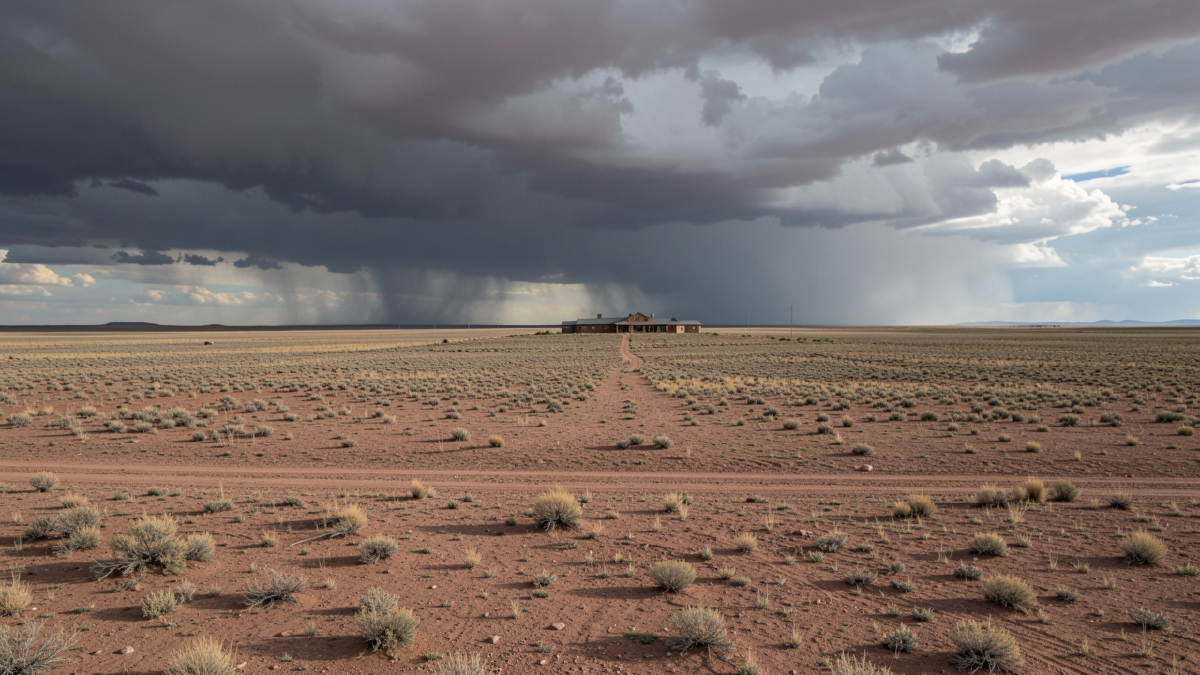
Tom lives twelve miles outside Havre, Montana where the phone company deemed broadband infrastructure economically unviable. No internet reaches his property. Cell service works sporadically, dropping calls and refusing to load web pages. The nearest public computer sits in a library 75 miles away, open Monday through Friday until 5 PM when he works at the feed store 45 minutes from home. When Montana’s work requirement verification system launched in December 2026 requiring online monthly reporting, Tom had no way to comply. He works 40 hours weekly. The system cannot see his work because the infrastructure to verify does not exist where he lives.
Alaska, Montana, Wyoming, North Dakota, South Dakota, Nebraska, Idaho, West Virginia, Maine, and Iowa share defining characteristics distinguishing them from urban and suburban expansion states. Substantial rural and frontier populations, vast geographic territories with sparse settlement, digital infrastructure deficits concentrated precisely where people live, transportation systems insufficient to connect residents to employment or verification sites, and economic patterns following seasonal rhythms that monthly hour requirements cannot accommodate. These ten states contain 45% of U.S. land area but less than 8% of national population. In frontier counties with six or fewer people per square mile, the baseline infrastructure assumptions underlying work requirement systems simply do not exist. Geography is not context in these states. Geography is the primary barrier to compliance.
The Infrastructure That Does Not Exist#
Work requirement systems designed in Sacramento or D.C. assume employment density, public transportation, broadband access, and service availability functioning as baseline conditions. In frontier states every assumption fails simultaneously.
Employment density creates the first impossibility. Frontier counties average 3.7 people per square mile. Phillips County, Montana where Tom lives offers no meaningful employer choice. The feed store, hospital, school district, and seasonal ranch work comprise the local labor market. When the nearest alternative employer sits 90 miles away with no transportation connection, employment becomes geographically bounded. The requirement assuming 80 monthly hours in labor markets with sufficient demand confronts frontier economies where insufficient demand structures into geography itself.
Seasonal patterns compound impossibility. Agricultural work dominates rural Iowa, Nebraska, and the Dakotas. Ranch work follows calving seasons and harvest cycles. Tourism in Montana and Wyoming concentrates in summer when national parks and ski resorts operate. A worker employed 180 hours monthly March through October and 15 hours November through February averages 97 hours monthly annually but fails monthly verification eight months of twelve. The system treats geographic employment reality as individual compliance failure.
Transportation infrastructure determines what employment is physically reachable. Greyhound serves 2,400 U.S. locations, leaving most rural areas without intercity bus service. Ride-sharing does not operate where population density makes rides unprofitable. When potential employment sits 50 miles distant, no public transit connects to it, and personal vehicle ownership is economically impossible, the employment is theoretically available but practically unreachable. The 35-mile commute requiring personal vehicle becomes barrier equivalent to no employment existing.
Digital infrastructure creates verification impossibility independent of employment reality. The FCC documented 28% of rural residents lack broadband meeting minimum standards. Independent audits found FCC maps understating the problem by 6.4 million people, with discrepancies concentrated in rural Plains states and Mountain West. The member living where broadband infrastructure does not extend faces online verification requirements where online verification is physically impossible. Telling someone to verify employment online when their home has no internet equals telling them to verify in person when they have no transportation.
The tribal sovereignty dimension affects Alaska, Montana, North Dakota, South Dakota, and Idaho disproportionately. Federal law exempts American Indians and Alaska Natives from work requirements. Indian Health Service and tribal facilities serve substantial Medicaid populations through FFS pathways. Tribal consultation requirements demand engagement with sovereign governments whose employment structures, seasonal patterns, and infrastructure constraints differ from state assumptions. Alaska’s geographic impossibility of managed care networks combines with tribal sovereignty creating dual implementation pathways neither resembling urban Medicaid.
Alaska: Where Geography Defeats Policy Design#
Alaska’s geography creates implementation impossibility that other states approximate but cannot match. The state comprises 665,000 square miles with population 733,000, creating density of 1.1 people per square mile. Many communities access only by plane or boat. Building managed care networks assuming beneficiaries can reasonably access network providers in defined geographic areas becomes literally impossible when geography prevents reasonable access.
Alaska operates Medicaid entirely through FFS, not because of political philosophy but because MCO models requiring defined service areas with accessible provider networks cannot function when communities are 300 air miles apart with no road connections. The FFS structure means Alaska cannot partially offload work requirement implementation to contracted plans with existing member services. Every function Ohio might delegate to MCOs becomes direct state responsibility.
The Alaska Native population comprises approximately 15% of state residents but higher proportion of Medicaid expansion adults. Federal AI/AN exemption from work requirements protects substantial population automatically. IHS facilities and tribal health organizations serve these populations through established FFS pathways. The exemption is automatic and federally mandated, eliminating state discretion but creating verification responsibility to confirm AI/AN status for exemption qualification.
Alaska’s expansion population totals approximately 45,000. After tribal exemptions, high unemployment exemptions for remote boroughs (some exceeding 20% unemployment), medical frailty exemptions for populations facing severe health disparities, and workers already meeting requirements through formal employment, the non-exempt population requiring active verification drops significantly. The geographic barriers are extreme but affected population becomes manageable if properly targeted.
But targeting requires infrastructure Alaska has not built. Wage record systems exist but update quarterly while requirements verify monthly. Seasonal employment in fishing, tourism, and oil services creates employment patterns where people work intensely for months and minimally in others. A fisherman working 80-hour weeks for six months and zero hours for six months averages 40 hours monthly failing requirements half the year despite working more annually than requirement mandates.
The remote borough unemployment exemption provides partial solution. When unemployment exceeds 10% in a geographic area, residents qualify for exemption. This accommodates some structural impossibility but creates documentation burden: how do members in bush communities without internet access apply for exemptions requiring online forms? Alaska must build parallel paper systems for populations the digital systems cannot reach, eliminating administrative efficiencies automation was supposed to create.
Montana, Wyoming, Dakotas: Tribal Coordination and Frontier Scale#
Montana’s eight tribal nations, North Dakota’s five, South Dakota’s nine, and Wyoming’s two create tribal sovereignty coordination requirements distinguishing these states from rural states without substantial tribal populations. Federal AI/AN exemption protects tribal members automatically but state-tribal relationships shape how exemptions get verified, how coordination occurs, and whether implementation accommodates tribal government structures or imposes state structures onto tribal communities.
Montana’s 105,000 expansion adults include approximately 18,000 to 19,000 American Indian/Alaska Native members, roughly 18% of expansion population. The state submitted waiver proposals recognizing frontier geography and tribal coordination as primary implementation challenges. Whether CMS guidance permits geographic hardship exemptions beyond tribal exemptions determines whether Montana can exempt frontier counties with unemployment exceeding 150% of state average, a provision recognizing that work requirements in counties without work make no sense.
South Dakota’s situation illustrates tribal coordination complexity. The state has nine reservations including Pine Ridge and Rosebud with poverty rates exceeding 50%, unemployment that would be crisis anywhere else, and health disparities among worst nationally. The federal exemption protects tribal members but requires verification of tribal membership. Tribal enrollment records are tribal government responsibility. States cannot access them without tribal consent. Whether South Dakota’s waiver permits tribal governments to issue exemption attestations directly or requires members to apply through state systems determines whether exemption process respects sovereignty or subordinates it to state administration.
Wyoming’s small scale creates different dynamics. The state serves approximately 15,000 expansion adults. Building verification systems for 15,000 people is different from Montana’s 105,000 or larger states’ hundreds of thousands. Manual verification becomes feasible at Wyoming’s scale where it would be impossible in California. But Wyoming’s two tribes (Eastern Shoshone and Northern Arapaho on Wind River Reservation) still require sovereignty-respecting coordination, and Wyoming’s frontier geography creates same structural barriers as larger states.
North Dakota’s oil economy creates employment opportunities in some regions while agricultural counties face opposite dynamics. The state’s five tribal nations concentrate in certain areas. Implementation must accommodate extraordinary regional variation: oil workers in Williston area working steady hours, agricultural workers in Grand Forks region with seasonal patterns, tribal members in Fargo area accessing urban employment, and reservation residents facing structural unemployment. One-size verification cannot fit this variation without systemic failure modes.
Nebraska and Iowa: Agricultural Seasonality and Broadband Gaps#
Nebraska and Iowa represent agricultural states with less extreme frontier geography than mountain West but similar seasonal employment and digital infrastructure challenges creating structural compliance impossibility.
Nebraska’s 70,000 expansion adults concentrate in Omaha and Lincoln but substantial rural populations work in agricultural processing, farming, and ranch operations following seasonal cycles. Planting season April through May, growing season June through July, harvest August through October, minimal agricultural employment November through March. Monthly 80-hour requirements cannot accommodate this pattern without treating agricultural employment reality as compliance failure.
Nebraska announced first-in-nation early implementation via state plan amendment rather than waiver, with May 1, 2026 enforcement preceding federal January 2027 deadline. The decision makes Nebraska test case for federal requirements, with its experience influencing other states’ approaches. Whether Nebraska builds recognition-based systems identifying agricultural workers through seasonal patterns or compliance-based systems punishing seasonal employment for monthly hour failures will shape national implementation.
Iowa’s 145,000 expansion adults create larger implementation challenge than Nebraska. The state’s agricultural economy follows similar seasonal patterns with corn and soybean cycles dominating rural employment. Processing plants operate year-round but agricultural field work concentrates in specific months. Digital infrastructure extends to towns but many farmhouses sit miles from town centers without broadband. The combination creates populations where work exists but verification infrastructure does not.
Both states operate statewide MCO programs providing delegation capacity Montana and Alaska lack. AmeriHealth Caritas Nebraska, Healthy Blue, and UnitedHealthcare Community Plan serve Nebraska. Amerigroup, Iowa Total Care, and UnitedHealthcare serve Iowa. Whether these MCOs can identify seasonal agricultural workers through employer partnerships and create verification accommodating seasonal patterns determines whether rural members can comply or face systematic termination despite working.
Idaho and West Virginia: Post-Industrial and Agricultural Overlaps#
Idaho’s 89,400 expansion adults face geographic challenges combining mountain West frontier characteristics with agricultural seasonality. The state’s four tribal nations require sovereignty coordination. Potato harvest September through November, dairy operations year-round, cattle ranching seasonal, all create employment patterns monthly verification poorly accommodates.
Idaho enacted HB 345 anticipating federal requirements but creating conflicting provisions with H.R.1. State law requires parental caregiver exemptions for children under six; federal law requires exemptions for children under 14. State law creates “physically or mentally unfit” exemption language; federal law uses “medically frail” terminology. Whether Idaho reconciles these conflicts or operates dual systems for state versus federal requirements shapes implementation complexity.
Extreme rural geography affects 30+ of Idaho’s 44 counties. Custer County with population 4,300 has no workforce development office. The nearest hospital sits 70+ miles away. Employment opportunities concentrate in a few locations while vast territories have minimal formal economy. How Idaho accommodates geographic impossibility determines whether implementation creates systematic coverage losses in precisely the counties where healthcare access is already most limited.
West Virginia represents post-industrial Appalachian variant of rural challenges other frontier states face. The state’s coal economy collapse left communities with limited employment opportunities, population aging faster than national average, and health burdens among worst nationally. Work requirements layer onto populations facing structural unemployment, not because individuals refuse work but because regional economies no longer generate employment at scales monthly hour requirements assume.
West Virginia’s 133,000 expansion adults concentrate in a few counties but substantial populations live in rural hollows with limited transportation, minimal broadband, and employment requiring long commutes to declining opportunities. Whether the state creates geographic exemptions recognizing structural unemployment or implements uniform requirements treating geographic disadvantage as individual failure determines implementation character.
Maine: Rural New England Variation#
Maine’s approximately 87,000 expansion adults spread across the most rural state in New England. The state operates FFS by choice, creating implementation dynamics more similar to Alaska than to neighboring Massachusetts. No MCO infrastructure exists for delegation. The state must build verification as direct state function without contractor support.
Maine’s geographic challenges differ from Mountain West. Smaller overall territory but similar population dispersion patterns. Coastal communities versus inland rural areas. Seasonal tourism employment creates patterns where workers are intensely employed summer months and minimally employed winters. Lobster fishing, blueberry harvesting, tourism services all follow seasonal rhythms that monthly verification cannot accommodate.
The state’s political culture emphasizes independence and local control. Implementation treating seasonal workers as non-compliant rather than recognizing seasonal employment as economic reality faces political resistance beyond administrative challenges. Whether Maine builds systems respecting seasonal patterns or implements federal requirements mechanically determines whether rural workers maintain coverage or face termination for employment patterns their economies create.
The Synthesis: When Policy Assumptions Meet Geographic Reality#
These ten states reveal that work requirement systems designed for urban and suburban America fail when core infrastructure assumptions do not hold. Employment density, digital connectivity, transportation access, and year-round labor markets function as baseline conditions in most of America. In frontier and rural states these are variable conditions frequently absent.
The policy question is whether geographic impossibility justifies geographic exemptions or whether federal law requires uniform requirements regardless of whether compliance is structurally possible. If CMS permits county-level or regional exemptions based on unemployment, broadband access, or employment density, these states can implement accommodating geographic reality. If federal law requires statewide uniform application, implementation creates systematic coverage losses among populations where geography prevents compliance regardless of individual effort.
The tribal sovereignty dimension adds constitutional and legal dimensions other states avoid. Federal AI/AN exemption recognizes tribal sovereignty in healthcare but implementation requiring state verification of tribal membership creates tension between sovereignty recognition and administrative burden. Whether tribal governments can attest directly to member exemption qualification or whether members must navigate state systems shapes whether implementation respects or burdens sovereignty.
The FFS states face implementation without MCO delegation pathway. Every function Massachusetts delegates to ACOs or California to managed care plans becomes direct state responsibility in Alaska, Maine, and Vermont. Whether these states can build human infrastructure at scale their geography requires determines whether implementation succeeds or generates coverage losses through administrative failure.
The seasonal employment reality creates fundamental mismatch between monthly verification cycles and agricultural, ranching, fishing, and tourism economies. Annual hour requirements would accommodate seasonal patterns. Monthly requirements cannot without treating seasonal employment as non-compliance. Whether federal guidance permits annualized calculations or requires monthly thresholds determines whether rural economies can comply with urban-designed systems.
Geography is not mere context in these ten states. Geography creates structural compliance impossibility that policy design cannot overcome without fundamental accommodation. The December 2026 deadline approaches with these states knowing their populations face requirements designed for infrastructure and economic patterns that simply do not exist where they live.