Series 14: State Implementation of Work Requirements
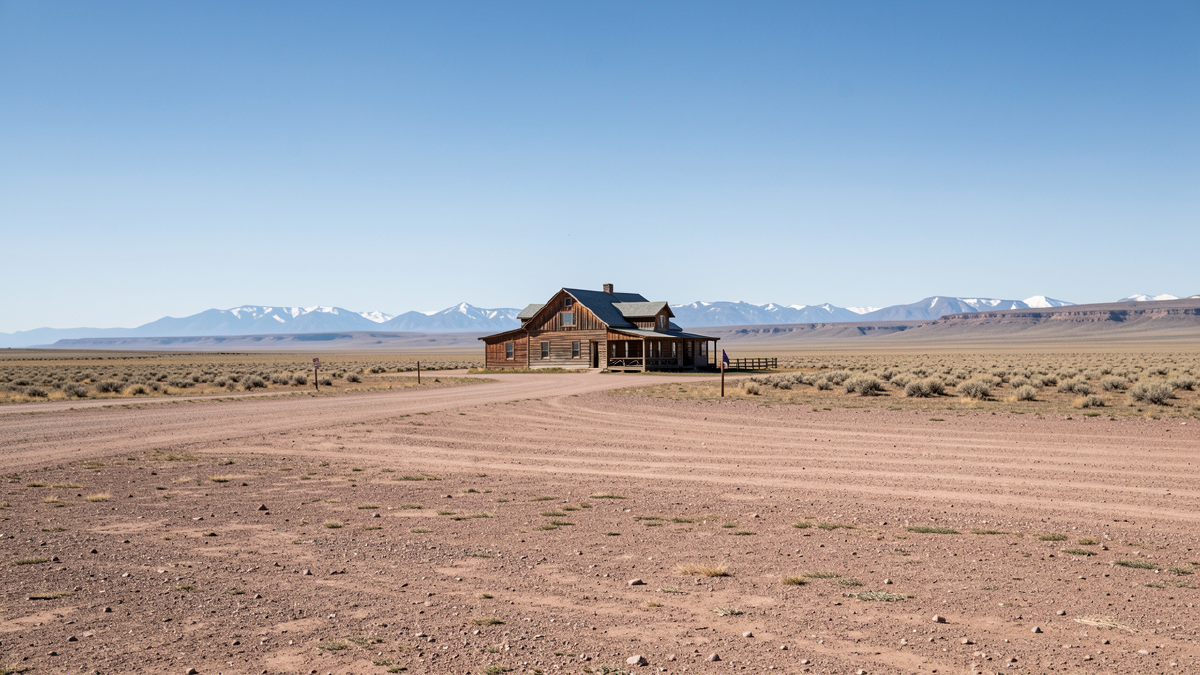
A 42-year-old man in Sublette County, rural western Wyoming, works seasonally at a natural gas extraction site earning approximately $18,000 during the six-month work season. During winter months he has no employment. He has no dependent children. He has diabetes that requires monitoring and medication. He has no employer-sponsored health insurance. He earns too much for Wyoming Medicaid during work months, which caps parent eligibility at approximately 56% of the federal poverty level and excludes childless adults entirely. He earns too little during winter months to qualify for marketplace subsidies, which begin at 100% FPL annualized. He represents one of approximately 9,000 Wyomingites in the coverage gap: working poor in the nation’s least populous state, with the second-lowest population density, excluded from coverage because Wyoming chose not to expand Medicaid. The nearest hospital is 87 miles away.
H.R. 1, signed July 4, 2025, transformed Medicaid work requirements from a state-option policy experiment into a federal mandate affecting approximately 18.5 million expansion adults nationwide. The law requires 80 hours monthly of work, education, training, or qualifying community engagement activities for adults aged 19-64 who gained Medicaid eligibility under the ACA’s optional expansion. States that expanded Medicaid face a January 1, 2027 implementation deadline, though good-faith extensions are available through December 31, 2028 for states demonstrating genuine progress toward compliance infrastructure.
Wyoming is not subject to these federal work requirements because Wyoming never expanded Medicaid under the ACA. By declining expansion since 2014, the state ensured that no residents gained coverage through the expansion pathway that now carries work requirement conditions. The federal mandate applies exclusively to expansion adults, a population that does not exist in non-expansion states. This creates a unique dynamic: Wyoming remains one of ten states that declined expansion, leaving approximately 9,000 residents in the coverage gap with no coverage option, while avoiding the work requirement mandate that would apply if those residents had Medicaid coverage.
Wyoming represents the limiting case for Medicaid work requirements analysis: the smallest expansion population if the state ever expanded (approximately 19,000 projected enrollees), the most extreme frontier geography of any state, the second-lowest population density nationally after Alaska, and persistent legislative resistance to expansion despite gubernatorial support in prior administrations. The state submitted an application for up to $800 million from the federal Rural Health Transformation Program in November 2025, seeking to address rural healthcare infrastructure challenges through alternative federal funding rather than Medicaid expansion.
Traditional Medicaid Eligibility and the Coverage Gap#
Wyoming Medicaid enrollment totals approximately 71,000 individuals as of June 2025, comprising predominantly children (56% of enrollment), pregnant women, elderly, and disabled populations. The program’s eligibility structure for working-age adults creates among the most restrictive thresholds nationally.
Parents with dependent children qualify only with household incomes up to 56% FPL, approximately $1,165 monthly for a family of three. This threshold excludes most working parents. A parent working full-time at minimum wage ($7.25 per hour, federal floor) earns approximately $1,257 monthly before taxes, exceeding Wyoming Medicaid eligibility. Most working parents are categorically excluded regardless of poverty level.
Pregnant women and infants qualify up to 154% FPL. Wyoming extended postpartum Medicaid coverage starting in 2022, so coverage for the mother continues for 12 months after birth instead of terminating after 60 days. Children ages one through five qualify up to 147% FPL, children ages six through eighteen up to 138% FPL. CHIP is available to children with household incomes up to 200% FPL. The children’s coverage structure is relatively comprehensive compared to adult eligibility.
Adults without dependent children face complete categorical exclusion. A childless adult earning $0 annually cannot qualify for Wyoming Medicaid. Disability (SSI eligibility) or age (65+) provides the only coverage pathway. This policy choice creates the fundamental coverage gap: approximately 9,000 adults earn below 100% FPL yet cannot access either Medicaid or marketplace subsidies. Another 10,000 people earning between 100% and 138% FPL would qualify for enhanced marketplace subsidies under current federal policy, but if those subsidies expire after 2025, many would become uninsured, expanding the effective coverage gap.
Legislative History: More Than a Decade of Failed Expansion Attempts#
Medicaid expansion bills have been introduced in the Wyoming Legislature nearly every year since 2013. The trajectory reveals consistent patterns of gubernatorial support meeting legislative resistance.
Early expansion bills (2013-2018) failed in committee without reaching floor votes. Governor Matt Mead, a Republican, publicly supported expansion but could not overcome legislative opposition. The state commissioned studies showing expansion would cover approximately 19,000 residents and reduce hospital uncompensated care by at least 30%. The studies did not change legislative dynamics.
House Bill 244 in 2019 proposed Medicaid expansion with work requirements, seeking to make the policy more palatable to conservative legislators. The bill failed despite the work requirement provision, suggesting that opposition runs deeper than policy design preferences. The inclusion of work requirements did not attract sufficient Republican legislative support to advance the bill.
A 2021 expansion bill passed the House but failed in the Senate Labor, Health, and Social Services Committee. No expansion bill was introduced during the 2022 budget session. House Bill 80 in 2023 passed out of the House Revenue Committee with bipartisan support, including amendments banning coverage for gender-affirming care and abortion. Committee Chair Steve Harshman (R-Casper) explained his shift to supporting expansion, saying he had “learned so much” and that “it’s the right thing to do for the people.” Despite this progress, the bill died without a floor vote in the full House.
Senator Cale Case (R-Lander) brought budget amendments in 2024 attempting to initiate expansion funding through lodging tax revenue. The amendments failed 7-23 and 5-26 in Senate votes. Case noted that colleagues who privately support expansion fear being “primaried” and “painted as a liberal.” This dynamic reveals how primary election politics in overwhelmingly Republican Wyoming creates greater risk for legislators who support expansion than general election consequences of blocking it.
The 2025 legislative session began in mid-January with no Medicaid expansion bills introduced by early February. Advocates continued educational efforts but acknowledged dim prospects in the current political environment. Healthy Wyoming, a pro-expansion coalition, focused its 2025 efforts on educating lawmakers, candidates, and voters rather than pursuing legislation, recognizing that expansion lacks sufficient legislative support under current political alignment.
Why Wyoming Has Not Expanded: Anti-Federal Sentiment and Primary Politics#
The persistent legislative opposition reflects factors beyond generic conservative ideology, revealing Wyoming-specific political culture and structural dynamics.
Anti-federal sentiment runs deep in Wyoming’s political culture. Legislators emphasize independence from federal government programs despite federal lands comprising approximately 48% of Wyoming’s land area and federal mineral leasing generating significant state revenue. Senator Bob Ide (R-Casper) characterized Medicaid as “essentially socialized medicine” and argued that “partnering with the federal government hasn’t worked out.” This skepticism exists even though 90% of expansion costs would be federally funded, creating fiscal paradox where the state rejects federal funding that would support state residents’ healthcare.
Fiscal conservatism in an energy state creates additional resistance. Wyoming’s reliance on mineral severance taxes creates revenue volatility tied to coal, oil, and natural gas markets. Legislators fear committing to expansion during boom periods and facing budget crises during busts. Despite the state’s Permanent Mineral Trust Fund exceeding $11 billion, lawmakers resist new ongoing obligations that could strain budgets if energy revenues decline. The coal industry’s contraction (production down 23% in 2024 versus prior year) intensifies fiscal caution.
Small population creates small political pressure. With only 9,000 people in the coverage gap in a state of 581,000 residents, the political salience differs dramatically from states where hundreds of thousands lack coverage. These 9,000 votes matter less in electoral calculations than in states with larger uninsured populations creating broader constituent pressure.
Primary election dynamics create the most immediate political constraint. In Wyoming’s overwhelmingly Republican electorate, primary challenges from the right pose greater electoral risk than general election losses. Supporting expansion, even with work requirements, risks “Obamacare” attacks in Republican primaries that could end political careers. Senator Case’s observation that colleagues privately support expansion but fear primary consequences reveals how electoral incentives override policy preferences.
Hospital influence has proven insufficient. Unlike states where major health systems drive policy through lobbying and campaign contributions, Wyoming’s 33 hospitals are mostly small, rural facilities without concentrated political power. The Wyoming Hospital Association supports expansion and emphasizes that hospitals absorb over $120 million annually in uncompensated care, but this advocacy has not compelled legislative action. Hospital systems lack the leverage to overcome ideological opposition.
Rural Health Transformation Program: Alternative Federal Funding#
Wyoming submitted an application in November 2025 for up to $800 million from the federal Rural Health Transformation Program established under H.R. 1. The program appropriates $50 billion nationally over five years (federal fiscal years 2026-2030) to support rural healthcare providers. Wyoming’s application seeks first-year funding of approximately $160 million with potential for $800 million over the five-year period.
The application proposes comprehensive initiatives to bolster healthcare access and shore up providers. These include incentives for small rural hospitals to provide basic services while cutting extraneous ones that can be performed at regional facilities; grants for clinical workforce training programs; a state-run insurance plan for catastrophic events; and permanent, investment-generated revenue to boost the healthcare industry. The proposal addresses Wyoming’s rural healthcare infrastructure challenges through federal investment rather than Medicaid expansion.
Legislative action is necessary to implement several proposals outlined in the application. Wyoming could leave up to $800 million on the table over the next five years if it does not implement proposals outlined in its application. A major bill, Wyoming Rural Health Transformation, would establish a perpetuity investment fund, create an advisory panel, and launch programs outlined in the federal application. The 2025 legislative session considered this enabling legislation.
The Rural Health Transformation Program represents an alternative strategy: securing federal healthcare funding while maintaining categorical exclusion of working-age adults from Medicaid. This approach addresses rural hospital infrastructure without expanding coverage eligibility. Whether federal rural health funding can stabilize Wyoming’s healthcare system without expanding insurance coverage to the uninsured population driving uncompensated care costs remains to be tested.
Geographic Barriers: Frontier Conditions and Implementation Challenges#
Wyoming’s geography creates the most extreme implementation challenges of any state if expansion with work requirements eventually occurred. The state covers 97,813 square miles, making it the tenth largest state by land area. Population density is approximately 6 people per square mile, the second lowest nationally after Alaska. Seventeen of Wyoming’s 23 counties are classified as frontier (fewer than 6 people per square mile).
Work requirements assume access to employment, education, training, and community service opportunities that may not exist in frontier Wyoming. How does someone in remote Hot Springs County (population 4,500 across 2,000 square miles) find 80 hours monthly of qualifying activities? The nearest community college might be 100 miles away. Job training programs may not exist within reasonable travel distance. Public transportation is essentially nonexistent in rural Wyoming, requiring personal vehicles for any travel. Winter weather conditions can make roads impassable for days, preventing access to services even where they exist.
Digital infrastructure deficits compound geographic barriers. Online reporting systems that work in urban areas may fail in Wyoming’s many communities without reliable broadband. Self-attestation and telephone reporting would be essential, but capacity for telephone-based verification is limited. The state has minimal administrative infrastructure compared to larger states, creating capacity constraints for any complex verification system.
Seasonal employment patterns dominate Wyoming’s economy. Tourism creates highly seasonal workforce fluctuations in gateway communities near Yellowstone and Grand Teton. Agricultural and ranching operations follow seasonal cycles. Energy extraction (natural gas, oil) creates boom-bust employment patterns. Monthly verification would need to accommodate these patterns or risk disenrolling workers during off-seasons when work hours naturally decline below 80 monthly.
The Wind River Reservation covers 2.2 million acres in central Wyoming. Approximately 12,500 enrolled tribal members (Eastern Shoshone and Northern Arapaho) would likely be exempt from work requirements under federal Indian law protections. However, the reservation’s extreme poverty (unemployment historically 50-84%), health disparities (19% diabetes prevalence versus 8% statewide), and limited healthcare infrastructure (Indian Health Service facilities) create coverage challenges regardless of work requirements. Tribal members experience a 30-year life expectancy gap compared to white Wyoming residents.
No Managed Care Infrastructure: Fee-for-Service and State Capacity Constraints#
Wyoming is one of few states that has not implemented Medicaid managed care. The state contracts directly with providers through fee-for-service arrangements. This creates fundamental differences from expansion states that delegate work requirement implementation to MCOs.
No MCO partners to share implementation burden means the state would build verification systems entirely within government capacity. No care management infrastructure to engage members means Wyoming lacks the member communication channels that MCOs provide in other states. No existing member outreach systems beyond eligibility notices means the state would develop compliance support programs from scratch.
Building work requirement compliance systems would require either creating state capacity from scratch or implementing managed care simultaneously with expansion. Neither option is simple. Creating state verification capacity requires technology investment, staffing increases, and development of verification protocols. Implementing managed care while expanding coverage to a new population creates dual transformation challenges that states typically address sequentially rather than simultaneously.
Wyoming’s state government is small by design, reflecting political culture valuing limited government. The administrative capacity to implement complex federal programs like work requirements may not exist at the scale required. States with larger administrative infrastructures can absorb new program requirements more easily than Wyoming’s minimal state bureaucracy.
The 2026 Gubernatorial Election and Future Expansion Prospects#
Wyoming’s political dynamics suggest continued non-expansion status through at least 2027. Governor Mark Gordon, a Republican, has not prioritized Medicaid expansion during his tenure. The 2026 gubernatorial election could potentially shift dynamics, though Republican control of the legislature would continue regardless of the governorship outcome.
If a Republican wins the 2026 gubernatorial race (likely given Wyoming’s partisan lean), expansion becomes highly improbable for the foreseeable future. Wyoming would join the permanent group of non-expansion states maintaining coverage gaps indefinitely. If a Democrat wins (unlikely given Wyoming voted for Trump by 43 percentage points in 2024), expansion remains possible but would face the same legislative obstacles that blocked expansion under prior Democratic gubernatorial support.
The elimination of ARPA incentives under H.R. 1 removed the two-year, five-percentage-point FMAP bonus that was available to newly expanding states. This changes the financial calculus for any future expansion decision, reducing the federal funding available compared to pre-July 2025 conditions. Wyoming would receive standard 90% federal matching for expansion population rather than enhanced matching that might have sweetened the political bargain.
ACA subsidy expiration could create new pressure. If enhanced ACA subsidies expire after 2025, the approximately 11,000 to 20,000 Wyomingites currently receiving marketplace subsidies could lose affordable coverage options. This broader coverage crisis might shift political dynamics toward expansion as hospitals face dramatically increased uncompensated care. However, legislative resistance has persisted through prior coverage crises, suggesting that political culture trumps fiscal considerations.
Wyoming’s Path Forward: Permanent Non-Expansion Trajectory#
Wyoming represents the limiting case: a state that has not expanded and shows limited political movement toward expansion regardless of federal policy changes. The federal work requirement mandate does not directly affect Wyoming because there is no expansion population to regulate.
However, federal work requirements may paradoxically improve expansion prospects by providing political cover for legislators who support coverage expansion but fear primary challenges. If expansion eventually occurs, Wyoming’s extreme frontier geography and lack of managed care infrastructure would create distinctive implementation challenges requiring significant federal flexibility.
For now, approximately 9,000 Wyoming residents remain in the coverage gap with no pathway to healthcare coverage. The state’s hospitals continue absorbing over $120 million annually in uncompensated care. Wyoming pursues alternative federal healthcare funding through the Rural Health Transformation Program rather than Medicaid expansion, addressing infrastructure without expanding eligibility. The political dynamics that have blocked expansion for more than a decade show no signs of fundamental change, regardless of what federal policy requires of states that took a different path.
If Wyoming eventually adopts expansion, work requirements would almost certainly be part of the package, following the pattern of work requirement inclusion in Republican-controlled states’ expansion proposals. The state would face unique implementation challenges: building verification infrastructure for a small population dispersed across vast geography, establishing exemption processes recognizing frontier realities, and engaging members without MCO partnership infrastructure. The state might seek federal flexibility for approaches tailored to frontier conditions, including heavy reliance on self-attestation, recognition of seasonal employment patterns, and extended good cause exemption periods for residents facing geographic barriers to qualifying activities.
Wyoming demonstrates how state political dynamics can permanently override federal policy incentives, maintaining coverage gaps regardless of federal funding availability or work requirement mandates that would apply if coverage existed.