Series 14: State Implementation of Medicaid Work Requirements
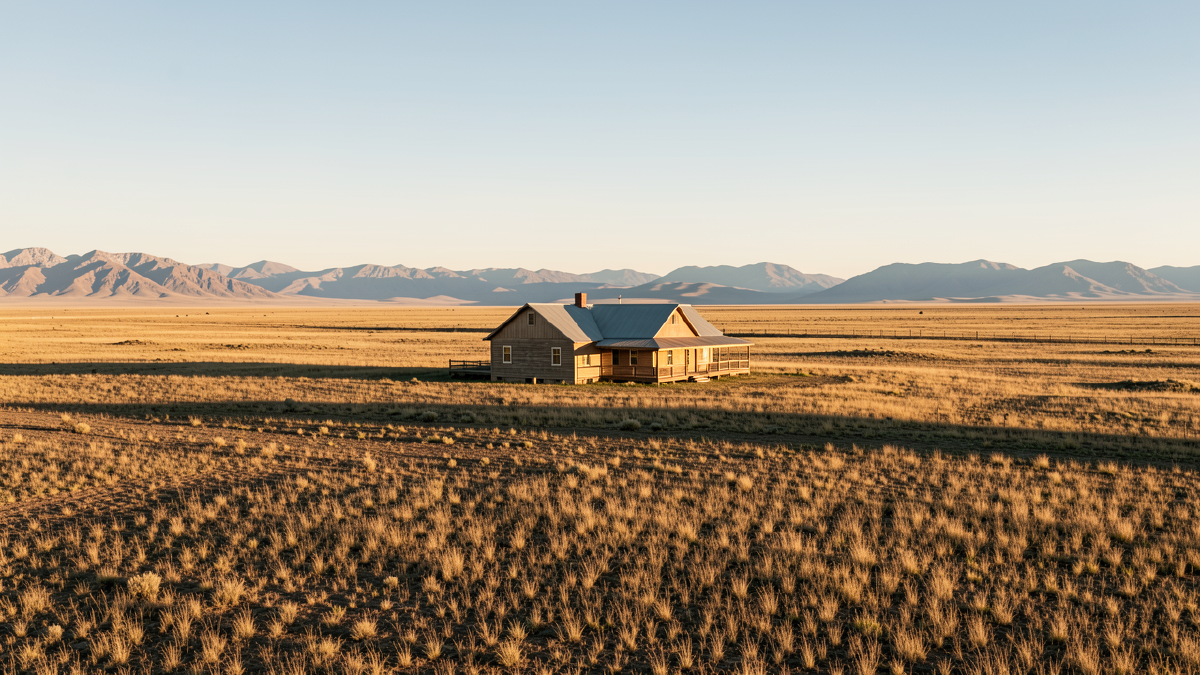
The drive from Billings to Glasgow covers 280 miles of grassland and grain elevator towns, a distance that feels longer in January when the wind chill drops to forty below and the nearest urgent care clinic might be two counties away. Along this stretch, a handful of Medicaid expansion enrollees work seasonal jobs on cattle ranches, in grain processing, and at the handful of small businesses that keep communities like Miles City and Jordan functioning. Most of them already meet the 80 hours monthly that federal law will soon require. Their challenge is not finding work. It is proving, to a verification system designed for urban labor markets, that the work they do counts.
Montana’s 76,000 expansion adults live in the fourth largest state by land area, spread across a population density of roughly 7.5 persons per square mile. Forty-five of its 56 counties qualify as frontier, meaning six or fewer people per square mile. The state operates 50 Critical Access Hospitals, more than any other state, and some enrollees live over 100 miles from the nearest hospital or workforce development center. This is the landscape on which a compliance system built around documentation, digital reporting, and semi-annual redetermination must now operate.
What makes Montana analytically significant is not just its geography but the layered complexity of its population. Approximately 18% of its expansion adults are Native American, the highest share of any expansion state, representing eight federally recognized tribes across seven reservations spanning 8.3 million acres. Seasonal agriculture and tourism dominate large portions of the economy. Veterans comprise roughly 10% of the state population, well above the national average. Substance use disorders, particularly opioids and methamphetamine, have made SUD treatment a central Medicaid priority. Each of these populations creates distinct verification challenges that compound in a state where broadband access remains spotty and the nearest state office may require a half-day drive.
A Decade of Policy Without Implementation#
Montana’s relationship with work requirements stretches back to 2019, when the legislature passed House Bill 658 extending Medicaid expansion while adding community engagement requirements. The legislation, sponsored by Representative Ed Buttrey, the same Republican who had championed the original 2015 expansion, represented a bipartisan compromise: expansion would continue, but with 80 hours monthly of qualifying activities for enrollees aged 19 to 55.
The state submitted its Section 1115 waiver amendment to CMS in August 2019, planned for January 2020 implementation, and waited. CMS never approved it. The first Trump administration granted an extension of expansion itself but left the work requirement in limbo. The Biden administration then notified all states with pending work requirement waivers that they would be reconsidered. Montana’s application died quietly, never rejected formally but never approved.
This history matters because it means Montana enters the OBBBA era with legislative authorization for work requirements dating back six years, but with zero operational experience implementing them. The state has never processed a work activity report, never adjudicated a noncompliance determination, and never managed the appeals that inevitably follow coverage terminations. Unlike Arkansas, which learned painful lessons from its 2018 implementation (18,164 coverage losses in five months), Montana approaches the federal deadline without the painful education that comes from failure.
The 2025 legislative session brought the question to a head. With the 2019 legislation’s sunset date of June 30, 2025 approaching, lawmakers faced a choice. HB 245, again from Buttrey, passed with bipartisan margins of 63-37 in the House and 30-20 in the Senate. Governor Greg Gianforte signed it in March 2025, making Medicaid expansion permanent, removing the recurring sunset, and retaining the community engagement requirements that had never been implemented. The expectation, widely shared across the political spectrum, was that the Trump administration would finally approve what the Biden administration had blocked.
The Waiver and the Federal Collision#
Montana moved fast after the OBBBA was signed on July 4, 2025. The Department of Public Health and Human Services released a draft waiver proposal on July 18 and submitted the formal application to CMS on September 2, 2025, making Montana one of the first states to file post-OBBBA.
The state’s urgency reflected a strategic calculation. By filing early, Montana hoped to secure approval for state-specific accommodations before the CMS June 2026 guidance potentially narrowed flexibility. DPHHS officials acknowledged they were still working with consultants to align state and federal exemption criteria, but pressed forward anyway.
The Montana proposal largely mirrors the federal 80-hour monthly threshold but includes exemptions beyond the federal floor. In addition to the mandatory federal exemptions for pregnancy, medical frailty, disability, full-time students, caregivers, and those receiving unemployment benefits, Montana sought automatic exemptions for tribal members residing on reservations, veterans, individuals experiencing homelessness or fleeing domestic violence, and individuals in SUD treatment. The tribal exemption is particularly significant: at 18% of the expansion population, roughly 14,000 people, it represents the largest categorical exemption any state has proposed relative to population share.
Yet the waiver also introduced elements that advocacy groups flagged as concerning. Montana sought premium authority alongside work requirements, a combination that creates compounding compliance burden. Heather O’Loughlin of the Montana Budget and Policy Center questioned the rationale for pursuing a waiver at all, given that the federal mandate would apply to all states regardless. Her concern was that a waiver filing invited CMS to impose additional conditions that a simple state plan amendment would not trigger.
The CMS December 8, 2025 guidance partially addressed Montana’s timeline but left key questions unresolved. The guidance confirmed that states could pursue early implementation through waivers, but it did not clarify the approval framework for state-specific exemptions beyond the federal floor. Montana’s tribal exemption, homeless population exemption, and veterans exemption all lack explicit federal authorization, leaving their fate to individual CMS review.
The Tribal Sovereignty Question#
No state faces a more consequential tribal coordination challenge. Montana’s eight federally recognized tribes (Blackfeet, Crow, Confederated Salish and Kootenai, Fort Belknap’s Aaniiih and Nakoda, Fort Peck’s Assiniboine and Sioux, Northern Cheyenne, Little Shell Chippewa, and Chippewa Cree) operate across reservations where formal employment is scarce, where traditional economies do not map easily onto hourly documentation systems, and where sovereignty concerns complicate state-administered verification.
The waiver’s automatic exemption for tribal members residing on reservations represents the cleanest solution: rather than attempting to verify activities in communities where verification infrastructure does not exist, the state would simply exempt the population. But this raises a secondary question about tribal members living off-reservation, who would presumably face the same requirements as non-Native enrollees, and about the administrative mechanism for determining reservation residency.
Consultations with tribal governments were ongoing through late 2025, with no public resolution. The Montana Healthcare Foundation’s January 2025 report on Medicaid expansion’s economic effects on tribal communities documented substantial gains from expansion, including reduced uncompensated care at Indian Health Service facilities and improved chronic disease management. Work requirement coverage losses would directly reverse these gains in communities with no alternative coverage options.
Frontier Verification and Seasonal Reality#
State health officials have indicated that implementation will require approximately 50 additional staff positions to process applications and determine eligibility, a significant expansion for an agency already managing over 200,000 Medicaid enrollees. The staffing challenge illustrates a fundamental characteristic of work requirements: they transform eligibility from periodic verification (an annual income check) to ongoing monitoring (monthly or semi-annual activity verification), requiring proportional administrative growth.
The deeper challenge is what those staff members will be verifying. Montana’s economy runs on agriculture, tourism, timber, and energy, industries defined by seasonal variability. A ranch hand working 200 hours during calving season and 40 hours in December meets the annual standard but fails the monthly test. A Glacier National Park employee working full-time May through September and not at all from October through April faces the same mismatch. The waiver application acknowledges seasonal employment patterns but does not specify accommodation mechanisms, leaving a gap between policy design and economic reality.
Rural verification infrastructure compounds the problem. In frontier counties where broadband penetration remains low, where employers may be single-person ranching operations without formal payroll systems, and where the nearest workforce development office is a three-hour drive, the assumption that members can document compliance digitally or in person breaks down. The Montana Free Press reported in September 2025 that state officials acknowledged this gap but had not yet identified solutions.
The KFF has projected approximately 34,000 coverage losses under work requirements, representing nearly half the expansion population. That projection should be understood in context: Montana’s own data shows 73% of expansion adults are already working or in school, and only 6% report no work or reasonable impediment to work. The coverage losses would fall disproportionately on people who are working but cannot navigate verification, on seasonal workers whose hours fluctuate, and on residents of frontier counties where documentation systems presume infrastructure that does not exist.
The Rural Hospital Equation#
No rural hospitals have closed in Montana since Medicaid expansion began in 2016, a period during which 136 rural hospitals closed nationally, 74% of them in non-expansion states. Uncompensated care at Critical Access Hospitals declined 35% following expansion. These are not abstract fiscal statistics. In communities where the hospital is the largest employer and the only source of emergency, obstetric, or behavioral health care, the coverage losses projected under work requirements would produce revenue declines that threaten institutional viability.
Montana’s provider tax situation offers less fiscal cushion than some states. The hospital utilization fee of $26.24 per inpatient bed per day supports expansion costs alongside federal matching and state general fund contributions, with state general fund contributions averaging only $36 per client per month. The OBBBA’s provider tax caps, while preserving the 6% ceiling, constrain the state’s ability to offset revenue losses from coverage disruption through alternative financing mechanisms.
What Montana Reveals#
Montana’s significance extends beyond its borders. The state presents the most extreme version of challenges that many states face at smaller scale: rural verification in areas without infrastructure, tribal populations requiring sovereignty-respecting accommodation, seasonal economies that defy monthly hour thresholds, and a thin workforce development system stretched across vast distances.
The state’s approach, seeking early implementation with expanded exemptions, represents an attempt to resolve these challenges through categorical exclusion rather than individual verification. If CMS approves the tribal exemption, the homeless exemption, the veterans exemption, and the DV exemption, Montana will have effectively removed from the verification system many of the populations most likely to fail documentation requirements. The remaining population would be predominantly urban, employed, and relatively straightforward to verify through administrative data matching.
If CMS narrows Montana’s exemptions to the federal floor, the state will face implementation challenges for which no existing model provides guidance. No state has attempted to verify work hours for ranch hands in Petroleum County (population 487), for tourist-season workers in communities accessible only by unpaved roads, or for tribal members navigating systems built on assumptions of formal employment and digital connectivity.
Montana entered the work requirements era with six years of legislative authorization and zero days of operational experience. Whether that proves to be an advantage, allowing the state to learn from others’ mistakes, or a liability, leaving it without the institutional knowledge that comes from doing, will be answered by December 2026.