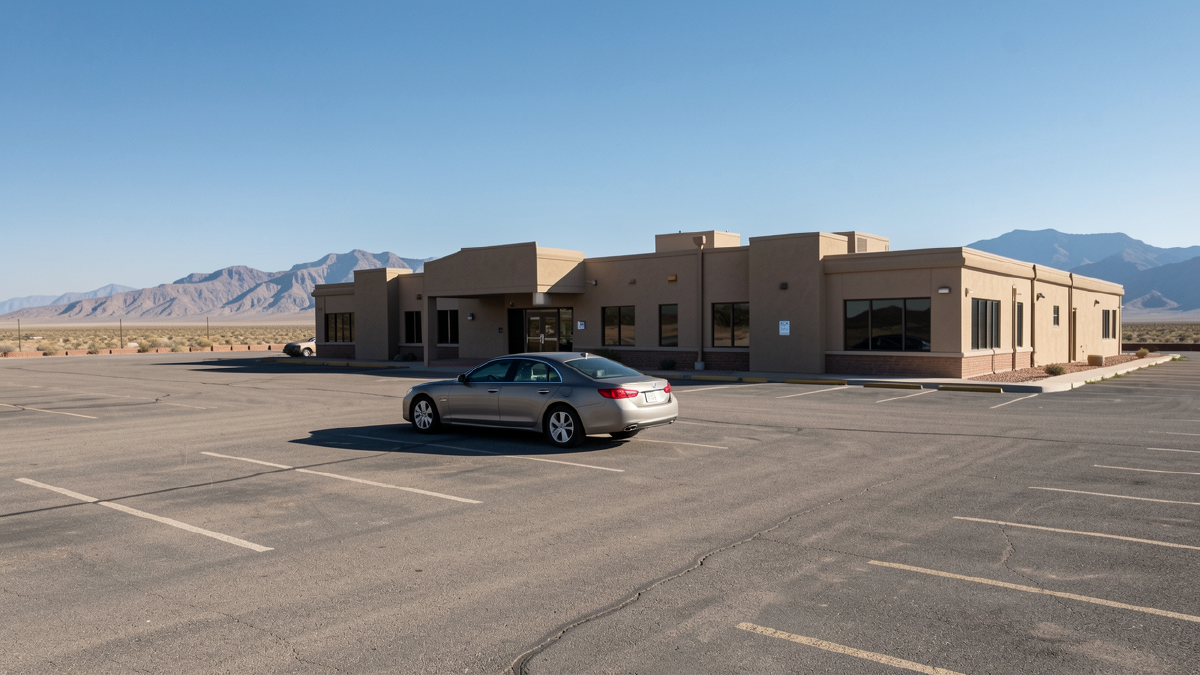
Arizona’s work requirement implementation asks whether a policy designed for uniform national application can function across the extremes this state contains: tribal sovereignty on the Navajo Nation, seasonal agriculture in Yuma County’s lettuce fields, international border economics, extreme geography spanning 114,000 square miles, and the nation’s most mature Medicaid managed care infrastructure. Approximately 400,000 to 450,000 expansion adults face 80-hour monthly requirements beginning December 2026, but Arizona’s distinction is not population size. It is the diversity of circumstances that population contains, making the state a test case for whether standardized federal policy can accommodate the varied terrain of American lives.
The lettuce worker in Yuma makes $16.50 an hour during harvest season, working sixty hours weekly from November through March in fields producing ninety percent of America’s winter leafy vegetables. By June, her agricultural hours drop to zero. She exceeds the 80-hour threshold by a factor of three for five months, then falls to zero for seven months. The Navajo community health representative drives forty-five minutes on unpaved roads to check on an elder, earning a tribal government salary in work that resists standard employment categories, living where the nearest AHCCCS office is a three-hour round trip. The federal government says she must verify work hours through Arizona’s eligibility systems. Her tribal government disputes federal jurisdiction over her healthcare. The Phoenix DoorDash driver logs thirty hours weekly of gig work that doesn’t appear in unemployment insurance wage data. The app tracks his miles, deliveries, and ratings, but not his Medicaid compliance.
Arizona operates the Arizona Health Care Cost Containment System, launched in 1982 as the nation’s oldest statewide Medicaid managed care demonstration. Every expansion adult receives coverage through contracted MCOs: Arizona Complete Health (Centene), Banner-University Family Care, Care1st Health Plan (Blue Cross Blue Shield), Health Choice Arizona (Steward), Mercy Care (Aetna), and UnitedHealthcare Community Plan. This forty-plus year managed care maturity matters enormously for implementation. Arizona doesn’t need to build infrastructure from scratch. It has decades of experience with eligibility verification, care coordination, performance-based contracting, and MCO accountability. The question is whether infrastructure designed for healthcare delivery can absorb the fundamentally different challenge of employment verification and compliance monitoring for gig economy workers, seasonal agricultural employees, tribal government positions, and cross-border wages.
Arizona’s path to work requirements predates the federal mandate by a decade. State statute SB 1092 from 2015 required AHCCCS to submit annual waiver requests to CMS seeking work requirement authority regardless of political environment in Washington. AHCCCS submitted its first formal request in December 2017. CMS approved it in January 2019. Implementation was scheduled for January 2020. Then came the cascade: federal courts vacating Arkansas and Kentucky waivers prompted Arizona to halt in October 2019. The COVID-19 public health emergency suspended efforts in January 2020. The Biden administration rescinded approval in February 2021. But SB 1092’s annual mandate meant AHCCCS kept submitting every year, refining policy design while waiting for political winds to shift. When they did, Arizona had years of preparation ready.
In February 2025, AHCCCS submitted its AHCCCS Works waiver amendment proposing coverage for adults ages 19 to 55 (not the federal mandate’s 19 to 64), requiring 20 hours weekly of qualifying activities (not 80 hours monthly), with a two-month suspension enforcement mechanism (not termination with marketplace exclusion), and a five-year lifetime limit on expansion coverage for non-exempt adults (a provision with no parallel in federal law anywhere). Then HB 2926 moved through the 2025 legislative session, signed into law on June 27, 2025, requiring AHCCCS to terminate eligibility by January 1, 2027 if implementation conditions weren’t met within 90 days of April 1, 2026. One week later, on July 4, 2025, the One Big Beautiful Bill Act established nationwide requirements that differed from both the waiver and HB 2926.
Arizona now faces a layering challenge few states confront. It has a state statute mandating annual waiver submissions. It has a pending waiver application with design elements differing from federal requirements. It has a budget bill with its own implementation triggers. And it has a federal law establishing requirements independent of any waiver. The alignment problem creates regulatory uncertainty for MCOs building compliance infrastructure, for AHCCCS staff designing verification systems, and for expansion adults trying to understand what will be required.
The tribal dimension adds complexity no other expansion state faces to this degree. Approximately 6 percent of Arizona’s expansion population is Native American, the largest share among expansion states. The Inter Tribal Council of Arizona and individual tribal governments submitted extensive comments during the waiver process emphasizing sovereignty concerns and the inadequacy of standard exemption categories for tribal employment patterns. Tribal health facilities serve as primary care providers for much of the AI/AN population while also serving non-AI/AN patients in communities where they represent the only healthcare access point. If work requirements cause coverage losses among non-AI/AN expansion adults in areas served by tribal facilities, those facilities absorb increased uncompensated care from populations they were not designed to serve at that volume.
Geographic extremes compound implementation challenges. Maricopa County (Phoenix metro) contains 62 percent of the state’s population with diversified employment markets and robust digital infrastructure. Yuma County produces $3 billion annually in agricultural output with employment swinging from 240 hours monthly during harvest to zero during dormant seasons. Greenlee County has 9,563 residents across 1,848 square miles, with the nearest AHCCCS office 90 miles away. Apache and Navajo counties contain substantial portions of the Navajo Nation where federal jurisdiction over healthcare eligibility remains contested.
Arizona’s work requirement story ultimately asks whether infrastructure designed for healthcare management can transform into infrastructure designed for employment verification across landscapes and populations that share a state boundary but little else. If work requirements can function equitably here, they can probably function anywhere. If they cannot, the failures will illuminate something fundamental about the distance between uniform federal policy and the varied terrain of American lives.