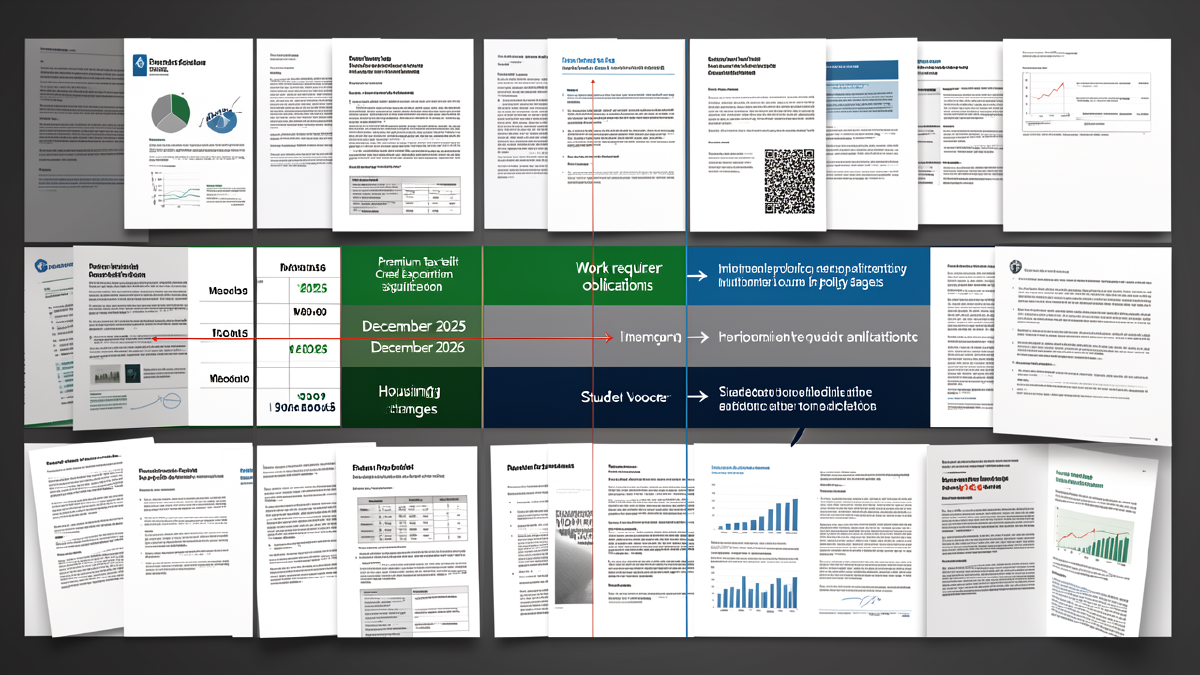
Work requirement analysis typically examines Medicaid policy in isolation. This article reveals that December 2026 implementation occurs within a 12-month window where multiple federal policy changes simultaneously affect the same populations, creating compounding effects that no single-policy analysis captures. Enhanced ACA premium tax credits expire December 31, 2025. Work requirements activate December 2026. Housing voucher payment standards have already been reduced. Student loan repayment obligations continue unabated. Each policy individually might be manageable. Their convergence creates destabilization that exceeds the sum of individual impacts.
The enhanced premium tax credit cliff is massive. The American Rescue Plan and Inflation Reduction Act enhanced marketplace subsidies drove enrollment from 11 million in 2020 to over 24 million in 2025. When enhancements expire January 1, 2026, roughly 3 million enrollees earning above 400% FPL lose all premium assistance immediately. For everyone else, required premium contributions increase an average of 114%, roughly $1,016 annually. Early rate filings suggest an additional 4-7 percentage point premium increase from adverse selection as healthier enrollees drop coverage, layered on top of 7-10% medical cost inflation. Combined marketplace premium increases of 15-20% are expected for 2026.
The populations most affected overlap substantially with those subject to work requirements. Someone earning $25,000 relies on enhanced credits for marketplace affordability. When those credits expire in January 2026, they may seek Medicaid if income qualifies, only to face work requirement compliance six months later. States implementing December 2026 work requirements will face an influx of formerly marketplace-covered individuals just as they operationalize verification systems.
Housing assistance uncertainty compounds the pressure. While Congress rejected the most severe proposed cuts, housing authorities reduced voucher payment standards 8-15% during 2025 in anticipation of budget restrictions. Recipients saw housing costs increase $60-70 monthly even though threatened federal cuts did not materialize. Roughly 40% of Housing Choice Voucher recipients have Medicaid coverage. Housing authorities and Medicaid programs operate in separate administrative silos, and data sharing infrastructure largely does not exist.
Student loan repayment adds continuous financial drain. Borrowers face $200-300 monthly obligations representing 10-15% of income, yet student loan repayment does not count as work activity under Medicaid requirements. A borrower working 80 hours monthly at $12 hourly earns roughly $800 net. Student loan payments of $250 claim 31% of that income. Work requirements count the hours worked but not the financial obligations those hours support.
The overlapping population mathematics are sobering. Of 18.5 million expansion adults subject to work requirements, roughly 15-20% receive housing assistance, 25-30% carry student debt, and 8-10% previously held marketplace coverage. A conservative estimate suggests 1.5-2.5 million expansion adults face at least two simultaneous policy impacts in the January-December 2026 window, with 400,000-800,000 facing three or more. For someone earning $18,000 annually, simultaneous premium increases, housing cost increases, and student debt obligations can consume 24% of gross income in policy-driven costs beyond their control.
Individual decision frameworks designed for single-policy changes break down under convergence. Increasing work hours to meet Medicaid requirements might push income above housing assistance thresholds, converting a healthcare gain into a housing loss. Income-driven student loan repayment adjusts upward with higher earnings, consuming much of the additional income. Reducing hours or dropping out of school to qualify for Medicaid exemptions creates exactly the perverse incentive work requirements were designed to prevent, but the incentive emerges from policy convergence rather than individual character.
States face implementation challenges compounded by marketplace disruption already underway. From January through November 2026, states will observe marketplace enrollment declines of 10-15%, Medicaid applications increasing 3-8% above baseline, and rising uninsured rates. MCO rate negotiations for 2027 contract years must occur during mid-2026 when marketplace disruption is visible but work requirement impacts remain uncertain. Actuaries struggle to model population changes when two major disruptions overlap within 12 months.
The temporal cascade matters: each shock hits before recovery from the previous one is possible. Housing cost increases absorbed throughout 2025 deplete financial reserves. Premium increases in January 2026 arrive atop already-stressed budgets. Work requirement compliance starting December 2026 demands administrative capacity from people already managing multiple transitions. The convergence separates those who can manage complexity from those who cannot, allocating hardship based on administrative capacity rather than work ethic.
Each individual policy might be defensible in isolation. But the convergence of these policies within a 12-month window creates effects none generates individually. The question is not whether any single policy is justified but whether the system created by multiple overlapping policies functions adequately for the people it affects.