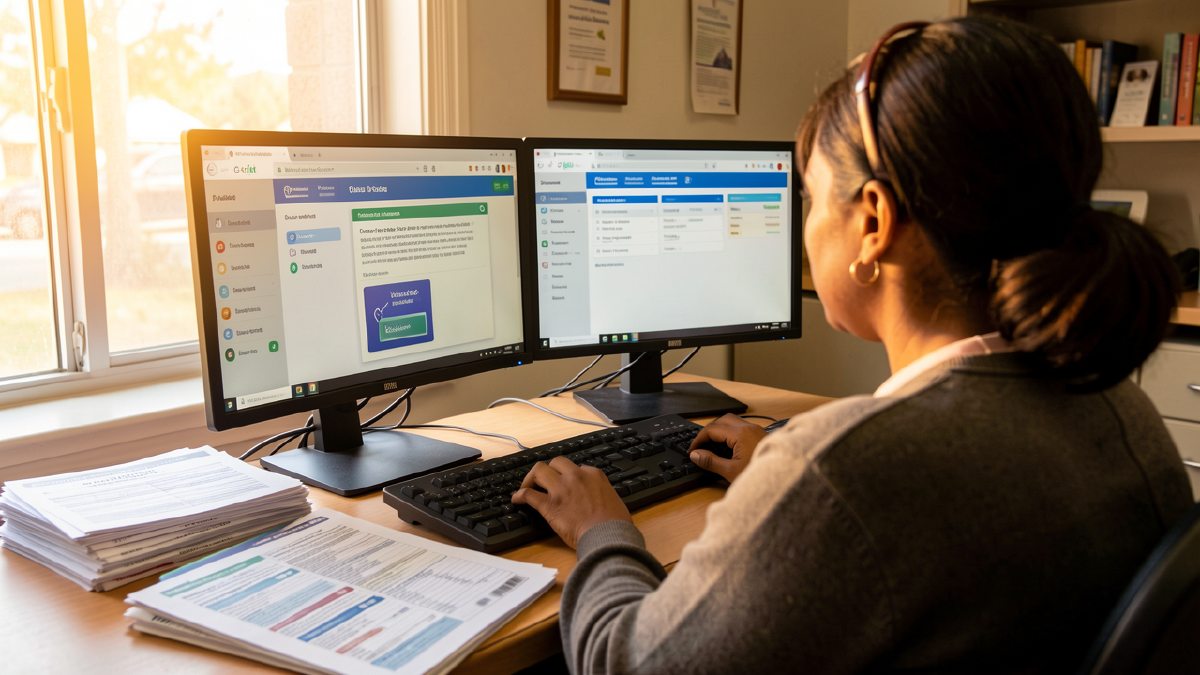
Work requirements transform social determinants of health from healthcare improvement initiatives into coverage survival necessities. The member who needed transportation assistance to reach medical appointments now needs transportation to reach verification appointments. The member who needed job training to improve economic stability now needs job training to maintain healthcare coverage. SDOH platforms built over the past five years to connect members to community resources, track referral completion, and coordinate care across organizations suddenly become infrastructure for work requirement navigation. An estimated 4 to 6 million of the 12 to 14 million employed expansion adults could be served through SDOH platform partnerships with MCOs, employers, and Medicaid ACOs, representing a market reaching hundreds of millions annually.
But capturing this opportunity requires platforms to build capabilities specifically designed for the special populations examined throughout Series 11. Generic SDOH functionality is insufficient.
Core Platform Architecture#
Effective SDOH platforms maintain unified member records integrating three domains: health status drawn from claims data and clinical assessments, social needs documented through SDOH screening and navigator assessments, and work requirement status tracking verification compliance, exemption status, and deadline proximity. Cross-domain analytics identifies connections between health events, social circumstances, and verification risk. Hospitalization predicts verification difficulty. Housing loss predicts exemption need. Job loss predicts hour shortfall. Integrated records enable integrated responses.
Population identification and stratification combine claims-based signals (psychiatric claims for SMI, SUD treatment claims, prenatal claims, chronic condition indicators) with screening-based identification (housing instability, domestic violence, language preference, caregiving burden) and verification history to classify members into three intervention tiers. Tier 1 (10 to 15 percent) requires intensive navigator support with proactive monthly outreach. Tier 2 (25 to 35 percent) requires periodic check-ins and accessible assistance. Tier 3 (50 to 65 percent) can self-navigate with platform tools. Dynamic reclassification adjusts tier assignment as circumstances change: hospitalization elevates risk, successful verification reduces it.
Closed-loop referral management tracks referrals from identification through service completion with accountability at each step. Platforms must distinguish between referrals accepted but not scheduled, scheduled but not attended, attended but not completed, and fully completed. Escalation loops alert navigators when referrals stall (48 hours without acceptance), care coordinators when appointments are not scheduled (one week), and supervisors when services remain incomplete beyond expected timeframes.
Work Requirement-Specific Capabilities#
Three capability sets distinguish work requirement platforms from standard SDOH tools. Verification deadline management tracks monthly status with visual progress indicators and predictive alerts identifying members unlikely to meet deadlines based on current pace. Multi-source aggregation consolidates verification from employer submissions, gig platforms, educational enrollment, volunteer logs, and self-reported activities into a single compliance calculation. Historical pattern analysis distinguishes between members needing permanent support intervention and those experiencing one-time disruption.
Exemption documentation workflows support the full cycle from screening through renewal. Guided questionnaires surface applicable exemption categories, documentation checklists specify required materials, and submission tracking monitors applications from filing through determination. Renewal management initiates processes before expiration dates arrive rather than after they pass.
Resource matching for qualifying activities connects members to employment services filtered by location, schedule flexibility, and physical requirements matching member capacity; job training programs where enrollment verification automatically reports to state systems; educational opportunities with automated attendance reporting; and volunteer positions with verified hour documentation.
Population-Specific Platform Capabilities#
The article maps platform adaptations for each Series 11 population. For serious mental illness: simplified interfaces with minimal steps, progress saving across sessions, crisis detection with automated escalation to human navigators, symptom-aware scheduling avoiding high-symptom periods, and hospitalization triggers automatically initiating exemption processes. For substance use disorder: 42 CFR Part 2 compliant privacy protections with separate consent management, treatment program integration verifying enrollment without disclosing treatment details, relapse accommodation maintaining engagement rather than terminating support, and peer recovery specialist workflow integration.
For homeless populations: alternative contact methods accepting shelter addresses and care-of designations, HMIS integration enabling automatic exemption identification, offline functionality for street outreach, and day labor verification through self-attestation with audit sampling. For domestic violence survivors: sealed record capability hiding location-revealing data, confidential address integration with Safe at Home programs, alternative verification pathways supporting redacted documentation, and safety-aware communication protocols. For limited English proficiency: culturally adapted workflows beyond translated text, in-language navigation, interpreter integration for three-way communication, and community organization intermediary submission.
For intersectional populations facing multiple simultaneous barriers: total burden assessment evaluating cumulative barrier load rather than individual barriers separately, single navigator assignment providing continuity across all domains, barrier interaction mapping understanding how barriers compound in cyclical patterns, and permanent supported status identification for members whose barrier combinations make standard compliance permanently unrealistic.
Integration Requirements and Analytics#
Platforms must integrate across the full stakeholder ecosystem. MCO care management integration requires bi-directional data exchange so care coordinators see SDOH activity while SDOH navigators see care coordination status. State eligibility system integration enables platform-facilitated verification submission directly to state systems and real-time status queries. Provider system integration routes exemption attestation requests and accesses clinical data informing eligibility assessment. Employer and payroll integration connects automated verification through payroll processors and gig platforms.
Operational analytics must track volume, timeliness, success, and efficiency metrics. Population analytics enable demographic stratification for disparity identification, barrier pattern analysis, and service utilization insight. Outcome tracking demonstrates value through coverage retention comparisons between platform-served and non-served populations, health outcomes measurement, and ROI calculation connecting platform investment to prevented coverage loss.
MCO and Financial Implications#
Platform deployment costs for comprehensive work requirement support range from $6 to $12 PMPM depending on population acuity and integration depth. The financial case rests on retained risk adjustment revenue of $2,000 to $4,000 per complex member and avoided downstream acute utilization costs when coverage gaps disrupt chronic disease management. For MCOs serving 100,000 expansion adults, preventing even 5 percent unnecessary coverage loss preserves $10 to $20 million in annual risk-adjusted capitation revenue.
The Bottom Line#
SDOH platforms represent the operational bridge between work requirement policy and population reality. The capabilities mapped here extend beyond generic social care coordination into verification management, exemption documentation, qualifying activity matching, and population-specific accommodations that determine whether vulnerable members maintain coverage or lose it to administrative failure. Platforms that build these capabilities will capture significant market opportunity while serving populations whose coverage depends on infrastructure that does not yet exist at the scale December 2026 demands. Those that treat work requirement support as an afterthought will fail both commercially and in their obligation to the populations whose coverage is at stake.