The Cliff Effect When Training Ends
Maria completes her Certified Nursing Assistant training in early November. She has attended every class, passed every skills assessment, and accumulated educational hours that kept her compliant with Medicaid work requirements throughout the twelve-week program. Her instructor tells her she’s one of the strongest students in the cohort, exactly the kind of person nursing homes desperately need.
The certification examination isn’t scheduled until December 15th. The community college offers the exam once monthly, and the November date fell during her final week of clinical training, making it impossible to sit for the test while still enrolled. She registers for December, studies diligently, and passes on her first attempt. Her name appears on the state nurse aide registry by December 22nd.
The nursing home where she completed her clinical rotation wants to hire her. The director of nursing remembers Maria from her practicum, noting her reliability and gentle manner with residents. But the facility operates on calendar-year budgets, and new positions don’t open until January when the next fiscal year begins. Human resources tells her to apply in the first week of January, complete the background check and drug screening, attend orientation the third week, and start her regular shifts by February 1st.
For nearly three months, Maria exists in a compliance limbo. Her educational hours ended when she completed the CNA program in November. Her work hours won’t begin until February. The six weeks between program completion and the certification exam, and the six weeks between certification and job start, leave her without qualifying activity during the exact period when she has done everything work requirements are supposed to encourage. She completed training. She passed her exam. She secured employment in her field. She loses Medicaid coverage anyway.
This pattern repeats across educational pathways whenever the transition from student to employee takes longer than the compliance system allows. The problem isn’t laziness or failure to try. The problem is that education ends at one moment, employment begins at another, and the gap between them creates coverage loss among people actively doing what policy intends.
The Completion Cliff#
Educational programs have end dates. Work requirements have monthly verification cycles. These two administrative realities create systematic coverage loss at the precise moment when former students are transitioning toward employment, the outcome that work requirements ostensibly seek.
The completion cliff operates through several mechanisms. Educational hours stop counting the moment a student completes their program, regardless of what comes next. A student enrolled through November 15th who completes their final requirements that day has zero educational hours for December, even if they began a job search the next morning. The administrative transition from enrolled student to job seeker happens instantaneously while the practical transition from training to employment unfolds over weeks or months.
Credential examinations create the first gap. Many educational programs prepare students for licensure or certification examinations that occur on fixed schedules. CNA certification exams may be offered monthly. Nursing licensure examinations occur on specific dates. Commercial driver’s license testing requires appointment scheduling weeks in advance. Cosmetology board examinations happen quarterly in some states. The gap between program completion and examination opportunity can span weeks, during which the former student has neither educational hours nor employment.
Examination results introduce additional delays. Even when examinations occur promptly after program completion, results may take days or weeks to process. A nurse who passes the NCLEX examination on December 1st may not receive official notification until December 15th. Employers requiring licensure verification cannot extend job offers until that verification arrives. The waiting period for results adds to the transition gap without any action the former student can take to accelerate it.
Background check timelines extend the cliff further. Healthcare employers, childcare providers, educational institutions, and many other settings require criminal background checks before employment begins. These checks can take two to four weeks depending on state systems, previous residence history, and processing backlogs. Someone who receives a job offer contingent on background clearance cannot start work until that clearance arrives, regardless of their own readiness.
Employer hiring cycles compound these delays. Many industries hire on predictable calendars that may not align with individual program completion. Healthcare facilities often batch new hires into monthly orientation cohorts. Schools hire for fall semesters, creating limited opportunities for mid-year program completers. Retail hiring surges seasonally. A graduate completing training between hiring cycles may wait weeks or months for the next intake regardless of employer interest in their candidacy.
Mapping the Transition Gap#
The duration of education-to-employment transitions varies by credential type, industry characteristics, and labor market conditions. Understanding these variations helps identify where grace period policies can prevent coverage loss most effectively.
Short-term credential programs often produce the briefest transitions. CNA training completers in high-demand markets may find employment within two to four weeks of certification. Medical assistant program graduates in metropolitan areas with healthcare workforce shortages may transition similarly quickly. Phlebotomy certification, home health aide training, and similar brief programs feeding high-turnover industries tend to produce relatively rapid employment. Yet even these compressed timelines can span a full monthly reporting period, triggering non-compliance during successful transitions.
Technical certifications with examination requirements show longer transitions. Commercial driver’s license programs require scheduling road tests that may have multi-week wait times. HVAC technicians, electricians, and plumbers seeking journeyman credentials face examination scheduling constraints. IT certification programs preparing students for CompTIA, Cisco, or Microsoft examinations may complete coursework weeks before testing opportunities arise. These credential-dependent transitions routinely span six to eight weeks even when job markets are favorable.
Associate degree completers face the longest typical transitions. Nursing program graduates must pass NCLEX examinations and receive state licensure before most employers will finalize offers. This process can take eight to twelve weeks from program completion to first day of employment. Respiratory therapy, radiologic technology, and similar allied health programs show comparable patterns. The clinical quality that makes these credentials valuable depends on examination and licensure processes that extend transition timelines.
Background check and onboarding requirements create additional variation. Healthcare employers requiring FBI fingerprint clearance may face longer processing times than those using state-only checks. Positions involving financial responsibility, work with vulnerable populations, or security clearances face extended verification timelines. Someone transitioning into a position requiring extensive background verification may wait four to six weeks beyond job offer acceptance before starting work.
Labor market conditions affect transition duration significantly. In tight labor markets with healthcare workforce shortages, employers may expedite hiring processes to capture qualified candidates. In slack markets or industries without acute shortages, standard hiring timelines apply regardless of candidate qualifications. Geographic location matters: metropolitan areas with multiple potential employers offer more opportunities for rapid placement than rural areas where a single facility may be the only option.
Grace Period Design#
State policy can address the completion cliff through grace periods that maintain coverage during transitions from educational to employment pathways. The design of these grace periods determines whether they effectively prevent coverage loss or merely delay it.
The simplest approach extends compliance credit for a fixed period following educational program completion. A ninety-day post-completion grace period would cover Maria’s entire transition from CNA program completion through job start. During this period, she would be deemed compliant without needing to document either educational or employment hours. The grace period acknowledges that successful educational completion demonstrates commitment to the work requirement’s underlying goals, and that transitions take time.
Grace period duration should match transition realities. A thirty-day grace period might suffice for short-term credentials in high-demand fields but would leave nursing program graduates vulnerable during their longer licensure process. A one-size-fits-all approach either provides insufficient protection for longer transitions or excessive latitude for shorter ones. States might consider graduated grace periods: sixty days for certificate programs, ninety days for associate degrees, one hundred twenty days for programs requiring licensure examinations.
Active job search requirements during grace periods can maintain program integrity while accommodating transition timelines. Rather than simply exempting graduates from all requirements, states could require documentation of job search activity: applications submitted, interviews attended, certification examinations scheduled. This approach maintains engagement with the compliance system while recognizing that employment establishment takes time. The documentation burden should be minimal, perhaps a simple attestation of active job search rather than detailed activity logs.
Grace periods triggered by specific milestones create more targeted protections. Coverage could continue automatically from program completion until thirty days after certification examination, then an additional period from certification until employment start. This milestone-based approach tracks the actual transition process rather than imposing arbitrary timeframes. It also accommodates variation across programs: someone whose certification exam occurs two weeks after program completion uses less grace period than someone whose exam occurs eight weeks later.
Seamless handoff to employment-based compliance should occur automatically when grace periods end with employment establishment. Someone who starts work during their grace period should transition immediately to employment-based verification without needing to take additional action. The system should treat educational completion, grace period, and employment start as a continuous pathway rather than three separate compliance regimes requiring distinct documentation.
Seamless Handoff Mechanisms#
Preventing coverage loss during education-to-employment transitions requires coordination among educational institutions, workforce development systems, and Medicaid agencies. Each entity holds information relevant to transition success, but this information rarely flows across organizational boundaries.
Educational institutions know when students complete programs and can anticipate transition timelines based on examination schedules and typical employment patterns for their graduates. A community college CNA program knows that graduates typically take four to six weeks to achieve certification and another two to four weeks to secure employment. This institutional knowledge could trigger automatic grace period activation at program completion, with notifications to both students and Medicaid agencies about expected transition timelines.
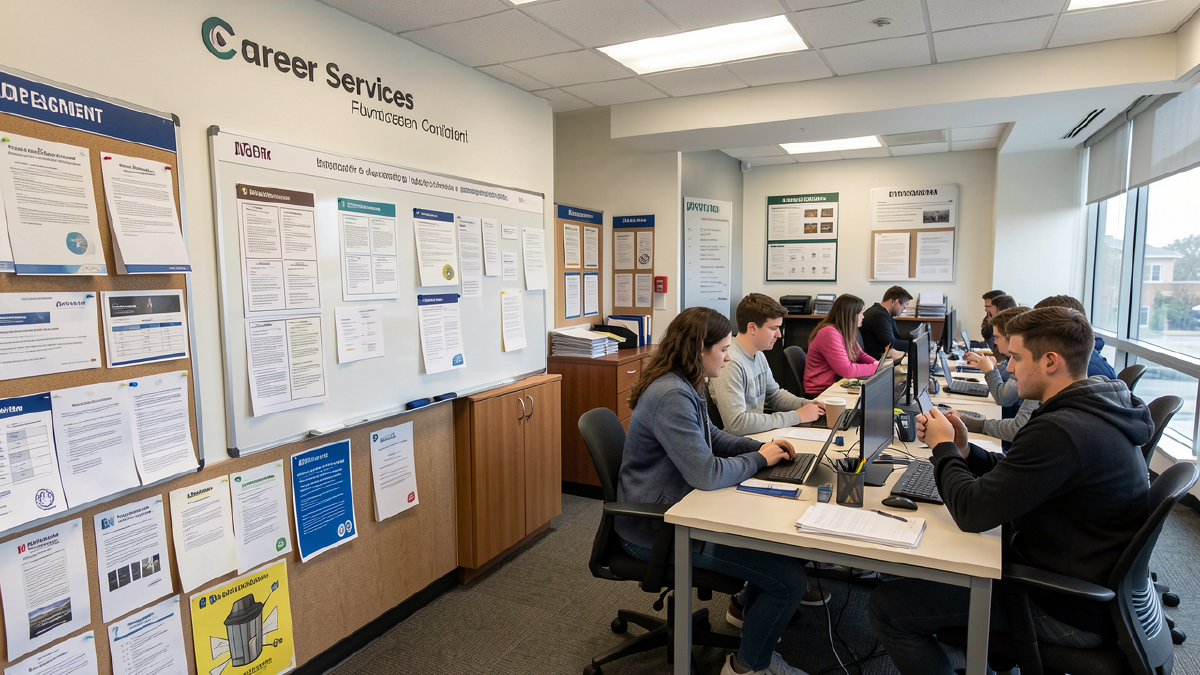
Career services offices within educational institutions represent an underutilized resource. Many community colleges and vocational programs maintain employer relationships specifically to place graduates. These offices know which employers are hiring, what their timelines look like, and how to connect graduates with opportunities. Formal integration between career services and work requirement compliance could ensure that graduates receive both job placement support and coverage continuation during their transition.
Workforce development boards coordinate training programs, employer relationships, and job placement services across regions. American Job Centers already serve many of the same populations subject to Medicaid work requirements. When someone completes a workforce development board-funded training program, that completion should automatically trigger grace period protections in Medicaid systems. The data already exists; it merely needs to flow to the right place.
MCO care coordinators have obvious interests in member coverage continuity. When MCOs know that members are enrolled in educational programs, they can anticipate graduation dates and proactively plan for transitions. Care coordination during the transition period might include connecting graduates with job search resources, ensuring prescription continuity during coverage uncertainty, and documenting any health conditions that might qualify for exemption if employment establishment takes longer than expected.
Employer partnerships create the most direct pathway from education to employment. When healthcare systems, manufacturing companies, or other employers partner with educational programs, they can commit to interviewing or hiring qualified graduates. These partnerships compress transition timelines by eliminating job search uncertainty. Some programs structure these relationships formally, with employer commitment to hire graduates who meet performance standards. These guaranteed placement arrangements effectively eliminate the transition gap entirely.
The Internship and Practicum Question#
Clinical rotations, practicums, and supervised field experiences occupy an ambiguous position in work requirement compliance. Students performing these activities invest substantial time in supervised practice that develops professional competencies. Yet this time often generates neither educational credit hours on a schedule that counts toward compliance nor wages that count as employment.
Nursing students illustrate the paradox most clearly. BSN programs require between eight hundred and one thousand clinical hours over several years of study. Students spend twelve-hour shifts in hospitals, nursing homes, and clinics, performing patient care under supervision. This work contributes directly to facility operations; students take vital signs, administer medications, assist with procedures, and document patient status. The work is real. But students are not paid, and clinical hours may not count toward the credit-hour calculations that determine educational compliance.
The disparity creates perverse incentives. A student who spends twelve hours in clinical rotation might generate fewer compliance hours than a student who spends three hours in lecture. The clinical experience is more demanding, more educationally valuable, and more directly connected to employment preparation. Yet compliance systems that count credit hours or classroom contact hours may undervalue the clinical component relative to its actual significance.
Other professional programs show similar patterns. Social work students complete field placements of several hundred hours. Teacher candidates student-teach for full semesters. Medical assistant students perform externships in clinical settings. Physical therapy assistant students complete clinical affiliations. In each case, students invest substantial time in supervised professional practice that neither pays wages nor generates conventional educational credit on the terms compliance systems recognize.
States should explicitly address how clinical, practicum, and field experience hours count toward work requirement compliance. Several approaches are possible. States could count supervised clinical hours at the same rate as classroom hours, recognizing that both represent educational activity. States could count clinical hours as partial employment, acknowledging that students perform real work even without compensation. States could exempt students during clinical rotation periods entirely, recognizing that the intensive nature of these experiences leaves little capacity for additional qualifying activity.
The worst outcome is ambiguity that leaves students uncertain whether their clinical hours count. A nursing student who believes clinical rotations satisfy work requirements, only to discover months later that they generated non-compliance, faces retroactive coverage termination for a misunderstanding that could have been prevented through clear policy communication.
Building Transitions That Work#
Education-to-employment transitions represent success scenarios. People complete training, obtain credentials, and secure employment in their fields. Work requirement policy should celebrate and support these transitions rather than creating coverage loss at the moment of achievement.
The current system penalizes exactly what it seeks to encourage. Someone who spends months in training, passes certification examinations, and secures employment loses coverage during the transition because administrative timelines don’t accommodate real-world hiring processes. This outcome serves no policy purpose. It doesn’t encourage work; the person is already working toward employment. It doesn’t reduce costs; coverage loss during transitions often leads to deferred care that increases costs when coverage resumes. It simply creates harm without corresponding benefit.
Grace periods represent the most direct solution. Automatic coverage continuation for a reasonable period following educational program completion prevents the completion cliff from causing coverage loss. The duration should match transition realities for different credential types, with longer periods for programs requiring licensure examinations and shorter periods for programs leading directly to employment.
Coordination among educational institutions, workforce systems, and Medicaid agencies can further smooth transitions. When these entities share information about program completion, job placement, and employment start dates, transitions can occur seamlessly without requiring individuals to navigate multiple bureaucracies during an already-complex life transition.
Clear policy regarding clinical hours, practicums, and field experiences eliminates ambiguity that currently leaves students uncertain about their compliance status. Explicit rules communicated at program enrollment allow students to plan their compliance strategies throughout their educational pathway rather than discovering problems after the fact.
Maria’s story could end differently. With a ninety-day post-completion grace period, her transition from CNA training through certification to employment would occur entirely within protected time. She would maintain coverage throughout, arrive at her new job healthy and insured, and transition smoothly to employment-based compliance. The policy change is simple. The benefit to people doing exactly what work requirements encourage is substantial.