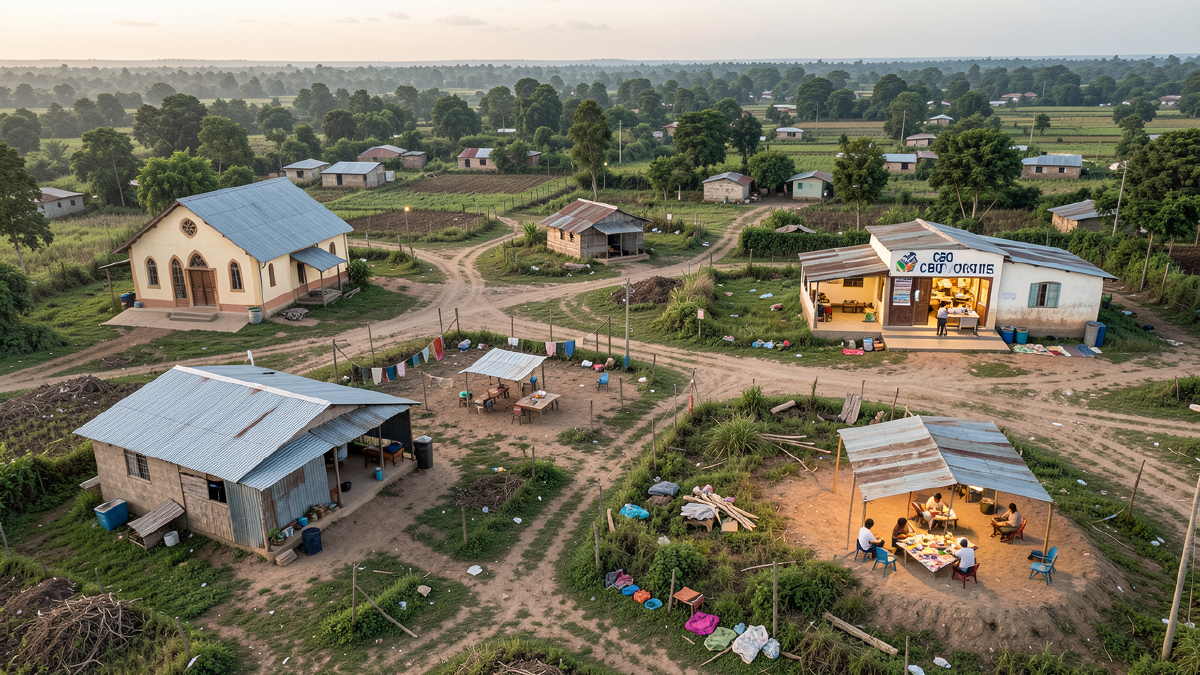
Work requirement navigation depends on an ecosystem that policy discussions assume and implementation reality must somehow conjure into existence. Across eight articles examining community-based organizations, faith communities, peer support models, and informal mutual aid networks, a pattern emerges: every organizational model contributes something essential, none provides comprehensive coverage alone, and the coordination infrastructure connecting them barely exists outside policy imagination. The challenge is not theoretical. 18.5 million expansion adults will begin facing compliance verification in December 2026. Some percentage will need help gathering documentation from multiple employers, understanding exemption criteria, or navigating state systems where verification happens. Professional community health workers can serve perhaps 10 to 15 percent of this population if every conceivable funding source materialized and workforce pipelines accelerated dramatically. The gap between professional capacity and actual need must be filled by some combination of faith volunteers, peer navigators, community-based organizations, and informal mutual support that policy has named but not built.
The synthesis reveals six fundamental insights about navigation infrastructure. First, distributed capacity across multiple organizational types is necessary because no single model scales to population needs, but distributed systems require coordination infrastructure that does not exist. Second, competency matters more than organizational affiliation, but matching mechanisms enabling clients to find appropriate providers regardless of institutional badge remain undeveloped. Third, rural CBO absence reflects structural economics rather than implementation failure, creating systematic disparities that cannot be solved through better contracting or investment in organizations that do not exist. Fourth, informal mutual aid provides substantial support capacity that verification systems struggle to recognize without destroying through documentation requirements. Fifth, realistic capacity estimates suggest verification assistance will remain undersupplied relative to need regardless of ecosystem development. Sixth, the fourteen-month timeline until implementation precludes building coordination infrastructure that ecosystem function requires.
The Architecture of Distributed Capacity#
Faith-based organizations provide trusted relationships grounded in weekly connection and spiritual authority. Congregations exist everywhere, know their members intimately, and operate from missions of service rather than contractual obligation. But churches cannot become compliance agencies without losing what makes them valuable. The volunteer coordinator who helps with verification paperwork between Sunday school and worship provides something government cannot replicate, but cannot scale to serve hundreds needing help across multi-county regions.
Grant-funded CBOs bring professional staffing, established relationships with government agencies, and infrastructure for service documentation. They can contract with states, handle sophisticated case management, and demonstrate outcomes to funders. But they face mission drift pressures when contract terms shape priorities, funding dependencies that compromise autonomy, and capacity constraints making population-scale service delivery impossible. The CBO that excels at youth development or food security must decide whether adding work requirement navigation serves core mission or dilutes organizational focus in ways that ultimately weaken both the original work and the compliance support.
Community Inclusive Social Enterprise models transform the equation by compensating peer navigators for expertise gained through lived experience. Someone who successfully navigated multi-employer verification while managing chronic illness possesses knowledge worth paying for. CISE recognizes this value, creating microenterprise opportunities that simultaneously build community capacity and generate income for people facing barriers in traditional labor markets. But CISE providers operate independently without collective bargaining power, face credentialing requirements that may protect quality or protect established organizations from competition, and navigate tensions between formalization enabling legitimacy and informality preserving accessibility.
Decentralized Autonomous Organizations represent the speculative edge of this ecosystem, using blockchain and smart contracts to coordinate peer navigation at scale without centralized hierarchical control. DAOs promise permissionless participation, transparent operations, efficient micropayments, and multi-stakeholder governance. They also require technical sophistication that most communities lack, operate under regulatory frameworks that do not yet exist, and face institutional resistance from organizations preferring contractors they can control over distributed networks they cannot. The DAO vision remains compelling but implementation timelines intersect poorly with December 2026 deadlines.
These organizational models were examined individually to illuminate distinct characteristics. But competency-based matching revealed that organizational affiliation matters less than specific capabilities when connecting people to appropriate support. The faith volunteer who personally navigated serious mental illness while maintaining employment brings competencies many professional CHWs lack. The CISE peer navigator with clinical background possesses medical knowledge exceeding standard certification. The matrix approach matches provider competencies to member needs regardless of organizational identity, recognizing that expertise derives from lived experience, training, and demonstrated capability rather than institutional badge.
This competency framework assumes matching infrastructure that barely exists. Who maintains the registry of navigator capabilities? Who facilitates warm handoffs when cases exceed provider competency? Who ensures quality across providers operating independently? The competency insight is sound. The implementation infrastructure is absent.
The Coordination Crisis#
The ecosystem in practice appears as fragmentation rather than integration. From Keisha’s perspective needing help with multi-employer verification, the organizational taxonomy matters not at all. She encounters a church volunteer who helped her cousin but attends different congregation, a CBO with three-week wait for appointments, a CISE provider charging twenty dollars she does not have this week, and a state hotline disconnecting after forty minutes on hold. Each pathway presents barriers and none connect seamlessly.
The coordination infrastructure enabling warm handoffs does not exist. A faith volunteer recognizes medical complexity requiring professional expertise but has no contact at any CISE provider or CBO. The volunteer tells the person to find their own navigator. The person gets overwhelmed and gives up. The system failed through nobody’s fault. No single entity owned the coordination problem.
Regional backbone organizations could fill this role by maintaining relationships across faith communities, CBOs, and independent providers, operating shared case management systems enabling handoffs without starting documentation over, coordinating training ensuring consistent competency across organizational boundaries, and facilitating matches between client needs and provider capabilities. Such organizations exist in some communities for collective impact initiatives or community health improvement partnerships. But extending these models to work requirement navigation requires investment nobody has committed and authority nobody possesses.
States could mandate and fund regional coordination but face implementation timelines precluding building new infrastructure. MCOs could require coordination among contracted navigators but have no leverage over faith volunteers or independent CISE providers. The backbone infrastructure that would make the ecosystem function remains unbacked.
Technology layer could provide provider directories, client portals, verification tracking, payment processing, outcome reporting, and handoff facilitation. Building this requires $2-3 million development cost plus $400,000-600,000 annual operations for regional platform serving 100,000 expansion adults. Who pays? State Medicaid agencies view this as MCO responsibility. MCOs view it as state infrastructure investment. CBOs lack capital for platform development. CISE providers cannot collectively fund shared systems. The investment gap leaves ecosystem operating through disconnected point solutions and informal processes.
The Rural Reality#
The rural CBO capacity crisis exposes the fundamental assumption failure. Policy discussions reference community-based organizations that simply do not exist across rural America. Counties with populations under 10,000 average fewer than 15 registered nonprofits total, most of which are churches, cemeteries, or social clubs rather than service providers. Counties under 5,000 frequently have no social service nonprofits at all.
This absence reflects structural economics rather than community deficits. Formal nonprofit organizations require minimum viable scales that rural populations cannot support. Research suggests community-based human service organizations require approximately 25,000-50,000 population to maintain sustainable operations with professional staff and formal infrastructure. Many rural counties fall well below these thresholds not because communities lack commitment but because population density makes formal organizational infrastructure economically impossible.
The places without CBOs are often the same places without broadband connectivity. Technology substitutes one infrastructure gap for another rather than solving underlying problems. When state Medicaid agencies build online-first verification systems, efficiency gains from digital processes come partly from excluding people who cannot use them. The systematic exclusion affects communities already facing multiple infrastructure deficits.
States bear responsibility for ensuring Medicaid requirements are actually achievable regardless of where enrollees live. This responsibility does not disappear because rural areas lack CBO infrastructure that urban implementation models assume. But states face impossible choices: build navigation capacity directly through state employees and county partnerships, invest in organizational development requiring years implementation timelines do not permit, accept coverage disparities between urban and rural populations, or fundamentally rethink verification approaches to accommodate areas lacking navigation infrastructure.
The Invisible Layer#
Beneath the visible infrastructure operates an invisible layer of informal mutual aid where neighbors help neighbors without documentation or formal agreements. Someone watches a friend’s children enabling shift work. Another provides rides to job interviews. A third helps with paperwork navigation. These exchanges happen through relationships and reciprocity rather than contracts or compensation.
The invisible infrastructure is substantial but unmeasured. Time use surveys suggest Americans spend billions of hours annually on unpaid care for family members and informal help to non-relatives. Some portion directly enables recipients to work, attend education, or contribute to community in ways that should qualify toward work requirements if properly recognized. But current verification systems do not recognize most informal support because documentation requirements exceed what informal networks naturally produce.
The recognition challenge creates fundamental tension. Informal mutual aid provides essential support, but its informality is feature rather than bug. Requiring documentation transforms mutual aid into something else. Someone providing twenty hours weekly of caregiving to neighbors might decline to formalize it if formalization means only bureaucratic burden. But if formalization means compensation through CISE models or community organization verification, the burden becomes worthwhile.
Light-touch recognition accepting community attestation without demanding hour-by-hour documentation might preserve mutual aid while enabling work requirement credit. Heavy documentation requirements demanding detailed records destroy mutual aid by making it too burdensome to continue. The policy choice between precision in verification and preservation of community capacity determines whether recognition helps or harms the informal networks it seeks to value.
Capacity Realities and Inevitable Shortfalls#
Realistic capacity estimates suggest verification assistance will remain undersupplied relative to need. If each volunteer or CISE provider can sustainably help twenty people monthly, reaching 13 million people requiring assistance requires 650,000 active helpers. The faith volunteer pathway assumes congregation members will donate time. Churches already struggle recruiting volunteers for existing ministries. The CISE pathway assumes people will develop peer navigator practices. Some will, but how many is uncertain. The CHW pathway assumes organizational employment with caseloads enabling sustained service, but at fifty-to-one ratios serving 13 million people requires 260,000 CHW positions. No funding stream approaches this scale.
The honest answer is that verification assistance will remain undersupplied regardless of ecosystem development. Some people will get help through faith communities, peer networks, CISE providers, or professional navigators. Some people will manage on their own despite burden. Some people will fail verification and lose coverage despite doing everything required because documentation did not happen correctly. The ecosystem improves outcomes compared to leaving everyone entirely alone. It does not solve the fundamental capacity problem.
Conflict and Competition#
The series has assumed different organizational models will cooperate, complement each other, and coordinate handoffs. This assumption deserves scrutiny. Faith organizations may resist their members receiving help from secular CBOs. CBOs may view CISE providers as unqualified competition. CISE providers may resent credentialing barriers that established organizations control. State administrators may favor contractors they can monitor over distributed networks they cannot control.
These conflicts do not emerge from bad actors. They reflect legitimate interests in tension. Faith leaders genuinely want to serve their congregations. CBO directors genuinely care about service quality. CISE providers genuinely have expertise to offer. State administrators genuinely need accountability mechanisms. The ecosystem brings competing interests together without structures for resolving conflicts when they arise.
Community convening processes could surface and address these tensions. Regional backbone organizations could facilitate dialogue across organizational boundaries. Shared governance structures could enable collective decision-making about resource allocation and coordination protocols. But building these structures requires time, trust, and investment that fourteen-month implementation timeline does not permit.
Bottom Line#
The navigation ecosystem policy discussions assume remains largely theoretical. The coordination infrastructure connecting faith volunteers to CBOs to CISE providers to professional CHWs barely exists outside policy imagination. Regional backbone organizations facilitating handoffs do not exist in most communities. Technology platforms enabling matching have not been built. Quality assurance mechanisms for distributed providers remain undeveloped. Rural CBO absence reflects structural economics that cannot be solved through better implementation. Informal mutual aid provides substantial capacity that verification systems struggle to recognize without destroying through documentation requirements.
Realistic assessment acknowledges that implementation will feature substantial fragmentation, capacity shortfalls, and coverage losses from system failures rather than individual non-compliance. The ecosystem described across this series provides valuable framework for understanding different organizational contributions and coordination requirements. But fourteen months until implementation prevents building infrastructure that ecosystem function requires. States should invest in coordination while accepting that ecosystem development requires time implementation timelines do not provide. The organizations that will navigate this successfully will start now, invest substantially, collaborate actively, and adapt continuously. Those that will struggle will wait passively, minimize investment, operate independently, and hope complexity resolves itself.