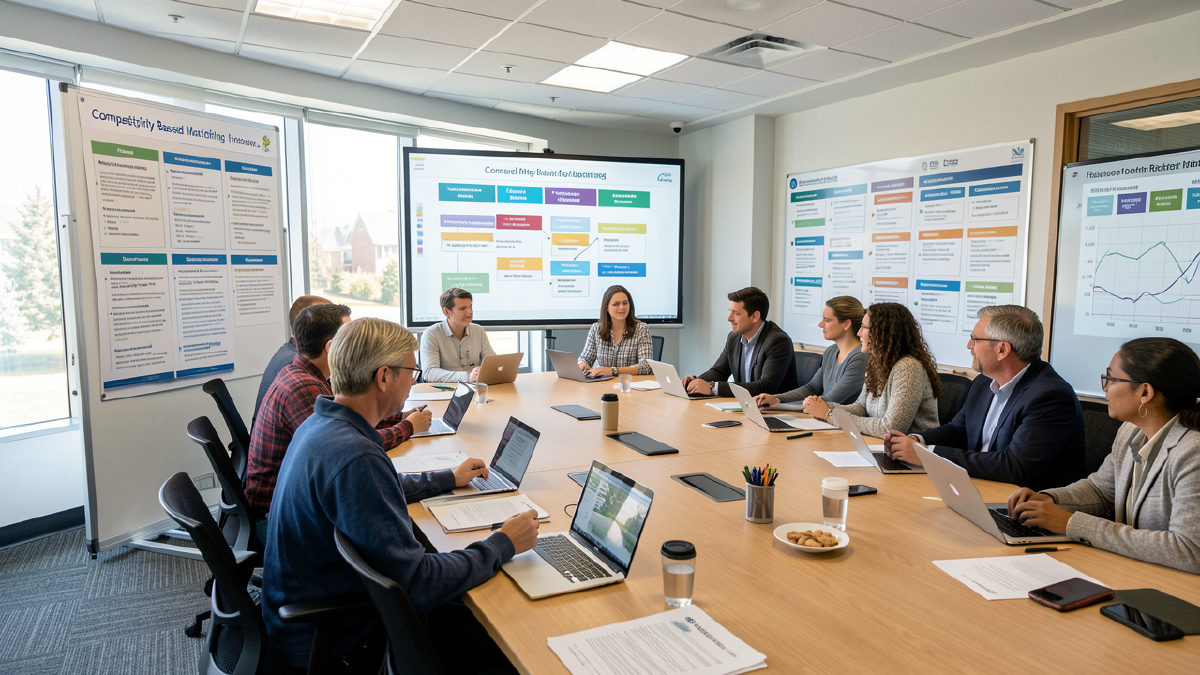
How navigation support works through competency-based matching rather than organizational tiers: lived experience, training, and specialization determine effectiveness regardless of whether someone volunteers through faith organizations, operates as CISE provider, or works as professional CHW
Beyond Organizational Tiers#
The first four articles in this series examined distinct organizational models: faith-based volunteers, grant-funded CBOs, Community Inclusive Social Enterprises, and Decentralized Autonomous Organizations. A simplistic interpretation would assign each model to complexity tiers with volunteers handling basic cases, CISE providers managing moderate complexity, and professional CHWs serving intensive needs. This organizational tier approach fails because it ignores the fundamental insight that competency derives from lived experience, training, and demonstrated capability rather than organizational affiliation.
A faith volunteer who navigated serious mental illness while maintaining employment for five years, completed specialized peer support training, and successfully helped ten congregation members obtain mental health exemptions brings competencies that many professional CHWs lack. A CISE peer navigator who worked as medical assistant before becoming disabled, completed exemption advocacy training, and effectively serves clients needing medical documentation brings clinical knowledge exceeding standard CHW certification. A professional CHW without lived experience navigating work requirements may struggle with basic verification more than a community volunteer who personally managed multi-employer documentation for years.
The effective model matches provider competencies to member needs regardless of organizational participation model. The question is not “which organizational type should serve this person” but rather “which specific capabilities does this situation require and who possesses them.” The answer may be a faith volunteer, CISE provider, professional CHW, or combination depending on competency alignment rather than organizational identity.
This competency-based approach requires fundamentally rethinking how navigation ecosystems function, how providers get credentialed and matched to clients, how compensation reflects capability rather than organizational tier, and how work requirement credit recognizes contribution regardless of participation model.
The Competency Matrix Framework#
The competency matrix operates on multiple dimensions creating sophisticated matching rather than linear tier assignment.
Lived Experience Domains include managing specific health conditions (mental illness, chronic disease, substance use recovery, disability), navigating particular barriers (multi-employer verification, exemption processes, appeals, informal caregiving documentation), succeeding with specific populations (immigrant communities, indigenous populations, LGBTQ individuals, people with intellectual disabilities), and overcoming structural challenges (housing instability, transportation barriers, childcare coordination, limited English proficiency).
Someone with diabetes who successfully maintained work and coverage while managing the condition brings lived experience expertise that clinical training cannot fully replicate. They understand what managing medication feels like while working irregular shifts. They know how provider appointments conflict with work schedules. They recognize the cognitive burden of remembering verification deadlines while managing blood sugar. This experiential knowledge enables them to support others facing similar challenges regardless of whether they volunteer through their church, operate as independent CISE provider, or work as employed CHW.
Training Modules and Certifications build on lived experience with procedural knowledge, technical skills, and specialized competencies. Basic modules cover verification procedures, exemption categories, documentation requirements, and professional boundaries. Intermediate modules address aggregation of multiple verification sources, medical exemption facilitation, appeals processes, and care coordination basics. Advanced modules focus on crisis intervention, specialized population support, complex barrier resolution, and system navigation for multiply-burdened individuals.
Providers select training matching their interests, lived experience strengths, and intended practice areas. Someone with personal recovery experience completes substance use disorder specialized training. Someone from refugee community completes cultural competency modules for immigrant populations. Someone who successfully appealed exemption denials completes appeals advocacy training. The modular approach enables competency development aligned with provider strengths rather than requiring identical training for everyone.
Professional certifications including Community Health Worker credentials, peer specialist certification, benefits navigation credentials, and specialized certificates (mental health first aid, trauma-informed care, motivational interviewing) add recognized qualifications. These certifications complement rather than replace lived experience and modular training. Someone may possess powerful lived experience and extensive training without professional certification. Another may hold certifications without relevant lived experience. The competency matrix values all three dimensions.
Demonstrated Outcomes prove capability through track record rather than credentials alone. Someone who successfully helped fifteen clients maintain coverage demonstrates navigation effectiveness regardless of formal qualifications. Someone who facilitated ten medical exemption approvals proves exemption support competency. Someone who prevented five coverage losses through crisis intervention shows capability managing acute situations. These outcome metrics validate competency in ways credentials cannot fully capture.
Technology platforms supporting competency-based matching track provider experience domains, completed training modules, relevant certifications, and demonstrated outcomes creating competency profiles. When members need support, matching algorithms consider which provider competencies align with member situation rather than which organizational type member should access.
Competency-Based Service Functions#
Different navigation challenges require different competency combinations. The matching happens through capabilities rather than organizational models.
Basic Verification Support#
Required Competencies: Understanding verification submission procedures, procedural knowledge of acceptable documentation, communication skills explaining requirements clearly, access to submission systems or credentialed submission authority, basic problem-solving for common documentation issues.
Provider Qualifications: Successful personal verification experience plus basic training (4-6 hours) covering submission protocols. No clinical knowledge required. No intensive care coordination needed.
Who Provides: Faith volunteers who navigated their own verification, CISE providers starting peer support practice, CHWs handling straightforward cases alongside complex work. The organizational model is irrelevant. The relevant qualification is procedural knowledge plus clear communication.
Compensation Range: Volunteer recognition through faith organizations. $15-25 for CISE consultation. Standard CHW hourly rate if provided by employed professional. The payment reflects time investment and organizational cost structure, not competency level for basic verification.
Work Requirement Credit: All verification support hours count equally toward providers’ own work requirements regardless of organizational model or compensation. Faith volunteer helping five people with verification documents fifteen hours monthly counting toward their requirements. CISE provider earning $20 per consultation documents same fifteen hours. CHW employee verification support hours already count through employment.
Exemption Navigation - General#
Required Competencies: Understanding exemption categories and qualification criteria, knowledge of documentation requirements for each category, coordination ability working between members and attestation sources, organizational skills compiling complete applications, persistence following up on pending applications.
Provider Qualifications: Relevant lived experience with exemption category plus specialized training (12-20 hours) covering exemption procedures, documentation standards, attestation coordination. Some categories require specific experience or training.
Who Provides: Faith volunteers who successfully obtained exemptions, CISE providers specializing in exemption support, CHWs with exemption expertise. A faith volunteer who obtained caregiver exemption for raising children with disabilities brings lived experience competency that professional CHW without caregiving experience lacks.
Compensation Range: Volunteer support through faith organizations. $30-60 for CISE providers depending on application complexity and sustained engagement required. Standard CHW rates when provided by employed professionals. Compensation reflects time investment and complexity, not organizational model.
Work Requirement Credit: All exemption navigation hours count equally. Faith volunteer spending twenty hours helping someone compile caregiver exemption application documents full twenty hours toward requirements. CISE provider earning $50 for same support documents identical hours. The compensation varies but work requirement credit remains consistent.
Exemption Navigation - Medical#
Required Competencies: Clinical knowledge understanding medical documentation, healthcare communication skills interfacing with providers, functional assessment awareness distinguishing impairment from diagnosis, medical terminology literacy, provider relationship access or ability to establish credibility with clinical staff.
Provider Qualifications: Healthcare background (nursing, medical assisting, social work, prior CHW experience) OR intensive clinical training (40+ hours) plus successful demonstration of medical exemption facilitation. Lived experience with relevant conditions adds credibility but healthcare knowledge is essential.
Who Provides: CHWs with clinical training typically excel. But faith volunteers with nursing backgrounds, CISE providers who worked in healthcare, or professionals transitioning to community support bring equivalent competency. A faith volunteer who worked as medical assistant for twenty years facilitates medical exemptions as effectively as CHW without healthcare background. The relevant qualification is clinical knowledge plus provider interface capability.
Compensation Range: $50-100 for CISE providers reflecting complexity and coordination intensity. Standard CHW rates for employed professionals. Higher compensation reflects specialized competency and extended time investment coordinating clinical documentation.
Work Requirement Credit: Medical exemption facilitation counts as specialized work. States may provide enhanced credit (1.5x hours) for specialized functions requiring advanced training or demonstrable expertise. Someone spending ten hours facilitating medical exemption might document fifteen hours toward requirements. This accommodation recognizes complexity and specialized knowledge.
Documentation Coordination - Multi-Source#
Required Competencies: Understanding aggregation procedures combining multiple verification sources, organizational skills managing parallel processes with different timelines, problem-solving ability identifying backup documentation when primary sources fail, member engagement capacity maintaining motivation through extended coordination, procedural knowledge of state aggregation requirements.
Provider Qualifications: Personal experience managing multi-source verification (multiple employers, education plus work, volunteer hours aggregation) OR specialized training (8-12 hours) covering aggregation procedures plus demonstrated success coordinating multi-source documentation.
Who Provides: CISE providers often excel because many developed peer support practices specifically because they successfully navigated multi-source verification themselves. Faith volunteers who juggle multiple jobs understand coordination challenges. CHWs provide organizational infrastructure supporting complex documentation processes. The organizational model matters less than lived experience with similar complexity and coordination capability.
Compensation Range: $40-75 for CISE providers depending on number of sources and coordination complexity. Standard CHW rates when provided by employed professionals. Compensation reflects extended engagement over multiple weeks and coordination intensity.
Work Requirement Credit: Complex documentation coordination counts as standard work hours. No enhanced credit unless state specifically recognizes specialized functions. A CISE provider spending twenty-five hours across a month coordinating multi-source verification documents twenty-five hours toward requirements.
Crisis Intervention#
Required Competencies: Mental health crisis recognition, risk assessment capability, knowledge of emergency resources and activation procedures, ability to maintain member safety during acute situations, access to clinical backup and organizational support, trauma-informed engagement skills, capacity to coordinate emergency responses.
Provider Qualifications: Crisis intervention training (20-40 hours), mental health first aid certification, demonstrated crisis management capability, AND organizational infrastructure providing supervision, backup, liability coverage, and emergency protocols. This combination typically requires professional CHW employment.
Who Provides: Almost exclusively professional CHWs employed through organizations providing necessary infrastructure. Faith volunteers and independent CISE providers generally lack organizational support enabling safe crisis intervention even if individually qualified. Exceptions exist when CISE providers maintain relationships with employing organizations providing backup while operating partially independently, or when faith organizations have professional mental health staff providing supervision.
Compensation Range: Standard CHW employment rates. Crisis capability typically requires full professional employment with benefits, supervision, and organizational support justifying higher compensation than independent practice models.
Work Requirement Credit: Crisis intervention hours count as standard professional employment toward CHW’s requirements if they’re subject to them. No enhanced credit despite specialization because professional employment compensation already reflects capability.
Specialized Population Support#
Required Competencies: Cultural competency and identity alignment with population served, language access matching population needs, understanding of population-specific barriers and resources, trusted relationships within community, knowledge of culturally appropriate engagement strategies.
Provider Qualifications: Community membership and cultural identity OR extensive cultural competency training (15-25 hours) specific to population served, language fluency when relevant, demonstrated trust relationships within community, understanding of population-specific navigation challenges.
Who Provides: Faith organizations serving immigrant, indigenous, or specific cultural communities provide natural platforms. CISE providers from communities they serve bring identity alignment and cultural trust. CHWs with cultural backgrounds or specialized training serve populations matching their competencies. The organizational model is completely irrelevant. What matters is cultural competency, language access, and community trust.
Compensation Range: Volunteer through faith organizations when community support is mission-aligned. $25-50 for CISE providers serving their communities. Standard CHW rates when employed professionals serve populations matching their backgrounds. Cultural competency commands standard rates not premium compensation despite specialization value.
Work Requirement Credit: All specialized population support counts as standard work hours. States should not differentiate between serving populations based on cultural competency despite real value difference. Faith volunteer providing culturally appropriate support to refugee families documents hours identically to any other navigation support.
Training Pathways and Competency Development#
Providers develop competencies through intentional pathways combining lived experience, modular training, and supported practice regardless of organizational model.
Entry Level: Providers with strong lived experience begin with basic training (4-8 hours) covering verification procedures, exemption overview, professional boundaries, and when to refer beyond scope. This enables them to provide basic support through whichever organizational model matches their circumstances. Faith volunteer with personal verification success completes basic training and begins helping congregation members. CISE provider who successfully maintained coverage while working multiple jobs completes same training and begins peer support practice. The training is identical. The organizational participation model reflects personal choice and community context.
Intermediate Level: Providers demonstrating competency with basic support and wanting to expand capability complete specialized modules (8-20 hours each) in exemption advocacy, documentation coordination, appeals processes, or population-specific support. Someone passionate about helping others with mental health conditions completes mental health exemption facilitation training. Someone from immigrant community completes cultural competency and language access training. These intermediate providers handle moderate complexity cases through whichever organizational model they participate in.
Advanced Level: Providers pursuing specialist competencies complete intensive training (40+ hours) in crisis intervention, medical exemption facilitation, multiply-burdened population support, or system navigation for complex cases. These advanced competencies typically require organizational infrastructure (supervision, backup, liability coverage) meaning most advanced practitioners work as employed CHWs. But advanced training remains accessible to faith volunteers and CISE providers who may use it supporting professional development goals, serving specific populations where advanced capability is needed, or transitioning toward CHW employment.
Certification Pathways: Providers can pursue professional certifications (CHW, peer specialist, benefits navigator) through training that builds on modules they’ve already completed. Someone who completed basic, intermediate, and advanced training modules accumulates 80-120 training hours. Adding certification-specific content brings them to 120-160 hours required for CHW certification. This progressive pathway enables certification without redundant training. The certification adds professional credential but doesn’t negate the competency they demonstrated before certification through lived experience, modular training, and successful outcomes.
Continuing Education: All providers regardless of organizational model should complete periodic continuing education (8-12 hours annually) staying current on policy changes, sharing effective practices, and maintaining competency. Faith organizations can host training sessions for volunteers. CISE provider networks offer peer learning opportunities. CBOs provide continuing education for employed CHWs. Technology platforms deliver accessible online training. The continuing education maintains competency across organizational models.
Compensation Structures Reflecting Competency and Complexity#
Compensation varies based on task complexity, provider specialization, time investment, and organizational cost structure rather than rigid tier assignment.
Basic Support ($0-25 per engagement): Faith volunteers typically provide unpaid support through religious service. CISE providers charge modest fees ($15-25) reflecting brief time investment and straightforward procedural support. CHWs providing basic verification support during employed hours receive standard hourly rates but aren’t paid extra for basic versus complex tasks.
Moderate Complexity ($30-75 per engagement): CISE providers handling sustained documentation coordination, general exemption support, or multi-session problem-solving charge rates reflecting extended time investment over weeks. Faith volunteers may provide some moderate complexity support unpaid when mission-aligned. CHWs manage moderate complexity cases as standard employment function.
Specialized Functions ($50-150 per engagement): Medical exemption facilitation, complex appeals advocacy, crisis stabilization planning (not acute crisis intervention which requires organizational employment), and intensive multiply-burdened support command higher compensation reflecting advanced competency and substantial time investment. Primarily CISE providers with specialized training or professional CHWs operate at this level.
Organizational Employme nt ($40,000-65,000 annually): Professional CHWs receive salaries reflecting full-time work, organizational infrastructure costs, supervision, benefits, and advanced competency. Employment provides stable income, career pathway, professional development support, and access to organizational resources enabling complex case management.
The compensation differences reflect time investment, specialized competency, organizational overhead, and market sustainability rather than inherent competency hierarchy. A faith volunteer with equivalent capability to professional CHW serves unpaid through religious calling. A CISE provider with similar competency earns income enabling work requirement compliance. A CHW receives professional salary supporting career sustainability. All three may provide equivalent quality support for members matching their competencies.
Work Requirement Credit Consistency: Regardless of compensation variation, work requirement credit remains consistent based on hours invested. Faith volunteer providing unpaid support documents hours toward requirements identically to CISE provider earning fees for equivalent support. States should not differentiate credit based on compensation except when explicitly recognizing specialized functions requiring advanced training.
Enhanced Credit for Specialization: Some states may provide enhanced work requirement credit (1.5x actual hours) for specialized functions requiring substantial training or demonstrated expertise. Medical exemption facilitation requiring clinical knowledge might qualify. Crisis planning requiring mental health training might qualify. Appeals advocacy requiring legal procedure understanding might qualify. This enhanced credit recognizes that specialized support requires investment in competency development and provides disproportionate value. But standard support regardless of organizational model counts at standard rates.
Matching Algorithms and Referral Protocols#
Technology-enabled matching connects members to providers with appropriate competencies regardless of organizational affiliation.
Competency Profiles: Providers complete profiles documenting lived experience domains, completed training modules, relevant certifications, demonstrated outcomes with previous clients, language capabilities, cultural competencies, geographic service area, and availability. These profiles enable algorithmic matching considering multiple dimensions simultaneously.
Member Need Assessment: When members need support, intake processes identify required competencies rather than organizational preferences. Someone needs help with multi-employer verification, speaks Spanish, and has diabetes affecting work capacity. The system identifies providers with multi-employer lived experience, Spanish fluency, and chronic disease understanding. Those providers might be faith volunteers, CISE practitioners, or CHWs. The algorithm presents options across organizational models.
Member Choice: Members select from algorithmically matched providers considering organizational preference, personal connection, prior relationships, and practical factors like location and availability. Someone active in their church may prefer faith volunteer despite CISE provider having slightly more relevant experience. Someone wants paid professional relationship may choose CISE provider or CHW over free faith volunteer support. The algorithm enables informed choice rather than dictating assignment.
Warm Handoffs: When member needs exceed provider competency, structured referral protocols facilitate handoffs. Faith volunteer recognizing medical complexity refers to CISE provider with healthcare background. CISE provider identifying crisis risk connects to professional CHW with organizational backup. CHW supporting someone who stabilizes refers back to community provider for maintenance support. These handoffs happen based on competency match not organizational tier.
Multi-Provider Models: Complex cases may involve simultaneous support from multiple providers across organizational models. Member receives medical exemption facilitation from CISE provider with nursing background, cultural support from faith community volunteer, and care coordination from professional CHW. The competency matrix enables this layered support matching different capabilities to different needs within same person’s situation.
Geographic Distribution and Access Equity#
Competency-based matching enables navigation access across diverse communities by recognizing capability wherever it exists rather than requiring organizational presence.
Rural Communities: May have limited professional CHW presence but active faith congregations with volunteers completing training. Competency-based credentialing enables those volunteers to provide substantial support including moderate complexity services if they develop appropriate competencies. Professional CHW support happens via telehealth or periodic regional visits for situations requiring organizational infrastructure.
Under-Resourced Urban Communities: May lack established CBOs but have strong community networks, resident expertise, and CISE provider potential. Recognizing and credentialing community-based competency enables service delivery without waiting for organizational infrastructure development. Professional backup supports community providers managing complex cases.
Immigrant Communities: Often have limited culturally appropriate professional services but strong faith communities and natural helping networks. Credentialing community members with lived experience navigating systems, completing training in their languages, and recognizing cultural competency as specialized qualification enables population-appropriate support through community structures.
Indigenous Communities: Require culturally specific approaches respecting tribal sovereignty and cultural protocols. Competency-based models enable tribal members with lived experience and cultural knowledge to provide community-based support through tribal organizations, native faith communities, or CISE models while professional CHWs with appropriate cultural training provide specialist backup.
The geographic equity emerges from recognizing distributed competency rather than requiring uniform organizational presence everywhere. Professional CHWs concentrate in areas with sufficient population density supporting organizational operations while community-based providers fill gaps through competency they develop locally.
Quality Assurance Across Competency Levels#
Quality monitoring focuses on outcomes and competency maintenance rather than organizational compliance.
Outcome Tracking: All providers regardless of organizational model track coverage retention rates, successful verification submission, exemption approval rates, and member satisfaction. These outcome metrics demonstrate effectiveness across competencies and organizational types. Someone providing excellent support shows strong outcomes whether they volunteer through faith organization, operate as CISE provider, or work as employed CHW.
Competency Verification: Periodic reassessment verifies competency maintenance through outcome review, continuing education completion, and practice evaluation. Providers showing declining outcomes receive remediation support regardless of organizational model. Faith volunteers access additional training. CISE providers receive mentorship from experienced practitioners. CHWs get supervision addressing competency gaps.
Scope Adherence: Monitoring ensures providers operate within competency boundaries. Faith volunteers attempting medical exemption facilitation without healthcare knowledge receive redirection to appropriate scope. CISE providers trying crisis intervention without organizational backup get referred to professional CHWs. CHWs providing culturally inappropriate support to populations outside their competency receive cultural training. Scope monitoring protects members and providers across organizational models.
Member Feedback: Satisfaction surveys and complaint mechanisms enable members to report concerns about any provider regardless of organizational type. Patterns of member dissatisfaction trigger quality review. Exemplary feedback validates competency and supports provider reputation building.
The Path Forward#
The competency-based matrix approach matches provider capabilities to member needs through sophisticated understanding of lived experience value, training specialization, and demonstrated outcomes rather than crude organizational tier assignment. Faith volunteers with relevant lived experience and specialized training provide moderate to advanced support. CISE providers with healthcare backgrounds and exemption expertise handle medical documentation equal to professional CHWs. Professional CHWs with organizational support provide crisis services and intensive coordination that community models cannot safely deliver.
Compensation reflects time investment, specialized competency, and organizational infrastructure rather than inherent capability hierarchy. Work requirement credit recognizes hours invested regardless of compensation level with possible enhanced credit for specialized functions requiring substantial training. Quality assurance focuses on outcomes and competency maintenance across all organizational models.
This sophisticated approach enables comprehensive navigation coverage matching the right capabilities to the right needs at sustainable cost by recognizing competency wherever it exists rather than requiring uniform professional services everywhere or limiting volunteers to only basic support despite their expertise.
Previous in series: Article 8D, “Decentralized Autonomous Organizations and Programmable Support”