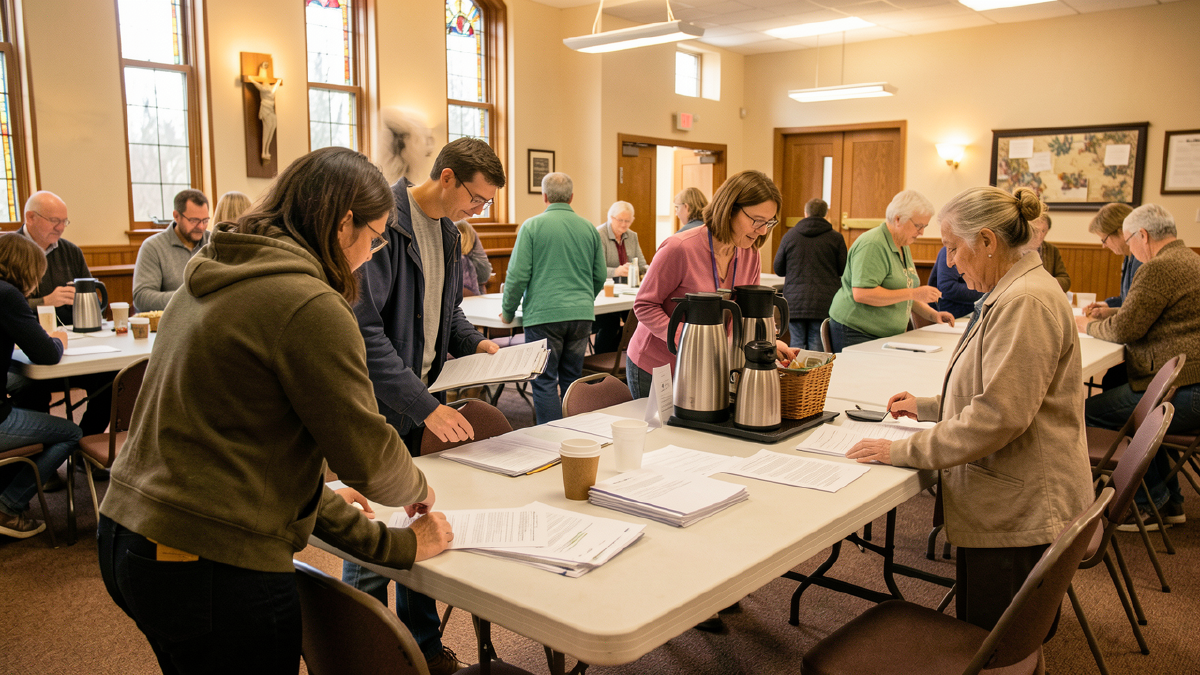
Faith-based organizations occupy unique positions in the work requirement navigation ecosystem through weekly connection, spiritual authority, and community trust that secular institutions cannot replicate. Congregations exist everywhere, know their members intimately through regular worship and fellowship, and operate from missions of service rather than contractual obligation. But churches cannot become compliance agencies without losing what makes them valuable. The volunteer coordinator who helps with verification paperwork between Sunday school and worship provides something government cannot replicate, but cannot scale to serve hundreds needing help across multi-county regions.
The central tension: faith organizations provide irreplaceable relational infrastructure but risk compromising spiritual mission if verification assistance dominates congregational life. Success requires understanding what churches can contribute authentically while recognizing inherent limitations in scale, technical capacity, and sustainability. States enabling faith participation without overwhelming congregational resources must design systems respecting spiritual boundaries, minimizing administrative burden, and protecting both volunteers and organizations from excessive liability.
What Faith Organizations Actually Contribute#
Churches, mosques, synagogues, and temples provide three things formal systems struggle to deliver: trusted relationships built through weekly connection and shared spiritual practice, judgment-free support grounded in religious commitments to serve rather than evaluate, and geographic reach extending to communities that formal social service infrastructure never reaches.
The pastor who knows someone’s work schedule, understands their childcare challenges, and has walked with them through health crises can help with verification documentation in ways professional navigators cannot match. Trust built through spiritual community creates openness about employment situations, exemption qualifying conditions, and documentation challenges that people may not share with government agencies or contracted providers.
Weekly worship creates regular touchpoints for verification reminders, documentation support, and troubleshooting assistance. Someone struggling with multi-employer verification sees their volunteer coordinator every Sunday rather than scheduling appointments weeks out. The coordinator can provide five-minute check-ins addressing simple questions immediately rather than requiring case management sessions. This informal support prevents small documentation problems from becoming coverage losses.
Faith-based support operates from spiritual commitment rather than contractual obligation. The volunteer coordinator helps because their faith compels service, not because performance metrics require certain outcomes. This motivation creates persistence through complications, flexibility when circumstances change, and genuine care about outcomes rather than compliance statistics. The person receiving help experiences this difference profoundly.
Geographic reach matters especially in rural and immigrant communities. Small-town congregations exist in counties with no CBOs, no social service agencies, and minimal government presence. Volunteer coordinators in churches serving populations of 150 can provide verification assistance that professional systems cannot cost-effectively deliver to dispersed rural populations. Immigrant communities trust mosques and temples when they avoid government systems, receiving culturally appropriate navigation in languages state systems don’t support.
Reciprocal Participation Models#
Faith organizations enable reciprocal models where people meet work requirements through volunteering while simultaneously building community capacity. Someone successfully navigating work requirements themselves volunteers helping others facing similar challenges. They spend twelve hours monthly as peer navigator helping congregation members with verification documentation, exemption applications, and compliance questions. These hours count toward their own requirements while building community navigation capacity.
The administrative infrastructure supporting reciprocal models need not be sophisticated. Volunteer coordinators maintain simple spreadsheets recording volunteer names, activities, hours, and dates. Monthly reporting to state systems happens through web portal submissions taking minutes. Volunteers can check compliance status through state member portals seeing verified hours.
States face policy choices about whether volunteer hours at faith organizations count equally to employment hours or face monthly caps. Arkansas limits volunteer and job search activities to combined maximums protecting against people meeting requirements entirely through unpaid activity. Georgia counts volunteer hours equally to employment recognizing community contribution as legitimate work. These choices reflect different philosophical views about work requirement purposes.
Training and skill development through volunteer activities create additional pathways for meeting requirements while building employment capacity. Someone volunteers helping with congregation website and social media, learning digital marketing skills applicable to paid employment. Another coordinates facility maintenance, developing property management capabilities. A third assists with financial record-keeping, gaining bookkeeping experience. These activities simultaneously meet work requirements, provide community service, and develop marketable skills.
Constitutional and Operational Boundaries#
Charitable Choice provisions in federal law explicitly authorize faith-based organizations to participate in social service delivery while maintaining religious character. Organizations can display religious symbols, maintain spiritual mission statements, and select staff based on religious criteria while receiving government funding or participating in verification networks. But constitutional boundaries prevent states from preferring one religion over others or requiring religious participation for public benefit access.
For work requirements, this means states can recognize volunteer hours at faith organizations without evaluating religious content of activities. Organizing food pantry serving entire neighborhood qualifies regardless of whether the pantry includes prayer. Leading Bible study exclusively for congregation members sits in gray area where state interpretations vary. Faith organizations document volunteer activities with attention to community impact rather than spiritual content.
The peer support pathway creates particularly valuable reciprocal models where constitutional concerns are minimal. Someone helping others navigate verification systems provides secular service even when coordination happens through religious institution. The help qualifies as work regardless of where it occurs or what motivates it spiritually.
Implementation Realities and Limitations#
Faith organizations provide irreplaceable infrastructure but cannot substitute for professional capacity at population scale. A congregation with 300 members might have 20 subject to work requirements, perhaps 5 needing intensive documentation support. One dedicated volunteer coordinator can reasonably serve 5 people with 2-3 hours weekly time investment. Scaling this to serve thousands requires thousands of congregations with dedicated coordinators, an assumption unsupported by evidence about volunteer recruitment realities.
Churches already struggle recruiting volunteers for existing ministries including Sunday school teaching, food pantry service, youth programs, and pastoral care. Adding work requirement navigation competes for volunteer time and congregational attention. Some congregations will prioritize verification assistance. Many will not. Policy cannot compel congregational priorities.
Technical capacity limitations affect what faith volunteers can realistically provide. Troubleshooting state portal errors, navigating complex exemption applications, or addressing verification rejections may exceed volunteer expertise. Faith organizations provide essential relational support and basic documentation assistance. Professional navigators handle technical complexity requiring specialized knowledge.
Sustainability concerns affect long-term navigation capacity. Volunteer coordinators burn out, move away, or face their own life circumstances requiring stepping back. Congregational leadership changes affect program priorities. Funding fluctuations impact administrative support. Faith-based capacity expands and contracts based on factors beyond policy control. States depending entirely on faith organizations for navigation infrastructure risk coverage losses when congregational capacity shifts.
State System Design for Faith Participation#
States maximizing faith organization contribution without overwhelming congregational resources should design systems with specific characteristics. Verification platforms should be web-based accessible through any browser without special software, mobile-responsive allowing coordinators to document hours from phones, and include paper backup options for congregations without reliable internet access.
Training should be modular and accessible through short video tutorials available on demand, written guides at accessible reading levels in multiple languages, and peer learning opportunities where experienced congregations help those just starting. Regional workshops bringing multiple congregations together for shared learning create networks supporting sustained participation.
Credentialing should verify organizational legitimacy without imposing excessive burden through simple registration confirming 501(c)(3) status or religious organization exemption, designation of authorized submitters with basic identity verification, and brief orientation to submission protocols. Recognition that faith organizations already have internal accountability structures through denominational hierarchies or congregational governance prevents duplicative oversight.
Liability protection must enable participation without exposing congregations to excessive risk through good faith provisions protecting volunteer coordinators from penalties for unintentional errors, clear guidance distinguishing honest mistakes from fraud, and indemnification for congregations participating in state-sanctioned verification networks.
Bottom Line#
Faith organizations provide trusted relationships, weekly connection, and geographic reach that formal systems cannot replicate. They enable reciprocal models where people meet requirements through community contribution while building capacity. But churches cannot become compliance agencies without compromising spiritual mission. Realistic policy recognizes what faith organizations authentically contribute, respects congregational autonomy, minimizes administrative burden, and does not assume faith-based capacity can substitute for professional navigation at population scale. States designing systems for faith participation while protecting spiritual integrity will leverage irreplaceable community assets. Those imposing bureaucratic requirements incompatible with congregational life will drive organizations away from participation.