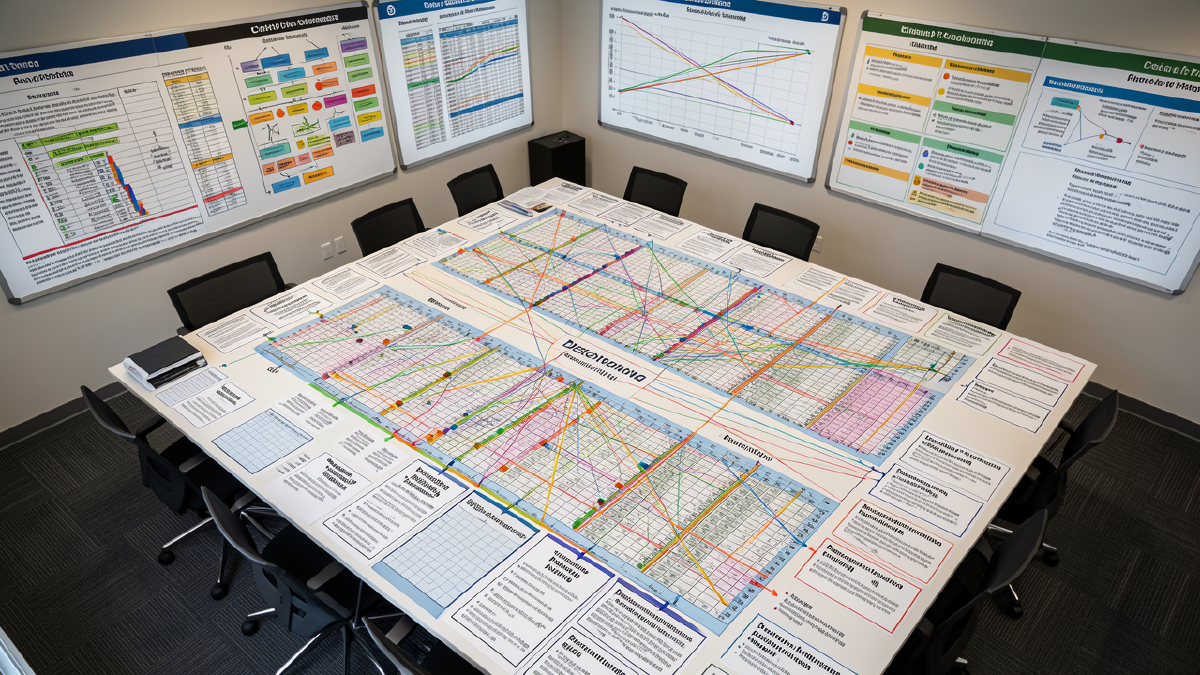
States implementing work requirements face not a single policy decision but hundreds of granular choices across exemption design, verification architecture, coordination timing, delegation authority, and tribal sovereignty. Each decision interacts with others in ways that are difficult to anticipate: exemption category choices ripple through verification processes, coordination timelines shape who can access exemptions before deadlines pass, and delegation frameworks determine whether third parties participate in verification at all. This decision matrix synthesizes the rulemaking choices from Series 7 articles and handbooks (7A through 7E) while cross-referencing accommodation requirements for the sixteen vulnerable populations analyzed in Series 11 and Article 4D, creating a consolidated framework that reveals both the scope of required decisions and the interdependencies between them.
Constitutional and Legal Framework#
The matrix operates within constraints established across the Series 7 legal analyses. Federal law under Section 1115 waiver authority permits state variation in exemption categories, verification methods, and coordination timelines, but constitutional due process requirements establish procedural floors for notice, appeals, and coverage continuation during dispute resolution. CMS waiver review parameters constrain how restrictive states can be while still obtaining federal approval. The delegation boundaries identified in 7D (data collection delegable, final eligibility determination not delegable) apply across all matrix domains. Tribal sovereignty requirements from 7E create distinct legal obligations for states with significant Native American populations. The matrix framework assumes states are designing within these boundaries, not testing them.
Core Regulatory Choices#
The matrix organizes decisions into six domains, each containing multiple decision points with identifiable alternatives and population-specific consequences.
Exemption rulemaking spans age thresholds (ranging from 50 to 65 for upper automatic exemption), Social Security disability integration (automatic data matching versus manual application), caregiver exemptions (child age thresholds from under 1 to under 13, plus adult caregiving standards), medical exemption frameworks (diagnosis-based, functional assessment, or hybrid approaches), episodic condition accommodations (automated utilization triggers versus static categories), and temporary disability duration rules. The recommended hybrid medical exemption approach combines automatic exemptions for severe conditions (active cancer treatment, organ failure, psychiatric hospitalization within 90 days, hospice enrollment) with provider attestation pathways using single-page checkbox forms requiring no detailed diagnosis, audited at 5 percent annually.
Verification decisions encompass employer integration by size (large employers through API, small employers through web portals and industry intermediaries), self-employment and gig economy pathways, seasonal work accommodation through hour banking, and communication architecture across languages and literacy levels. The matrix identifies that large employer automation could verify 40-50 percent of expansion adults through perhaps 5,000 to 10,000 employers, leaving the remaining population requiring alternative pathways that must function simultaneously.
Coordination choices include redetermination synchronization (synchronized versus staggered cycles), grace period duration and philosophy (30 to 90 days for first-time transitions, proportional versus uniform for exemption expirations), appeals architecture (coverage continuation versus termination during disputes), and system failure accommodation protocols.
Delegation decisions span safe harbor standards for employers, providers, educational institutions, MCOs, and community organizations; credentialing requirements balancing accountability against access; liability allocation for errors across entity types; and audit frameworks balancing fraud prevention against participation incentives.
Tribal provisions require IHS exemption operationalization, data sovereignty agreement negotiation, tribal administration pathways, and subsistence economy recognition.
Trust and Burden Framework#
The matrix reveals that across all six domains, states face a consistent meta-choice between compliance-oriented and recognition-oriented system design. Compliance systems place burden on individuals to prove they meet requirements through documentation, application, and reporting. Recognition systems invest in infrastructure that identifies existing compliance and exemption eligibility through automated data matching and proactive outreach. The cumulative effect of choosing compliance orientation across hundreds of individual decisions creates systems where documentation burden, not work capacity, determines coverage outcomes. This is the central finding that Arkansas 2018 demonstrated empirically and that the matrix framework makes visible structurally.
The population accommodation tables in Part VI of the matrix make the burden distribution concrete for sixteen specific populations. Someone experiencing serious mental illness (11B) who is psychiatrically hospitalized when a verification deadline passes needs automatic exemption triggers and deadline extensions, not application forms. Someone experiencing homelessness (11E) who lacks a stable address needs shelter voicemail alternatives and trusted intermediary submission pathways, not mailed notices. Someone reentering from incarceration (11D) needs 90-day post-release automatic exemptions and reentry organization intermediaries, not immediate compliance expectations. Each population accommodation represents a choice about whether to design systems for the people actually navigating them.
Interdependencies and Critical Paths#
The matrix’s most significant contribution is making sequential dependencies visible. Data sharing agreements with SSA, DOL, IHS, and HMIS must be executed by March 2026 before system development can incorporate automatic exemptions. Provider portal development requires payment structure finalization by April 2026. Employer credentialing cannot begin until verification architecture decisions are final by May 2026. MCO contract amendments require delegation authority frameworks by June 2026. Tribal consultation must produce government-to-government agreements before any tribal provisions can be implemented, on timelines states do not control. Special population accommodations must be coded into eligibility systems during July through September 2026 development windows.
These dependencies mean that policy decisions not yet made in early 2026 create cascading delays across subsequent implementation stages. States that have not finalized exemption categories cannot tell vendors what to build. States that have not established safe harbor frameworks cannot begin employer credentialing. States that have not initiated tribal consultation cannot operationalize IHS exemptions. The matrix makes visible what narrative analysis can obscure: the sheer number of decisions required and the sequential relationships between them create implementation timelines that are mathematically incompatible with December 2026 compliance for states starting late.
Series 11 Population Accommodations#
The matrix cross-references all sixteen Series 11 populations plus 4D (Autism/IDD) against every regulatory domain, creating accommodation specifications that translate population analyses into concrete rulemaking guidance. Pregnant and postpartum populations (11A) need postpartum extensions through 12 months with acceptable documentation formats including waitlist screenshots for childcare unavailability. Substance use disorder populations (11C) need 42 CFR Part 2 confidentiality protections allowing functional attestation without diagnosis disclosure, plus recognition that relapse triggers automatic exemption rather than termination. Justice reentry populations (11D) need 90-day post-release automatic exemptions with probation officer verification pathways. Geographic isolation populations (11I) need 60-day deadlines rather than 30, phone verification availability, and elimination of internet-only requirements. The intersectionality analysis (11L) calls for graduated requirements based on barrier count and single applications covering multiple exemption categories.
Implementation Timeline Realities#
The system integration requirements table identifies seven major external data systems requiring connection before December 2026: SSA for disability exemptions, DOL for unemployment exemptions, Department of Corrections for incarceration status, National Student Clearinghouse for education verification, HMIS for homeless status, VA for veteran disability, and IHS for tribal eligibility. Each requires negotiated agreements, technical development, testing, and deployment. Most states have not begun these negotiations. The matrix does not solve the timeline problem; it makes the problem’s dimensions visible in a format that forces states to confront the gap between what must be done and what time permits.
Bottom Line#
The decision matrix reveals that work requirement implementation is not a single policy choice but a web of hundreds of interconnected decisions whose cumulative effect determines coverage outcomes. States that approach these decisions individually, without reference to interdependencies and population-specific consequences, will build systems where unintended interactions create coverage losses that no single decision intended. The matrix provides the framework for coherent decision-making. Whether states use it depends on whether they treat regulatory architecture as policy-making or as administrative procedure, and the eight-month timeline determines whether deliberate design or emergency improvisation shapes the architecture that 18.5 million expansion adults will navigate.