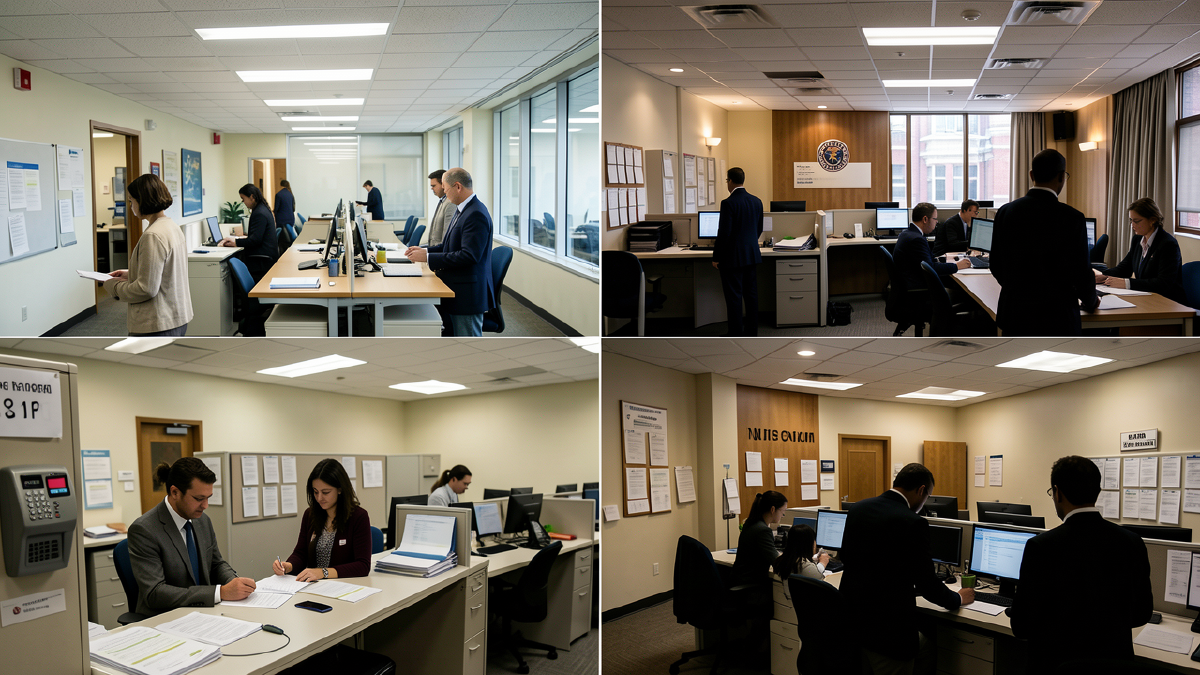
When work requirements take effect in December 2026, approximately 12-14 million working people on Medicaid expansion will need employer documentation multiple times yearly. This represents a fundamental transformation of the American workplace, conscripting millions of employers as agents of the social safety net whether they want that role or not. But the infrastructure needed to make this transformation work does not exist. No one designed it, no one funded it, and no one is responsible for building it.
The five articles in this series reveal a coordination failure of extraordinary scope. Employers face legal obligations without legal authority, administrative burdens without administrative capacity, and liability exposure without liability protection. Workers navigate verification systems that cannot accommodate the labor market realities they actually face: variable hours, multiple jobs, seasonal work, informal employment, and industry structures that move people between employers weekly. Meanwhile, union infrastructure that could solve verification problems for millions of workers remains disconnected from Medicaid systems that were designed before integrated care became policy priority.
The Conscription Without Compensation#
The most fundamental tension across all five articles is that employers never volunteered for this role. As MRWR-5A establishes, work requirements create both obligations and opportunities for employers, but the obligations come first and the opportunities remain largely theoretical. A family restaurant completing verification forms is not doing it instead of nothing; they are doing it instead of managing inventory, handling customer complaints, or covering a shift for an absent employee. For small businesses especially, this represents real cost on thin margins.
MRWR-5D reveals the predictable consequence: widespread employer reluctance that ranges from passive non-cooperation to active avoidance. Ray Gutierrez’s landscaping company, which let verification forms sit in a filing cabinet until employees lost coverage, exemplifies rational employer behavior when participation is voluntary but time-consuming. The employer faces no penalty for non-response, the employee’s healthcare is valuable to the employee but not the employer, and the employer has legitimate concerns about immigration enforcement, liability exposure, and administrative burden.
This reluctance creates a verification system that systematically advantages workers whose employers cooperate and disadvantages those whose employers do not. Someone working full-time for a Fortune 500 retailer with sophisticated HR systems gets automatic verification. Someone working full-time for a small landscaping company where the owner fears immigration scrutiny loses coverage despite identical work patterns. The policy ostensibly measures work, but actually measures which workers happen to have cooperative employers.
The scope of employer diversity examined in MRWR-5B explains why one-size-fits-all verification approaches fail structurally. A large employer with 5,000 employees, dedicated HR departments, and sophisticated IT systems faces entirely different operational realities than a family business with handwritten time sheets. Self-insured employers have direct financial incentives from healthcare cost management that small employers lack. Taft-Hartley plans enable coordination across multiple employers impossible in traditional employment. Public sector employers can leverage government infrastructure unavailable to private employers.
Policy designed around the operational capacity of large employers with sophisticated systems becomes impossible for small employers to execute. Policy designed for simplicity that small employers can manage becomes inefficient for large employers with automation capacity. The employer ecosystem is too diverse for uniform approaches to work well across all segments simultaneously.
The Gap Between Employment and Compliance#
MRWR-5C exposes the structural disconnect between being employed and meeting an 80-hour monthly threshold. Marcus’s three jobs totaling 78 hours in October, 84 in November, 91 in December, and 58 in January illustrate that variable hours schedules create compliance volatility that individual workers cannot control. Just-in-time scheduling driven by workforce management software optimizes labor costs for employers while creating verification chaos for workers. The employer’s rational business decision becomes the worker’s coverage crisis.
This analysis reveals that work requirements function as documentation challenges rather than employment incentives. Marcus is never unemployed. He is never not trying. He applies for additional shifts, accepts every delivery ping his body can handle, and scans job boards for positions offering more hours. But the 80-hour threshold treats him as a policy problem rather than recognizing him as someone navigating a labor market that offers insufficient hours regardless of his willingness to work.
The seasonal employment patterns, temporary work through staffing agencies, gig economy participation, and informal work arrangements detailed in MRWR-5C create verification impossibilities for millions of workers. Someone working 40 hours monthly for Employer A, 25 hours for Employer B, and 20 hours for Employer C reaches 85 hours total but each employer alone reports insufficient compliance. Without systems aggregating hours across multiple employers, compliance becomes administratively invisible despite actual work.
MRWR-5E demonstrates that union infrastructure solves exactly this problem for millions of workers, yet remains disconnected from Medicaid verification systems. Tony Reyes’s union tracks every hour he works with precision that would make most HR departments envious. The hiring hall logs each dispatch, the pension fund records each contribution calculated from hours worked, and the health and welfare fund knows exactly how many hours he has accumulated. All that data exists in union systems, carefully maintained for decades, but no one has connected those union records to Medicaid verification.
The construction electrician moving between projects monthly, the hospitality worker moving between hotels seasonally, and the entertainment industry worker moving between productions have employment patterns incompatible with single-employer verification but perfectly captured by union records. Taft-Hartley plans serving 250 contractors could establish single verification protocols that all contractors implement, enabling cross-employer hour tracking impossible in traditional employment models.
Liability Fears and Safe Harbor Gaps#
The delegation architecture explored in MRWR-7D reveals that liability concerns discourage employer participation even when employers otherwise would cooperate. What happens when an employer reports hours incorrectly and an employee loses coverage? Can the employee sue the employer? What standards apply? These questions have no clear answers, and employers facing legal uncertainty often choose non-participation over liability exposure.
MRWR-5D’s examination of employer reluctance demonstrates that this isn’t paranoia but rational risk assessment. Employers completing medical forms, education verification, or government program attestations face potential liability that most have no experience managing. For small employers without legal counsel, the safer choice is avoiding participation entirely. For employers with immigrant workforces, cooperating with government verification creates fears about immigration enforcement attention that may be exaggerated but cannot be dismissed.
This dynamic creates perverse outcomes where the employers most likely to participate are large sophisticated organizations serving workers who need help least, while small employers in low-wage industries serving workers who need help most are least likely to cooperate. Someone working for Walmart gets verification through automated payroll API integration. Someone working for a family restaurant gets nothing because the owner fears Immigration and Customs Enforcement attention.
The safe harbor protections outlined in MRWR-7D as essential infrastructure for delegation systems do not exist in most states. Without clear legal frameworks establishing what activities are protected, what standards apply to liability determinations, and what immunities cover good-faith participation, employers have strong incentives to avoid the system entirely. The regulatory architecture determining liability exposure shapes participation patterns as fundamentally as verification technology specifications.
Strategic Possibilities Versus Practical Constraints#
MRWR-5A outlines strategic possibilities that forward-thinking employers could pursue: API connections with state Medicaid agencies automatically reporting hours, benefits navigator roles helping employees maintain eligibility, flexible scheduling policies supporting compliance activities, and SDOH platform partnerships connecting workers to community resources. These approaches could create competitive advantage in tight labor markets for frontline workers while reducing turnover costs that exceed 50-200% of annual salary.
But MRWR-5B’s segmentation analysis reveals that these strategic possibilities remain accessible only to employers with resources, technical capacity, and workforce scale justifying infrastructure investment. Large employers can build comprehensive systems that small employers cannot afford. Self-insured employers have direct ROI from healthcare cost management. Medium employers might form coalitions pooling resources. Small employers need simple templates and industry association support, not sophisticated technology platforms.
The strategic partnership view outlined in MRWR-5A assumes employer interest in helping workers navigate the social contract. But MRWR-5D documents widespread employer sentiment that providing employment is sufficient civic contribution without adding healthcare documentation responsibilities. The boundary protection view treats work requirements as fundamentally transforming employment relationships in ways most businesses neither want nor feel equipped to handle.
These competing philosophical frames create different employer responses that states cannot control through regulation alone. States can build systems making participation easy, provide clear safe harbor protections, and offer technical support. But they cannot compel voluntary compliance from employers who view their role as providing jobs, not administering social policy. The difference between systems that work and systems that collapse depends on employer cooperation that policy design influences but cannot guarantee.
Union Infrastructure as Forgotten Solution#
The most striking gap revealed by reading these articles together is that existing infrastructure solving verification problems for millions of workers remains disconnected from Medicaid systems. MRWR-5E documents that Taft-Hartley plans serving construction, hospitality, entertainment, and transportation industries already track hours with precision, coordinate across multiple employers, and maintain data systems that could integrate with state verification platforms.
Building trades unions serving 25,000 workers across 350 employers in five-state regions could establish centralized navigation teams, industry-specific technology platforms, and SDOH partnerships for $2.5 million annually. Per-member costs of $312 compare favorably to the coverage disruption costs, emergency utilization increases, and turnover expenses that verification failures create. But these investments require recognizing union infrastructure as verification solution rather than treating each employer as independent verification source.
The policy implications are substantial. States could establish streamlined verification processes for union workers with centralized hour reporting from Taft-Hartley plans. They could enable exemptions for seasonal patterns in construction, hospitality, and other cyclical industries that union contracts already accommodate. They could recognize union-provided training and education hours toward work requirements. These approaches would serve millions of workers more effectively than individual employer verification while reducing administrative burden on small contractors.
Yet this possibility appears nowhere in most state implementation planning. The regulatory architecture detailed in MRWR-7A through 7D focuses on employer attestation, provider documentation, and managed care organization coordination without acknowledging union verification capacity. This represents a coordination failure where existing infrastructure that could solve problems efficiently remains invisible to policymakers designing new systems from scratch.
What Remains Unresolved#
Eight months before implementation, fundamental questions remain unanswered. Will states build tiered verification options accommodating employer diversity, or impose uniform requirements that work well for some employers while creating impossible burdens for others? Will they provide safe harbor protections incentivizing participation, or leave liability questions unresolved until litigation establishes precedent through employee lawsuits?
How will verification systems aggregate hours across multiple employers when workers piece together 80 hours from several part-time positions? What happens to workers in industries with employment patterns incompatible with monthly hour counting: seasonal construction, project-based entertainment work, agricultural cycles, and hospitality’s extreme demand fluctuations?
Can union infrastructure be integrated into state verification systems before December 2026, or will this coordination opportunity be lost because implementation timelines are too compressed for building data exchange protocols? If lost, will it remain lost permanently, or will coverage failures in the first six months create pressure to explore verification alternatives that should have been built initially?
The employer liability questions examined in MRWR-5D become urgent as implementation approaches. States that fail to provide clear legal frameworks will face employer non-participation that undermines verification systems regardless of technology sophistication. But creating those frameworks requires regulatory work that most states have not begun.
Perhaps most fundamentally, the philosophical tension between civic obligation and boundary protection described in MRWR-5A remains unresolved. Different states will make different choices, and those choices will reveal whether work requirements represent reasonable reciprocal obligation or fundamental transformation of employment relationships in ways that increase worker vulnerability while imposing unreasonable burdens on businesses.
The employment infrastructure nobody built will determine coverage outcomes for 12-14 million working people. Whether that infrastructure emerges in the next eight months through coordinated effort across states, employers, unions, and community organizations, or whether its absence creates verification failures cascading into coverage losses, will become clear soon enough. The analysis in this series suggests the latter outcome is far more likely unless implementation approaches change dramatically in the limited time remaining.