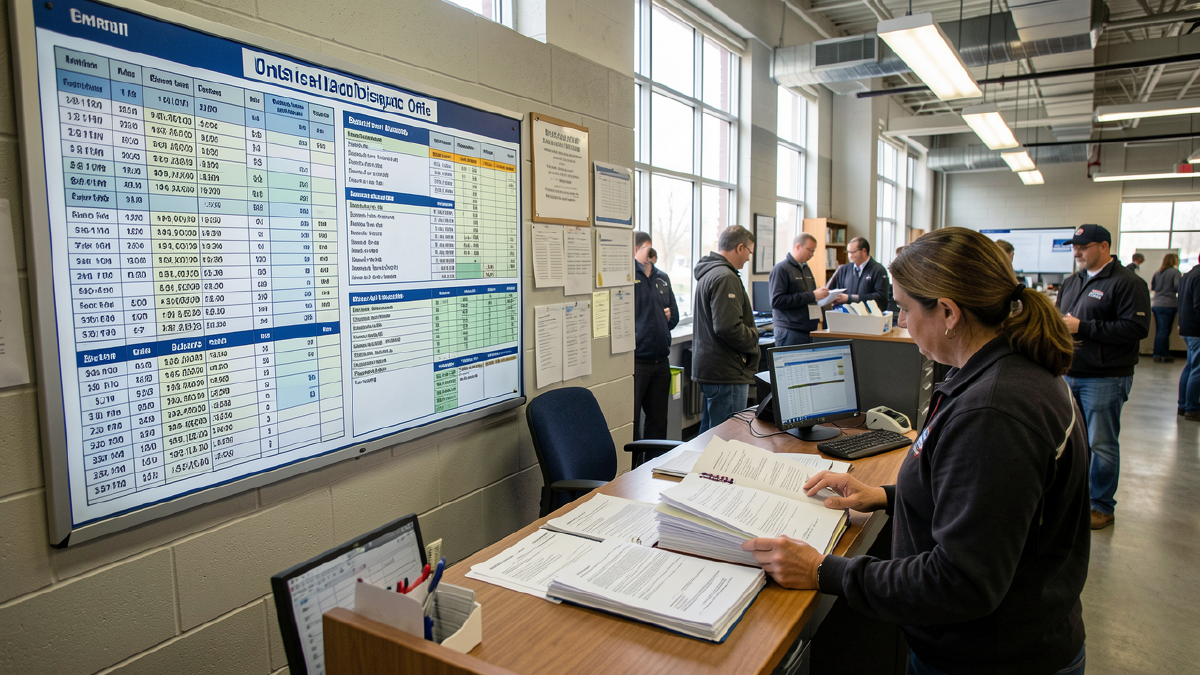
Tony Reyes has been a journeyman electrician with IBEW Local 347 for fourteen years. His union tracks every hour he works with precision that would make most HR departments envious. The hiring hall logs each dispatch, the pension fund records each contribution calculated from hours worked, and the health and welfare fund knows exactly how many hours he has accumulated this quarter. All that data exists in union systems, carefully maintained for decades. But no one has connected those records to Medicaid verification. When the state sends verification requests to Tony’s “employer,” the requests go nowhere because Tony’s employers change with each project, and neither employs him directly. Tony loses coverage not because he is not working but because the verification architecture was designed for employment relationships his industry does not use.
The intersection of union membership and Medicaid expansion eligibility is less paradoxical than it initially appears. Building trades workers earning $35 to $60 per hour who work only 800 hours annually due to seasonal construction patterns earn roughly $40,000, potentially qualifying for expansion coverage depending on family size and state. Service worker unions including SEIU and UNITE HERE represent hotel housekeepers, food service workers, and janitors whose wages frequently place them in expansion income ranges year-round. Retail unions including UFCW represent grocery and warehouse workers in sectors featuring substantial part-time employment and variable hours clustering around eligibility thresholds. Healthcare unions represent nursing assistants and home health aides whose wages, despite union premiums, often remain in expansion ranges, creating the irony of healthcare workers qualifying for Medicaid based on income from providing healthcare services.
Collective bargaining agreements interact with work requirements in distinctive ways. Seniority systems determine who gets hours when hours are scarce, meaning junior workers may face chronic hour shortfalls while senior members maintain full schedules. A union with 500 members might have 200 working full-time, 200 part-time, and 100 on the out-of-work list, all under the same CBA. Layoff and recall provisions create predictable employment interruptions that have nothing to do with work ethic. A worker laid off in November and recalled in March experiences a gap driven by seasonal industry patterns, but whether that gap triggers work requirement consequences depends entirely on how states design exemption systems. Apprenticeship provisions combining employment with structured training create additional complexity, as apprentices build toward journeyman wages while earning incomes qualifying for Medicaid during training periods.
The article’s central argument is that union halls represent existing infrastructure that could serve verification if properly connected to state systems. Hiring halls already track dispatch with precision sufficient for pension contributions and health fund eligibility, exactly the hour aggregation that work requirement verification needs but rarely achieves for non-union workers with multiple employers. A construction worker employed by six different contractors in a quarter has hours aggregated automatically by the benefit fund. Shop stewards present natural touchpoints for navigation, already helping members understand contractual rights and navigate grievance procedures.
Taft-Hartley plans serving construction, hospitality, entertainment, and transportation could establish centralized verification protocols for all participating contractors. A building trades fund serving 25,000 workers across 350 employers in a five-state region could build comprehensive navigation infrastructure for $2.5 million annually, a per-member cost of $312, while enabling cross-employer hour tracking impossible in traditional employment models. These plans could also explore wraparound coverage bridging Medicaid eligibility gaps, maintaining coverage during appeals or while members accumulate hours for reinstatement.
Organized labor has historically opposed work requirements but opposition to policy does not preclude engagement with implementation. Unions can advocate for annual rather than monthly hour requirements, recognition of union training hours as qualifying activity, acceptance of union verification in place of employer attestation, generous good cause exemptions for seasonal workers, and contract provisions supporting member compliance including employer commitments to provide verification documentation promptly.
The strategic significance is substantial. States could establish streamlined verification for union workers through centralized hour reporting, reducing administrative burden on small contractors while serving hundreds of thousands of workers through a manageable number of institutional relationships. That this possibility appears nowhere in most state implementation planning represents a coordination failure where existing infrastructure capable of solving problems efficiently remains invisible to policymakers designing new systems from scratch. Tony Reyes worked 1,600 hours last year across eight employers. His union knows every hour. Whether he keeps his Medicaid depends on whether anyone decides to connect those records to the system determining his eligibility.