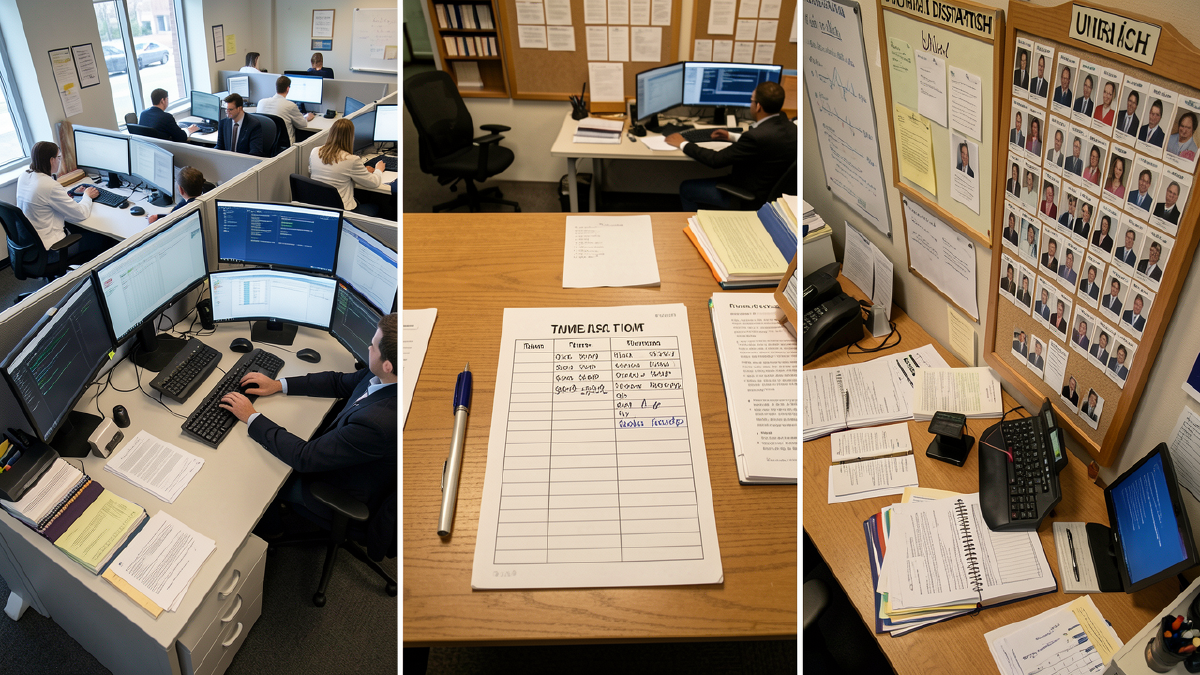
Work requirements affecting 18.5 million expansion adults create verification responsibilities for millions of employers, but treating “employers” as a monolithic category guarantees policy failure. A Fortune 500 retailer with sophisticated HR systems, a mid-sized manufacturer with 500 employees, a self-insured healthcare system, a family restaurant with fifteen employees, a construction union with Taft-Hartley health benefits, and a county government face entirely different operational realities. This article maps those differences and their implications for verification system design.
Large employers with 5,000 or more employees possess dedicated HR departments, sophisticated IT infrastructure, and resources justifying substantial investment. They can build payroll API integrations with state Medicaid systems, deploy dedicated benefits navigation teams, and create peer navigator programs across multiple facilities and languages. Walmart, with 1.6 million U.S. employees and potentially 300,000 or more on Medicaid expansion, could invest $5 to $8 million in technology integration plus $200,000 annually per major market for navigation teams, potentially reducing turnover costs by $50 million or more annually. For these employers, work requirement support becomes competitive advantage in tight labor markets for frontline workers.
Medium employers with 500 to 5,000 employees face an “in-between” dilemma. They are too large for simple solutions that work for small businesses and too small for enterprise investments justifiable at scale. The article identifies coalition strategies as the optimal response. A group of fifteen regional healthcare systems in the Midwest, collectively employing 120,000 workers with approximately 25,000 on expansion Medicaid, could invest $8 million collectively, roughly $535,000 each, for shared SDOH platform access, regional navigator networks, and integrated technology. This produces comprehensive infrastructure that would be impossible for any single medium employer to build independently.
Self-insured employers occupy a distinctive position because they assume direct financial risk for employee healthcare. This creates unique incentives for preventing coverage disruption, since health consequences of delayed care affect productivity and future costs regardless of which coverage source is active. Healthcare data visibility enables proactive support: patterns of increased emergency department usage, medication non-adherence, or chronic disease complications can signal coverage instability before formal loss occurs. Self-insured employers can integrate work requirement support into existing care coordination infrastructure, making the incremental investment modest relative to other employer types.
Small employers with fewer than 100 employees represent the most challenging segment. They lack HR departments, IT infrastructure, and resources for any meaningful investment in verification systems. The owner completing a verification form is doing it instead of managing inventory or covering a shift. The article argues that small employers require externally provided simple solutions: verification letter templates completable in 90 seconds, digital submission by employees themselves, and strong safe harbor protections for good-faith participation. Industry associations and chambers of commerce become critical intermediaries connecting small employers to state support systems.
Taft-Hartley plans serving construction, hospitality, entertainment, and transportation industries represent perhaps the most promising but most overlooked segment. These multiemployer benefit funds already track hours across multiple employers with precision that individual employer verification cannot match. A building trades union serving 25,000 workers across 350 employers in a five-state region could establish centralized navigation for $2.5 million annually, a per-member cost of $312 that compares favorably to the coverage disruption costs that verification failures create. The existing infrastructure for hour aggregation across multiple employers solves exactly the problem that work requirements create for workers with project-based or seasonal employment.
Public sector employers, including state and local governments employing approximately 20 million workers, face unique dynamics. They can leverage government infrastructure unavailable to private employers, coordinate with social services agencies sharing the same institutional frameworks, and model exemplary practices setting standards for other employers. But procurement constraints, civil service rules, and union agreements create implementation challenges requiring longer timelines.
The strategic implications are clear. States designing verification systems must provide tiered pathways enabling different employer types to participate according to their capacities. Policy designed around large employer operational capacity becomes impossible for small employers to execute. Policy designed for simplicity that small employers can manage becomes inefficient for large employers with automation capacity. The employer ecosystem is too diverse for uniform approaches, and states that ignore this diversity will produce verification systems that work well for some workers while creating impossible burdens for others.