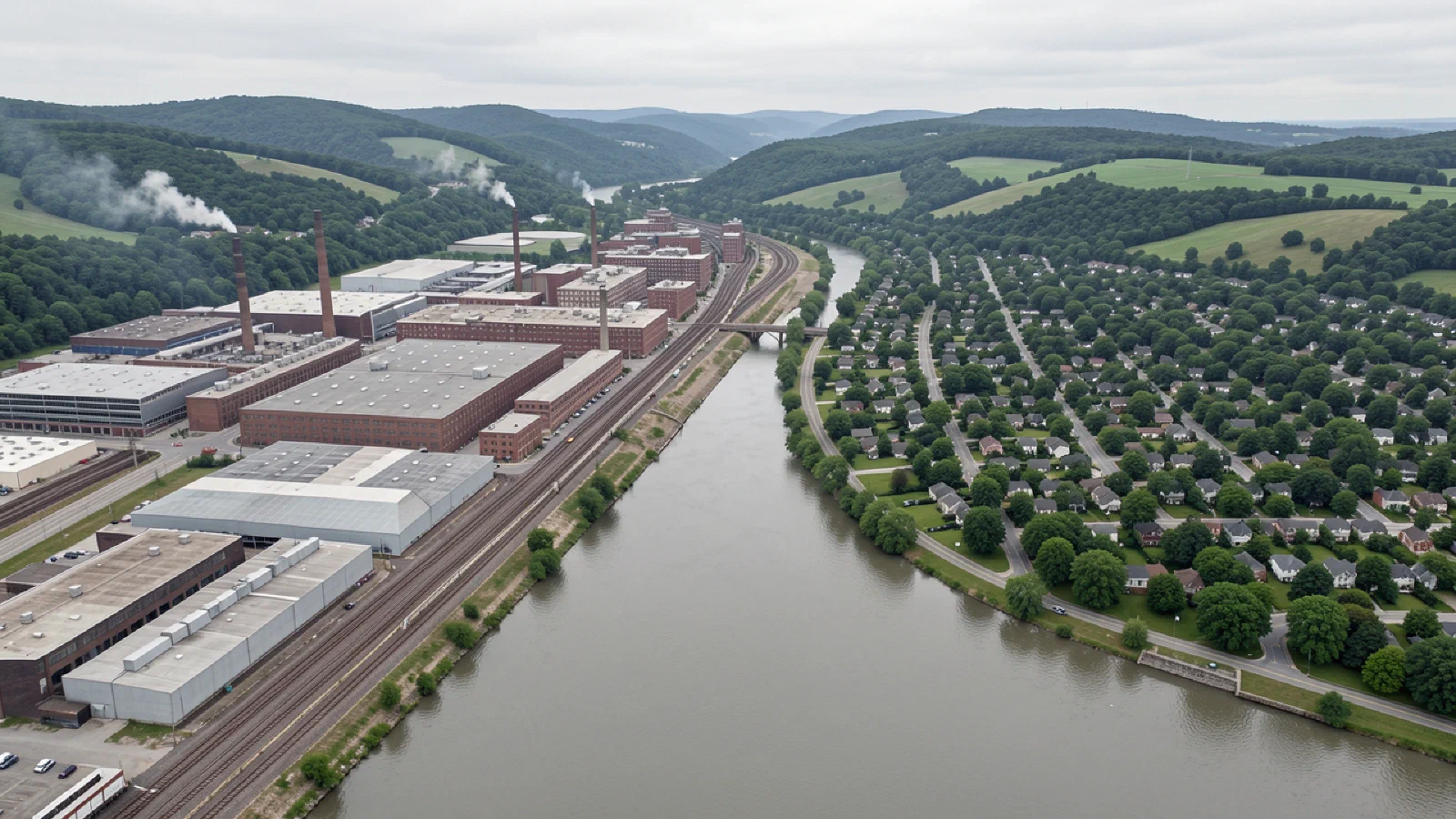
Ohio, Pennsylvania, and Michigan
The Rust Belt Medicare Reality
The Rust Belt states share a Medicare population that reflects the economic and health consequences of industrial decline: higher-than-average rates of chronic disease, disability, and dual eligibility, a disproportionately older Medicare population with longer average enrollment tenure, and health systems that built their market positions around a volume model that Medicare payment reform is now actively dismantling. Ohio has approximately 2.3 million Medicare beneficiaries. Pennsylvania has approximately 2.8 million. Michigan has approximately 2.1 million. Together these three states account for roughly 11 percent of the national Medicare population. Their MA markets are mature, their health system competition is intense in urban markets and nonexistent in rural ones, and Ohio is a WISeR pilot state, adding prior authorization burden to a market already under pressure from rate compression, risk adjustment reform, and the highest chronic disease prevalence rates in the northern United States.
Ohio: WISeR, Three Major Markets, and Rural Appalachia#
Ohio is one of six WISeR pilot states beginning January 2026. Original Medicare beneficiaries in Ohio now face prior authorization for 17 categories of outpatient services. The Cleveland, Columbus, and Cincinnati markets have large hospital systems with the administrative infrastructure to manage PA workflows. Rural Appalachian Ohio, the southeastern counties bordering West Virginia and Kentucky, does not. These counties have high rates of the musculoskeletal conditions, spinal procedures, and wound care services that WISeR targets. The overlap between WISeR’s targeted services and the procedures most commonly performed on the elderly population in Appalachian Ohio is direct. Providers in small practices in Meigs, Vinton, and Morgan counties are navigating a PA process for the first time with no dedicated authorization staff and limited familiarity with the electronic portal systems that WISeR participants operate.
The Ohio MA market is organized around three distinct metropolitan zones. Cleveland has the deepest health system competition: MetroHealth as the safety-net system, Cleveland Clinic as the dominant academic medical center with national brand equity, and University Hospitals as the primary competitor. Each system has a different MA and ACO strategy. SummaCare, now part of Summa Health based in Akron, operates as a regional payvider with a concentrated MA enrollment in northeast Ohio. Columbus is anchored by OhioHealth and Medical Mutual, the regional plan with significant MA market share. Cincinnati’s market is shaped by UC Health, TriHealth, and a strong Anthem (Elevance) presence in both commercial and MA lines.
Outside these three metros, Ohio’s MA market thins rapidly. Southeast Ohio’s Appalachian counties have among the highest Medicare poverty rates in the state, the highest dual eligible concentrations, limited MA plan competition, and effectively no FIDE SNP availability. The dual eligible beneficiaries in these counties navigate Medicare and Medicaid separately, without the integrated care coordination that D-SNP or FIDE SNP enrollment would provide.
Ohio’s post-Financial Alignment Initiative landscape reflects the national pattern. The MyCare Ohio demonstration ended, and the state transitioned to D-SNP-based integration. D-SNP availability in Cuyahoga County (Cleveland), Franklin County (Columbus), and Hamilton County (Cincinnati) is moderate, with several plans offering coordination-only or higher-integration products. Outside the metro counties, D-SNP options are sparse. Ohio expanded Medicaid under the ACA, which means the dual eligible pipeline is broader than in non-expansion states like Florida and Texas. The expansion population includes working-age adults with disabilities who will age into Medicare eligibility over the coming decade, expanding the dual eligible cohort that D-SNPs serve.
Pennsylvania: The UPMC Payvider and Two Major Markets#
Pennsylvania’s Medicare market is defined by the most documented payvider competitive dynamic in the country. UPMC Health Plan operates as the MA plan arm of the University of Pittsburgh Medical Center, the largest health system in western Pennsylvania. UPMC’s integrated model provides the canonical example of what payvider market dynamics look like in practice: the plan controls the network, the network generates the data, the data drives risk capture at the point of care, and the point-of-care risk capture produces the HCC coding completeness that encounter-based risk adjustment rewards. As the industry moves toward encounter-based RA, UPMC’s operational model is what every health system with MA ambitions is trying to replicate.
The UPMC-Highmark competitive tension is the defining feature of the Pittsburgh MA market. Highmark BCBS, the Blue Cross plan covering western Pennsylvania, and UPMC have been in a prolonged competitive conflict that has produced network exclusions, provider access disputes, and beneficiary confusion about which doctors accept which plan. The conflict has partially resolved through negotiated arrangements, but the competitive dynamic persists and shapes how beneficiaries in the Pittsburgh metro area experience MA plan choice. A beneficiary choosing between UPMC Health Plan and Highmark is not making a standard plan comparison; they are choosing between two delivery system allegiances with different provider networks.
The Philadelphia market operates under different dynamics. Independence Blue Cross is the dominant commercial and MA insurer in southeastern Pennsylvania. Jefferson Health, Penn Medicine, and Temple Health are the major health systems. The Philadelphia dual eligible population is concentrated, high-acuity, and has better FIDE SNP availability than rural Pennsylvania. The Penn Medicine and Jefferson systems both have MA participation strategies, though neither operates at the payvider integration depth that UPMC has achieved in Pittsburgh.
Rural Pennsylvania, the counties forming the “T” between the Philadelphia suburbs and Pittsburgh, is economically depressed, high in Medicare poverty, and has very limited MA plan competition. Central Pennsylvania’s rural counties face provider shortages, hospital closures, and a Medicare population that is aging in place without the delivery system infrastructure that urban Pennsylvania provides. The Pennsylvania Wilds, the rural northcentral counties, have access constraints comparable to rural Appalachian Ohio.
Pennsylvania’s Community HealthChoices program is the state’s Medicaid LTSS managed care system, providing managed long-term services and supports for dual eligible and Medicaid-only beneficiaries. CHC operates through three managed care organizations covering the entire state. The CHC-FIDE SNP interface creates an integration pathway for dual eligible beneficiaries who are enrolled in both a CHC plan and a FIDE SNP operated by the same parent organization. In the Philadelphia and Pittsburgh markets, this alignment exists for some plans. In rural Pennsylvania, the CHC plan may be the only managed care entity the beneficiary interacts with, and the Medicare side remains unintegrated.
Michigan: The Automotive Healthcare Legacy and Rural UP#
Michigan’s Medicare market carries the imprint of the automotive industry’s healthcare legacy. The Detroit-area health system landscape was built to serve a unionized manufacturing workforce with comprehensive employer-sponsored coverage. That workforce aged into Medicare, and the health systems that served them transitioned into MA plan operations. Henry Ford Health System and Corewell Health (the former Beaumont-Spectrum merger) are the two dominant Detroit-area systems with different MA strategies. Henry Ford operates a more integrated model with tighter network management. Corewell Health, formed from the 2022 merger of Beaumont and Spectrum Health, is still integrating its delivery and coverage operations across southeastern and western Michigan.
Priority Health, based in Grand Rapids, is the dominant regional plan in western Michigan. Its MA market share in the Grand Rapids metro area and surrounding counties makes it the functional equivalent of what SelectHealth is in Utah: a regional plan with deep community ties, strong provider relationships, and a market position that national carriers compete against but rarely displace. Blue Cross Blue Shield of Michigan is the dominant MA insurer statewide, with a footprint that extends from the Upper Peninsula to the Ohio border.
Michigan’s Upper Peninsula is geographically one of the most challenging Medicare access environments in the country. Low population density, extreme winter access constraints that can make travel to healthcare facilities impossible for weeks at a time, and very limited MA plan availability define the UP Medicare experience. UP Health System is the dominant and often sole health system in many UP counties. Original Medicare is the primary coverage vehicle for the UP Medicare population because MA plan availability is insufficient to create meaningful choice. The UP Medicare population is older, sicker, and more geographically isolated than the statewide average, and the delivery system serving them operates on margins that make additional investment difficult.
Michigan’s MI Health Link program is the state’s dual eligible coordination effort, providing integrated care for dual eligible beneficiaries through aligned Medicare and Medicaid managed care plans. MI Health Link operates in select regions, primarily in southeastern Michigan. Outside those regions, dual eligible beneficiaries navigate the two programs separately. Michigan expanded Medicaid under the Healthy Michigan Plan, creating a dual eligible pipeline that includes the working-age expansion population aging toward Medicare eligibility.
The Shared Rust Belt Pattern#
Across all three states, the same structural pattern repeats. Urban metro areas have competitive MA markets, developed D-SNP options, academic medical centers with sophisticated coding and care management operations, and community-based navigation infrastructure through SHIPs and AAAs. Rural areas, including Appalachian Ohio, central Pennsylvania, and Michigan’s Upper Peninsula, have minimal MA competition, limited or no D-SNP availability, provider shortages, and SHIP programs that cannot reach the beneficiaries who need them most.
The chronic disease burden in the Rust Belt Medicare population is higher than national averages. Diabetes, COPD, heart failure, and musculoskeletal conditions are more prevalent in populations shaped by decades of industrial exposure, economic stress, and health behaviors associated with poverty. The HCC coding gap for these populations is real: beneficiaries in rural Appalachian counties with limited primary care access have fewer documented diagnoses than their clinical burden warrants, producing lower risk scores and lower capitation payments for the plans that serve them. The V28 risk adjustment transition, with its emphasis on point-of-care documentation, rewards the delivery systems that have invested in coding infrastructure. The rural Rust Belt providers who have not made that investment are at a structural disadvantage under the new model.
WISeR in Ohio adds a layer of administrative burden that the other two states do not yet face. Pennsylvania and Michigan are not WISeR pilot states, but their provider communities are watching Ohio’s experience closely. If WISeR expands after the pilot period, the Rust Belt’s high-volume musculoskeletal and pain management markets will be directly affected.
Related Reading#
MCR-01_03 WISeR: Prior Authorization Comes to Traditional Medicare MCR-05_02 Becoming a Payvider: The Strategic Case for Provider Plan Ownership MCR-05_07 AHEAD States: Hospital Global Budget Strategy