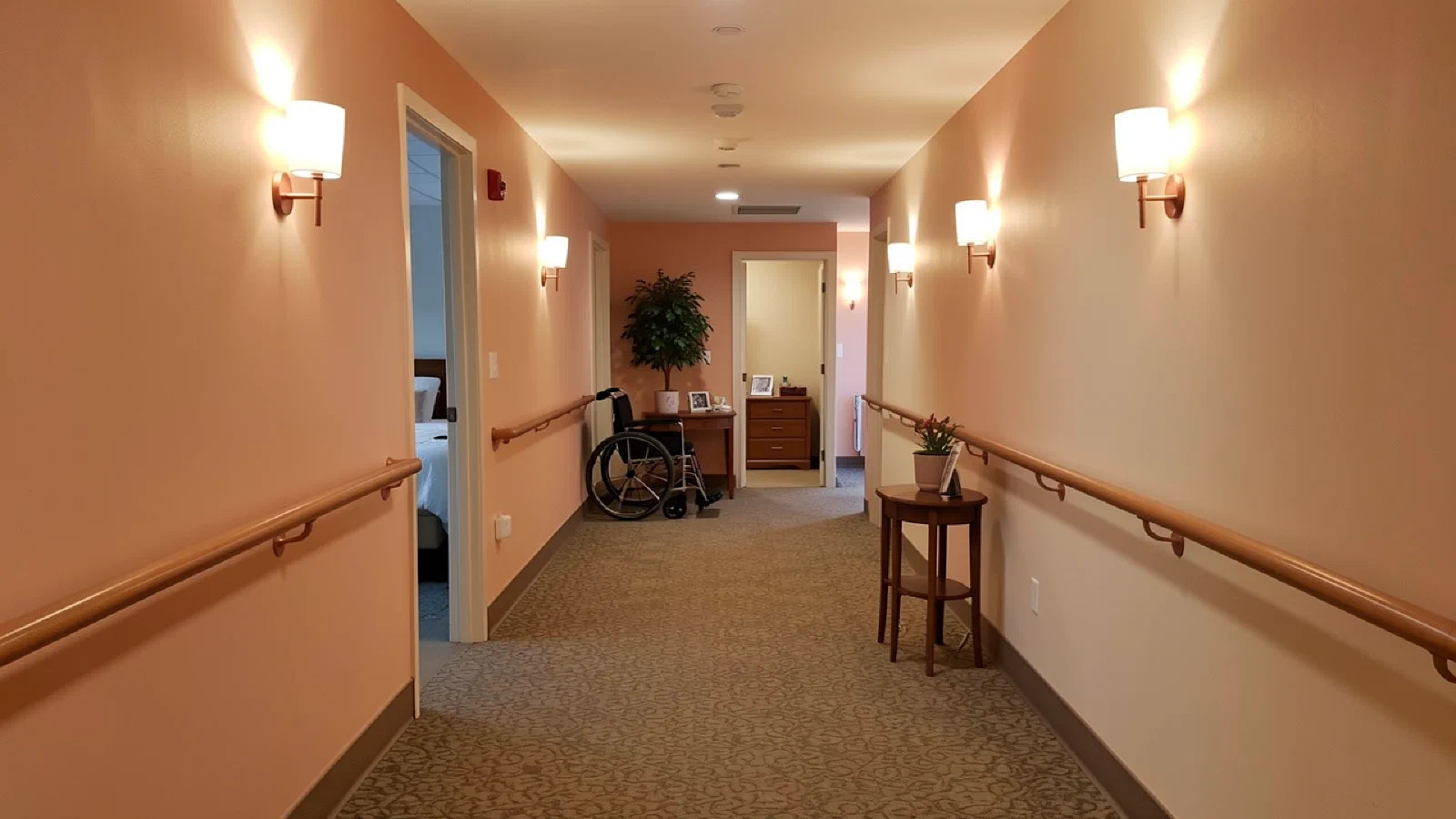
The Skilled Nursing and Long-Term Care Axis
Staffing Rules, FIDE SNPs, Global Budgets, and the Medicaid Squeeze
Skilled nursing facilities operate at the most congested policy intersection in Medicare. They are simultaneously a Medicare post-acute care provider, a Medicaid long-term care setting, a site of dual eligible integration for FIDE and HIDE SNPs, and a discharge destination whose availability directly affects hospital throughput under global budget models. Four major policy forces are reshaping the SNF operating environment at once: a staffing minimums rule that was finalized, litigated, legislatively suspended, and effectively repealed in under two years; FIDE and HIDE SNP contracting requirements that give plans new leverage over SNF quality expectations; AHEAD’s hospitalization avoidance logic that changes the hospital-SNF referral relationship; and OBBBA’s Medicaid provisions that constrain the state funding that supports the long-term care residents SNFs serve alongside their Medicare patients.
No single one of these forces is manageable in isolation. Together they constitute an operating environment that rewards scale, data capability, and payer relationship sophistication in ways that smaller and rural facilities are structurally less able to provide.
The Staffing Minimums Rule: Finalized, Vacated, and Legislated Away#
The Biden administration’s April 2024 minimum staffing final rule represented the first national quantitative staffing standard in nursing home history. The rule required 3.48 hours per resident day of total nurse staffing, 0.55 hours from registered nurses, and 2.45 hours from nurse aides. It required a registered nurse on site 24 hours a day, seven days a week. The phase-in timeline gave urban facilities until May 2026 for total HPRD and 24/7 RN requirements, and until May 2027 for the RN and NA hourly components, with rural facilities receiving an additional year at each phase.
CMS acknowledged in the rule that only 18 to 22 percent of nursing facilities nationwide currently met the full scope of the requirements. The projected cost was $43 billion over ten years. Industry groups, including the American Health Care Association and LeadingAge, sued immediately in two federal districts. In April 2025, the Northern District of Texas vacated the rule, finding under the major questions doctrine that CMS had exceeded its statutory authority. A parallel case in the Northern District of Iowa reached the same conclusion.
The litigation became moot in July 2025 when Section 71111 of the One Big Beautiful Bill Act, Public Law 119-21, prohibited CMS from implementing, administering, or enforcing the minimum staffing standards until September 30, 2034. CMS issued an interim final rule in December 2025 restoring the pre-2024 regulatory text at 42 CFR 483.35, reverting to the previous standard of simply requiring sufficient staffing to meet resident needs in accordance with individual care plans. The effective repeal means the 78 percent of facilities that would have needed to increase staffing no longer face that mandate for the next decade.
Consumer advocacy groups expressed sharp criticism of the repeal, arguing that the hardship exemptions in the original rule were adequate for facilities with genuine workforce supply constraints and that the repeal abandons nursing home residents to documented understaffing conditions that have produced measurable harm. The National Consumer Voice for Quality Long-Term Care argued that rural workforce concerns were used as political cover for a broad industry exemption that benefits well-capitalized urban facilities as much as genuinely constrained rural ones.
The underlying workforce shortage that drove the staffing debate has not resolved because the regulation was repealed. The Bureau of Labor Statistics projects continued nursing shortages through at least 2037, with a 13 percent RN deficit projected in nonmetropolitan areas. Facilities in markets where workforce supply is genuinely insufficient will continue to operate below staffing levels they themselves consider adequate, regardless of what federal regulations require or do not require. The repeal removed a compliance obligation. It did not create a workforce.
FIDE and HIDE SNP Contracting Leverage#
The dual eligible integration agenda has elevated SNF performance expectations through a channel distinct from Medicare quality requirements. Fully integrated and highly integrated dual eligible special needs plans bear financial risk for their members’ total cost of care. Avoidable SNF admissions and extended SNF stays cost plans money. Readmissions from SNF to hospital cost plans money. Poor discharge planning that delays transition to home-based care costs plans money. These financial incentives translate into plan expectations for SNF partners that go beyond the five-star quality rating system.
FIDE SNPs are increasingly requiring SNF network partners to meet contractual standards on care coordination protocols, discharge planning timelines, clinical communication with the plan’s care management team, and participation in medication reconciliation and transition of care programs. Plans are using SNF quality data, including CMS’s Nursing Home Compare star ratings, potentially preventable hospitalization rates, and discharge-to-community rates, to make network inclusion and tiering decisions. A facility with three or four stars and high rehospitalization rates is a cost risk for a FIDE SNP, regardless of what the facility’s relationship with the local hospital has historically looked like.
HIDE SNPs operate with somewhat less integration, as they work with states to coordinate Medicaid services rather than fully integrating them under a single capitated payment, but the directional pressure is similar. D-SNP integration requirements adopted in CMS rules have been tightening the floor for what coordination activities D-SNPs must perform and document, and SNF partners who cannot participate in the coordination infrastructure these plans require are at risk of network exclusion.
The five-star system remains the most visible SNF quality signal for plan contracting, despite well-documented limitations in its ability to distinguish genuinely high-quality facilities from those that perform well on specific metrics used in the star calculation. Staffing ratings, which had been a significant component of the star system, are in transition given the collapse of the federal staffing minimums rule. Facilities that had been investing in staffing to improve their staffing star component now face uncertainty about how the metric will be calculated in a regulatory environment that no longer has national minimums as a reference point. CMS has not signaled how it will adjust the star rating methodology in response to the rule repeal.
AHEAD and the SNF Referral Dynamic#
AHEAD’s global budget mechanism creates a specific pressure on the hospital-SNF referral relationship. Under global budgets, a hospital is accountable for the total cost of care for its attributed population within a state-negotiated budget envelope. Inpatient admissions count against the budget. Readmissions from SNF back to the hospital also generate cost within the budget period. A hospital operating under AHEAD has an explicit financial reason to refer patients to SNFs that have low readmission rates, good discharge planning practices, and the clinical capacity to manage patients who might previously have remained in an acute bed for an additional day or two.
This dynamic is well established from the AHEAD pilot states and from the predecessor Maryland Global Budget program. Maryland hospitals, operating under an all-payer global budget since 2014, invested heavily in preferred SNF partnerships precisely because SNF performance was financially material to hospital budget management. The relationship evolved from a volume-based referral business to a performance-based contracting relationship, where hospital discharge planners directed patients to facilities based on care quality and readmission history rather than purely on bed availability or historical relationships.
SNF occupancy under AHEAD pressure is a more complex dynamic than it first appears. The same hospitalization avoidance incentives that motivate hospitals to invest in home-based care management reduce the pool of patients who would otherwise flow through a SNF stay before returning home. If AHEAD is working as designed, some patients who under FFS would have had a short inpatient stay followed by a SNF-based rehabilitation episode are instead managed at home with RPM and home health support, bypassing the SNF entirely. The net effect on SNF volume in AHEAD states is not uniformly positive, even though the patients who do use SNF care may be higher acuity and therefore higher paying under Medicare’s prospective payment system.
SNFs whose clinical capabilities are limited to lower-acuity post-acute rehabilitation will face increasing referral pressure toward higher-acuity specialty populations as AHEAD reshapes the discharge flow. Facilities that have invested in clinical programming for complex wound care, IV medication management, pulmonary rehabilitation, and neurocognitive support will be better positioned to capture the patients who genuinely need SNF-level care rather than competing for the lower-acuity volume that home health and RPM can increasingly absorb.
Medicaid LTSS Under OBBBA#
SNFs that provide long-term care rather than exclusively post-acute care operate on a dual payment stream. Medicare covers the post-acute SNF stay under Part A for qualifying beneficiaries for up to 100 days. Medicaid covers the long-term care resident stay under state Medicaid LTSS programs for dual eligibles and others who have spent down their assets to Medicaid eligibility. The Medicaid-covered long-term stay population represents a substantial portion of nursing home residents in most states.
OBBBA’s Medicaid provisions create fiscal pressure on state Medicaid programs that flows directly to SNF Medicaid LTSS funding. The bill’s caps on state-directed payments limit states’ ability to use supplemental payment mechanisms to augment Medicaid rates to nursing homes above the base payment level. Provider taxes, which many states use as a financing mechanism to draw down federal matching funds and direct those funds back to providers through rate increases, face new scrutiny and potential limitation under the bill’s Medicaid fiscal accountability provisions. States that have relied on these mechanisms to make Medicaid LTSS rates competitive with the cost of care will need to find alternative funding approaches or accept that their Medicaid LTSS rates will not keep pace with operating costs.
The PDPM payment system governs Medicare SNF payment under Part A. The Patient-Driven Payment Model, which took effect in October 2019, restructured SNF payment around clinical complexity rather than therapy volume, using a classification system based on primary diagnosis, comorbidity interactions, functional status, and nursing and non-therapy ancillary needs. PDPM corrected the perverse therapy-volume incentives of the prior RUG system, but it also changed the revenue profile of SNFs in ways that continue to ripple through the industry. Facilities with patient populations concentrated in high-therapy-volume case types saw revenue reductions; those with clinically complex medical populations often saw revenue improvements.
The dual-payment-stream dynamic for SNFs means that Medicaid rate adequacy is not separable from Medicare financial viability. A facility that loses Medicaid LTSS revenue because OBBBA fiscal pressures force state rate reductions cannot fully compensate through Medicare Part A billing, because Medicare post-acute care and Medicaid long-term care serve substantially different patient populations with different clinical needs and length of stay profiles. Facilities with a high proportion of Medicaid long-term care residents are more exposed to state budget pressure than facilities with primarily short-stay post-acute populations. As OBBBA’s Medicaid provisions work through state budgets over the 2026 and 2027 plan years, the facilities most at risk of financial stress are those that are simultaneously managing FIDE SNP contracting pressures, AHEAD referral dynamics, and a Medicaid resident population whose funding is contracting.
Related Reading#
MCR-05_11 Post-Acute Care Reform: The Unfinished Agenda MCR-09_03 Dual Eligible Integration: The FIDE/HIDE/AIP Landscape in 2025 to 2027