Conversational AI for Older Adults
Care Navigation, Companionship, and the Regulatory Frontier
Twenty-eight percent of community-dwelling Medicare beneficiaries live alone. The fastest-growing segment of social isolation in the United States is adults over 75. These are not incidental facts about lifestyle preference. They are clinical risk factors. AARP research has attributed approximately $6.7 billion annually in excess Medicare spending to social isolation — the downstream costs of higher depression rates, accelerated cognitive decline, medication non-adherence, and increased emergency department utilization that accompany chronic loneliness. The Surgeon General’s 2023 advisory on the loneliness epidemic made the epidemiological case explicit and largely settled: social isolation kills, and it does so at a scale that the healthcare system continues to misprice as an unmeasurable social determinant rather than a billable cost driver.
Conversational AI is an intervention category that can reach isolated older adults in ways that clinical infrastructure cannot. It is available at 3 AM. It does not burn out, turn over, or call in sick. It can remember what a person told it six weeks ago and ask whether the grandchild’s college application worked out. It can initiate contact with a senior who would never initiate contact herself. None of those properties map cleanly onto a CPT code. The regulatory and payment environment has not caught up to what the technology can do, which means the business model challenge for this market is not primarily technical.
The Technology Landscape#
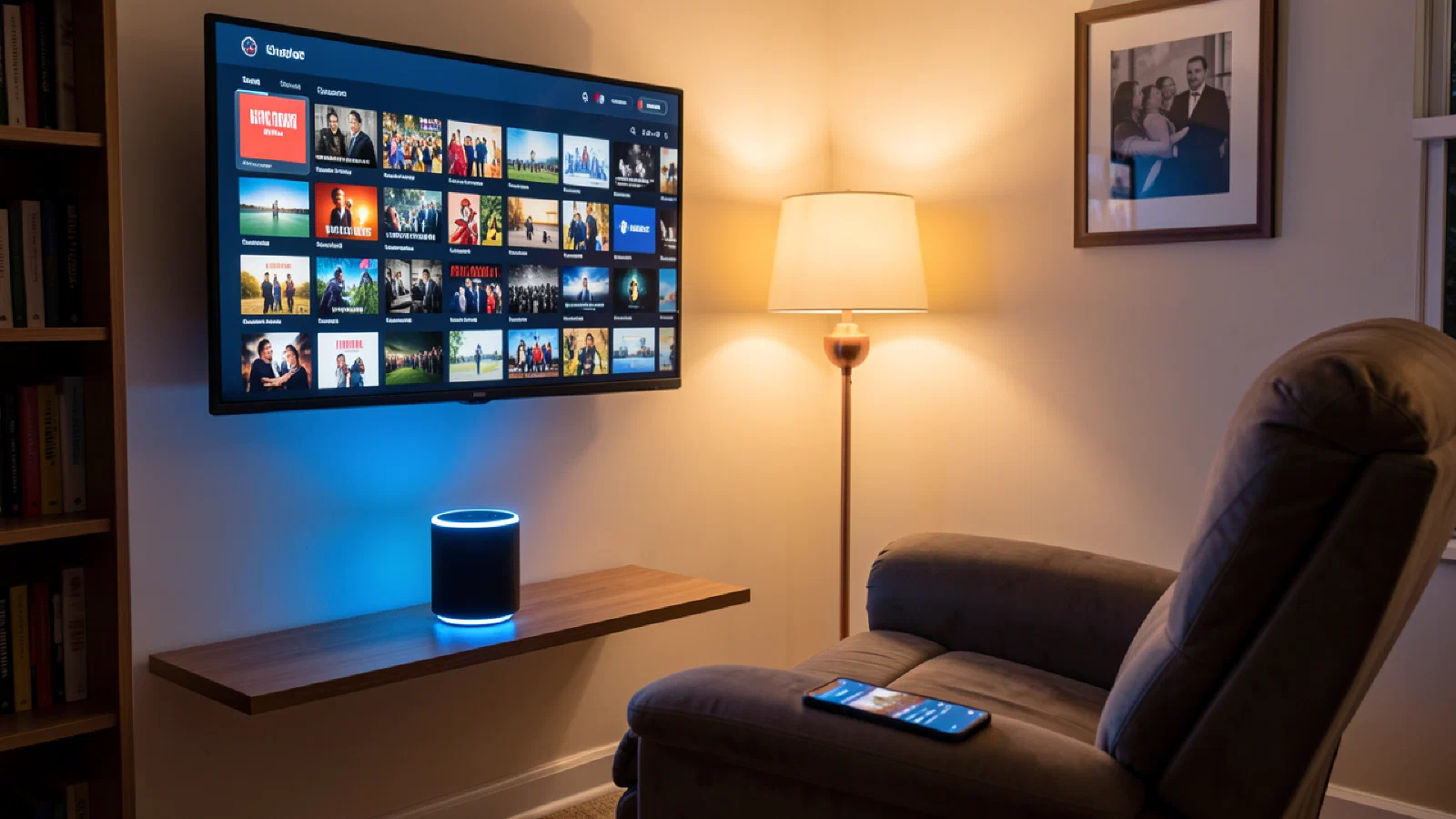
Purpose-built senior companionship AI is a distinct product category from general-purpose voice assistants, and the distinction matters clinically. ElliQ, developed by Intuition Robotics, is the most extensively deployed and evaluated product in this category. It is a tabletop device with a screen and a motorized head that lights up and orients toward the user — a physical presence rather than a disembodied voice. The design is deliberate. ElliQ is proactive: it initiates conversation, suggests activities, and remembers what users share across sessions. It was built specifically for the social and communication patterns of adults in their seventies, eighties, and nineties, including the pace, the emotional register, and the content domains — health, family, memory, civic life — that matter to that population.
The New York State Office for the Aging has deployed ElliQ at scale since May 2022. The program reached approximately 900 units across New York State through local Area Agencies on Aging. Outcome data from the third deployment year, covering June 2024 through May 2025, showed 94 percent of clients reporting reduced loneliness, 97 percent reporting improved overall wellbeing, and 79 percent reporting feeling more connected to the world. Users engaged with ElliQ an average of more than 30 interactions per day, six days per week, with engagement remaining high 180 days into deployment — a durability result that separates ElliQ from apps and wellness tools that see rapid drop-off after initial novelty. Customer satisfaction on the Cobot scale, the patient-reported outcome instrument designed specifically for companion robots, scored 4.6 out of 5. Intuition Robotics has expanded beyond NYSOFA to partnerships with Inclusa (a Humana company), the Area Agency on Aging of Broward County, the Olympic Area Agency on Aging, and Ypsilanti Meals on Wheels. ElliQ 3, launched at CES 2024, integrated generative AI capabilities that substantially expanded the conversational range and personalization of the interaction.
The methodological limitation of the NYSOFA data deserves acknowledgment. Self-reported loneliness reduction is not the same as a randomized controlled trial demonstrating reduced emergency department utilization or hospitalization. The 94 percent figure measures whether users feel less lonely, which is meaningful but different from demonstrating that AI companionship reduces Medicare spending. Randomized controlled evidence connecting conversational AI companion use to clinical outcome improvement in the Medicare population does not yet exist at the scale CMS would require for coverage consideration. The NYSOFA data is important for what it demonstrates about engagement durability and user experience in the target population. It is not yet the evidence base that opens a CMS billing pathway.
LLM-powered voice and chat navigation represents a second and commercially distinct market. Amazon Alexa’s aging-in-place positioning through Alexa Together adds a family visibility layer — designated family members receive activity summaries, alerts, and drop-in access — but does not address the care navigation and clinical support use cases at the depth the senior population needs. Alexa Together’s fall detection uses audio sensing rather than dedicated hardware, producing lower sensitivity than radar systems. The value proposition is primarily the combination of the existing Alexa device base with a monitoring service layer, not a purpose-designed senior engagement product. Google has made significant R&D investment in aging-related AI but has not deployed a consumer product for this market as of early 2026.
The startup landscape in this category is expanding. LLM-based senior-specific conversational tools are appearing from multiple development teams building on foundation models with senior-optimized interfaces: voice-first interaction, slow cadence, extended memory across sessions, and domain specialization in Medicare navigation, medication management, and care coordination. The differentiation question for any new entrant is persistent memory — the capability that makes a conversational AI a relationship rather than a transaction. A companion tool that resets every session has no clinical value for social isolation. One that builds a longitudinal model of the individual, their preferences, their family, their health concerns, and their communication patterns over months of interaction is something qualitatively different.
What distinguishes senior-specific design from general-purpose LLM deployment is principally three things. Cognitive accessibility means designing for the interaction patterns of mild cognitive impairment — repetition, shorter queries, digression, confusion — rather than for the efficient task completion that general-purpose assistants optimize toward. Proactive engagement means the tool initiates contact with a senior who is isolated precisely because she does not reach out; a tool that only responds to prompts is useless for the most socially isolated users. And persistent memory is the mechanism through which the interaction generates relationship value rather than just information retrieval value. An AI that remembers a user’s deceased spouse’s name, the medication that was changed last month, and the TV show she mentioned missing is not the same product as a voice search engine.
The Clinical Evidence Base#
The connection between social isolation and clinical outcomes in older adults is well-established. Published research links chronic loneliness to increased dementia risk, elevated rates of depression and anxiety, higher rates of cardiovascular disease, and mortality effects comparable to smoking. The AARP $6.7 billion annual Medicare spending estimate, while a modeling output rather than a direct measurement, reflects real utilization patterns associated with isolation — emergency department visits, hospitalizations, and care coordination failures that occur when an isolated senior has no one monitoring their condition.
The gap is between the well-established health consequences of isolation and the demonstration that AI companionship specifically reduces those consequences. The NYSOFA-ElliQ data shows sustained engagement and self-reported wellbeing improvement. A 2024 PMC analysis of ElliQ deployment data noted that the product has been implemented in large-scale community settings with promising results but concluded that randomized controlled trials are needed to establish efficacy compared with other interventions and that more long-term data is required. The absence of RCT data is not a criticism unique to ElliQ — it is a structural feature of the current evidence gap for the entire category. Building that evidence requires the kind of longitudinal, controlled deployment that state aging agencies and AAAs are positioned to generate, which is why the non-Medicare revenue strategy through those channels is also, functionally, the evidence-generation strategy.
The FDA Clearance Question#
The boundary between a consumer AI product and a Software as a Medical Device is where product teams in this category spend considerable legal and regulatory effort. The FDA’s Digital Health Center of Excellence has developed a framework for evaluating when software functions trigger regulatory oversight under the 510(k) or De Novo pathways.
The clinical decision support exemption is the operative boundary for most conversational AI products. Software that displays information for a clinician or caregiver to review, without automating a clinical decision, is generally outside the SaMD framework. Software that directly recommends a clinical intervention based on patient-specific data — adjust this medication, call emergency services, this symptom indicates a specific diagnosis — is more likely to cross the threshold. Products in this space are designed around the boundary: they surface information and ask questions rather than issuing clinical recommendations. The legal opinion that underlies most product designs in this category is that a companion AI that says “you mentioned your knee has been hurting more — you might want to mention that to your doctor at your next visit” is not diagnosing musculoskeletal disease. Whether that interpretation survives a shift in FDA enforcement posture is a risk that the sector is managing actively.
The more immediate regulatory risk for deployed conversational AI products is not FDA reclassification. It is the FTC’s health data enforcement posture. Consumer-facing AI products that handle health information without being covered entities under HIPAA operate under FTC jurisdiction, and the FTC has been active in health data privacy enforcement since 2021. A companionship AI that logs every conversation, builds a longitudinal health and behavior profile, and operates under a privacy policy that allows broad data use is a regulatory exposure that product teams in this category should be managing as carefully as the FDA SaMD question.
The CMS Reimbursement Landscape#
Medicare does not reimburse companionship. The absence of a billing pathway for social isolation intervention is not a policy oversight — it reflects a deliberate CMS position that Medicare pays for medical treatment, not social services, even when the social service demonstrably prevents medical costs. That position is changing slowly, and the signals in the payment environment point toward indirect rather than direct pathways.
Community Health Integration codes, finalized for CY 2024, create a billing mechanism for community resource navigation and social needs referrals, but they require qualified clinical staff operating under physician supervision and are oriented toward SDOH screening and referral rather than ongoing companionship. Behavioral Health Integration codes create a pathway when loneliness rises to the clinical threshold of depression or anxiety requiring treatment — a real pathway but one that captures only the highest-severity end of the isolation spectrum. The G0136 SDOH risk assessment code, redesigned effective January 1, 2026, narrowed the reimbursement hook for social determinants screening.
MAHA ELEVATE’s social connections pillar creates a policy framework for recognizing social isolation as a health problem worth addressing through the Medicare model apparatus, but the pilot — approximately $100 million across up to 30 cooperative agreements, launching September 2026 — is a time-limited research investment, not a permanent benefit category. The CMMI model design requires evidence generation before CMS converts any intervention into a covered service, and that timeline runs years.
The clearest current billing pathway for conversational AI is MA supplemental benefits under the Special Supplemental Benefits for the Chronically Ill framework, which allows plans to offer benefits not otherwise covered by Medicare when those benefits have a reasonable expectation of improving or maintaining the health of chronically ill enrollees. A plan that can demonstrate that an AI companion reduces emergency department utilization in a population of isolated seniors with heart failure or COPD has a compliance basis for funding the service. The MA benefit contraction cycle has reduced plan generosity in supplemental categories broadly, but the evidence basis for companionship AI as an SSBCI benefit is distinguishable from the wellness perks that have been most aggressively trimmed.
The Non-Medicare Revenue Architecture#
The NYSOFA model — state aging office as payer and deployer, with local Area Agencies on Aging handling identification and installation — is the template for the near-term non-Medicare revenue strategy. State and county aging budgets are small, but they are funding evidence-generating deployments in the highest-need population. The NYSOFA program was funded through New York State’s budget as part of a package of programs addressing social isolation, making it a legislative appropriation rather than a standard Medicare billing pathway.
OAA Title III-D preventive services funding supports evidence-based loneliness and social isolation interventions through the AAA network. An AI companionship product with published deployment data from a program like NYSOFA has the evidence basis to be incorporated into a state aging plan as a Title III-D eligible service. That funding is not large — Title III-D appropriations nationally are a fraction of the total OAA budget — but it provides the contractual infrastructure for AAA deployment that generates outcome data.
ACOs with downside risk can invest shared savings in care management tools that address social isolation if the clinical relationship between isolation and attributed population utilization can be demonstrated in their own data. That demonstration requires a period of deployment in which the ACO can measure whether enrolled seniors who use a companionship AI generate fewer avoidable hospitalizations. It is a long investment cycle, but ACOs with sophisticated care management operations are beginning to ask the question.
The sequencing logic for the business model is: state aging agency deployments first, generating durability and outcome data; AAA network partnerships second, building the advocacy-channel relationship described in MCR-06.14; ACO pilots third, producing the utilization data that makes an evidence case to CMS; MA SSBCI coverage last, once sufficient evidence exists to negotiate coverage with plans in high-isolation markets. The Medicare billing pathway is not the starting point. It is the destination.
Related Reading#
MCR-10_06 Housing-Insecure and Homeless Seniors: Enrollment Failures, Address Requirements, and What Works MCR-12_04 The HealthTech Company Ecosystem: What Medicare Policy Actually Allows vs. What Companies Claim