Executive Summary: Health Benefits Are Not Health Insurance: The Case for Non-Insurance Employer Health Investment
TOS.12 — The Other Side#
A 15-person employer who offers a level funded plan with a $2,575 deductible has purchased something that most of their employees will not use for the medical needs they actually have. For an employee earning $45,000 per year, that deductible is 5.7 percent of gross income before a dollar of insurance coverage activates for non-preventive care. The Commonwealth Fund’s 2024 State of Health Insurance Coverage survey found that nearly one in four continuously insured adults were underinsured, and that 57 percent of underinsured adults avoided needed care because of cost. An Imagine360 survey in 2024 found that 38 percent of adults with health insurance delayed or skipped care due to cost, a 41 percent increase over the prior year. The employer has purchased coverage the employee cannot afford to use.
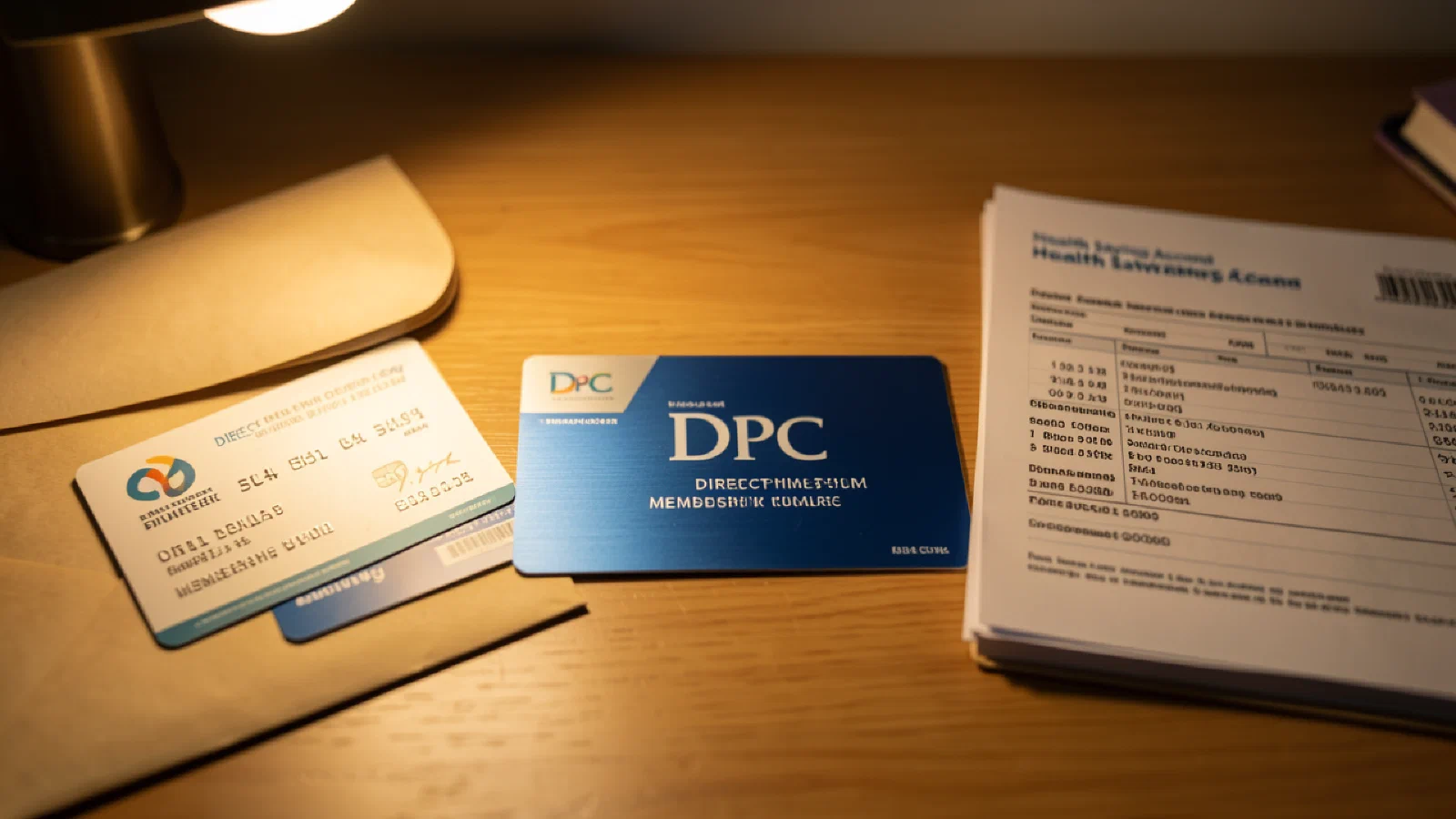
The non-insurance health investment stack addresses the actual problem. A direct primary care membership at $75 to $88 per member per month, the median range documented in the AAFP 2024 DPC Data Brief, gives the employee unlimited primary care: same-day or next-day appointments, extended visits averaging 30 to 60 minutes, 24-hour direct physician communication, and basic lab work at wholesale pricing. No deductible, no copay, no prior authorization for a primary care visit, no claims. More than 2,800 DPC practices operate in the United States as of early 2026, and as of 2026, DPC memberships qualify for HSA contributions under the terms established by the One Big Beautiful Bill Act. A pharmacy discount arrangement through GoodRx, Mark Cuban’s Cost Plus Drugs, or direct pharmacy contracting covers the majority of prescription needs without insurance intermediation. Generic drugs, approximately 90 percent of all prescriptions dispensed in the United States, are available for a few dollars per prescription at discount programs. A catastrophic protection layer activating above $25,000 or $50,000 in annual medical costs covers the actual insurance function at a fraction of the bundled plan premium.
The three components together, at a typical cost of $7,200 per employee annually for DPC plus pharmacy discount access plus a catastrophic policy, compare to an average small firm single premium of $9,131 per the KFF 2024 survey. The non-insurance stack costs less and produces more actual healthcare access than the bundled plan with the deductible the employee does not cross in most years.
The tax treatment gap is real. Employer contributions toward a non-insurance stack do not receive the IRC Section 106 exclusion that group health insurance premiums enjoy unless structured within a qualifying HRA arrangement. An ICHRA offers a partial path: the employer funds an ICHRA through which the employee reimburses DPC fees, prescription costs, and qualifying expenses, and can fund individual market premiums for a catastrophic marketplace plan. For employers below the 50-full-time-equivalent threshold, the employer mandate under IRC Section 4980H does not apply. The regulatory barrier is the tax treatment gap, not the employer mandate.
The model operates on reciprocity: the employer invests in health access and asks, transparently, that the employee use it. For a low-wage workforce, the question is not which carrier to select. It is whether a bundled plan with a deductible these employees cannot afford produces better health outcomes than the components that would actually reach them.