Executive Summary: The Broker Technology Gap: Still Mostly Excel, Email, and Carrier Portals
LFP-14.04 — The Broker’s Position#
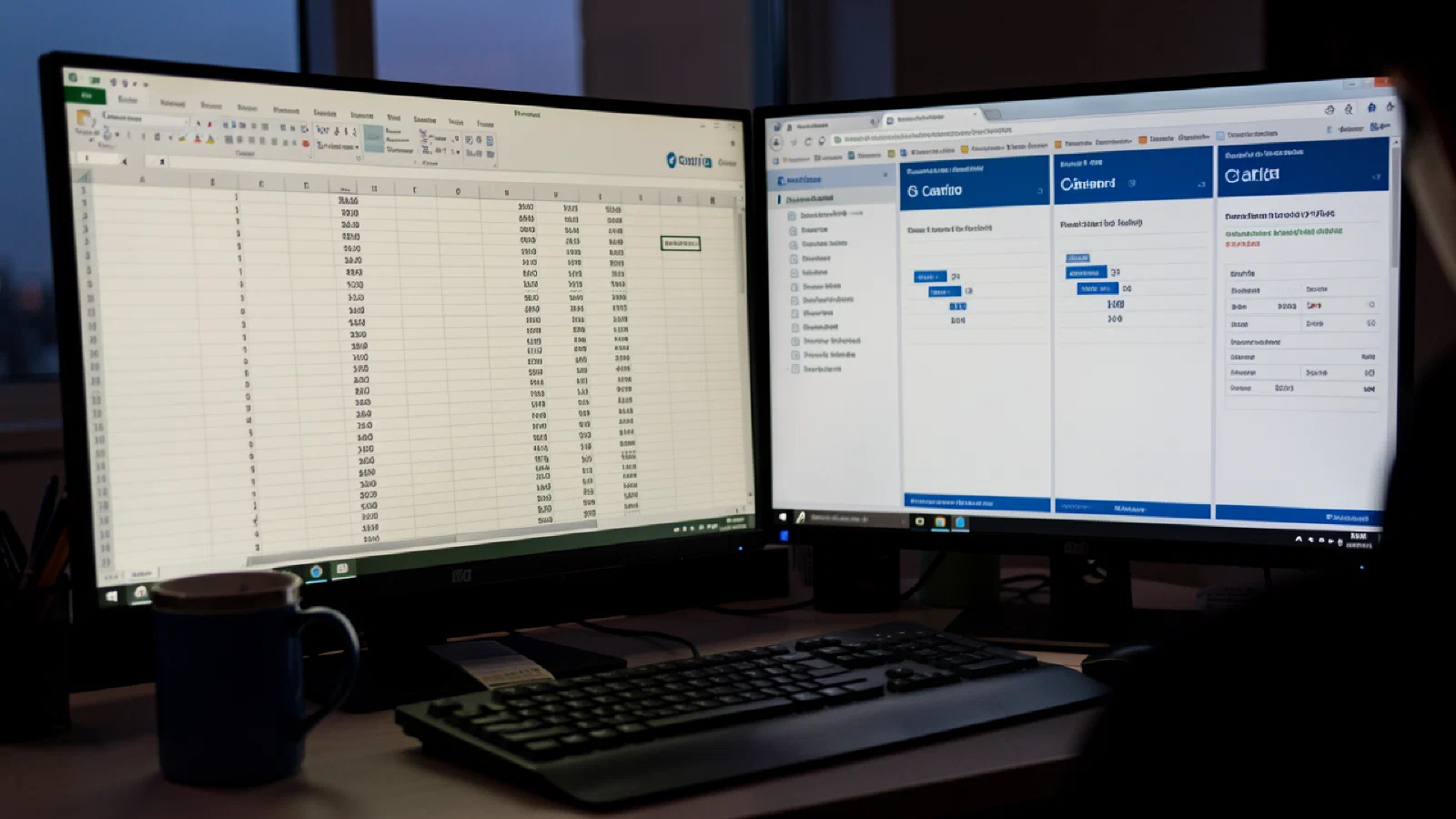
A broker preparing a level funded proposal opens three browser tabs: a TPA quoting portal, a carrier portal for a fully insured comparison, and a spreadsheet for manual side-by-side entry. The completed spreadsheet goes to the employer as a PDF attached to an email. This is the analytical infrastructure for a decision that will determine how a 35-person company manages health care risk for the next 12 months. The broker’s technology stack for level funded advisory in 2026 is fundamentally the same stack brokers used for fully insured comparison in 2006.
The CRM layer (AgencyBloc, HubSpot, Salesforce) tracks relationships, not analytics. Benefits administration platforms (Employee Navigator, Ease, bswift) digitize enrollment but do not support the analytical work that precedes the placement decision. Carrier and TPA portals are siloed and incompatible, each using different census templates, quote formats, and reporting structures. A broker contracted with three TPAs and two stop loss carriers logs into five separate portals to gather information for a single renewal. Email remains the primary communication channel for quoting, underwriting, and renewal conversations. Spreadsheets remain the analytical engine, with quality dependent entirely on the individual broker’s actuarial literacy.
Level funded advisory requires capabilities these tools do not provide. Claims data analysis for identifying cost drivers and projecting future claims. Stop loss evaluation for comparing attachment points, corridors, lasers, and terminal liability across multiple carrier quotes. Renewal intelligence showing the employer at month eight whether their claims run rate is tracking favorably or trending toward a laser at renewal. Benchmarking against comparable employers in the same industry and geography. Multi-model analysis integrating level funded quoting, ICHRA contribution modeling, and hybrid configurations for the same employer.
The gap produces two consequences. Advisory quality suffers because brokers compare products using incomplete information, creating E&O exposure when the analysis falls short of the standard the product requires. Market adoption is constrained because brokers who lack the tools to present level funded competently avoid presenting it, reinforcing the gatekeeper problem. The TPA that provides brokers with analytical tools, including plan-level dashboards, stop loss evaluation frameworks, and benchmarking data, removes the technology barrier from its distribution channel and invests directly in distribution capacity.