Series
Cost Drivers
Nine cost categories are reshaping the economics of small group level funded plans. Some arrive as single catastrophic claims: a gene therapy, a NICU delivery, a cancer biologic. Others erode through compounding: MSK trajectories, chronic disease progression, mental health upstream of every other diagnosis. The series documents each driver's mechanism and scale before Series 10 addresses what plans can do about them.

LFP-09.01
The Specialty Drug Problem: Why One Prescription Can Break a Small Group Plan Year
One member starting a biologic in month three can consume 42 percent of a 15-person plan's entire claims fund before the rest of the group files a single claim. The FDA approved 50 …

LFP-09.02
Pregnancy and Childbirth: The Claims Event That Reshapes a Small Group Plan Year
A vaginal delivery averages $15,712 in total healthcare costs. A cesarean averages $28,998. A complicated delivery with a 30-day NICU stay consumes 50 to 75 percent of a 15-person …
LFP-09.03
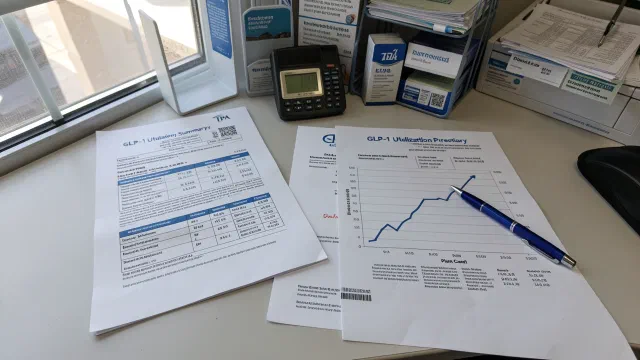
GLP-1 Drugs: Ozempic, Wegovy, and the Demand That Is Not Going Away
The SELECT trial published in November 2023 documented a 20 percent reduction in major adverse cardiovascular events from semaglutide 2.4mg. A drug with documented mortality …

LFP-09.04
PCSK9 Inhibitors, Inclisiran, and the Alzheimer's Drug Pipeline: The Next Wave of High-Cost Chronic Therapies
PCSK9 inhibitors for cardiovascular disease cost approximately $5,850 annually. Lecanemab for early Alzheimer's costs $26,500. Neither requires a rare diagnosis to appear in a …

LFP-09.05
Cell and Gene Therapies: The Million-Dollar Claims That Are No Longer Hypothetical
Casgevy costs $2.2 million. Roctavian costs $2.9 million. These are not pipeline projections. They are current list prices for FDA-approved therapies with commercial claims flowing …

LFP-09.06
Biosimilars: The Cost Relief Opportunity Most Level Funded Plans Are Missing
Biosimilar adoption generated $20.2 billion in system-wide savings in 2024. Adalimumab biosimilars produced over $200 million in documented savings through early 2025, averaging …

LFP-09.07
Musculoskeletal Costs: Back, Joint, and Spine Claims and the Compounding Problem Most Plans Ignore
Musculoskeletal conditions cost an estimated $420 billion annually across the U.S. healthcare system, more than diabetes or cardiovascular disease. The Business Group on Health …

LFP-09.08
Mental Health, Substance Use, and Social Isolation: The Cost Drivers Nobody Measures and Every Plan Pays For
The claims data shows a member with poorly controlled diabetes and irregular medication fills. It does not show the untreated depression that caused the member to stop taking …

LFP-09.09
Chronic Disease Compounding: Diabetes, Hypertension, Obesity, and the Predictable Trajectory Most Plans Watch Happen
Well-managed type 2 diabetes costs $10,000 to $15,000 per year. Poorly managed diabetes with complications costs $50,000 to $100,000 or more. The trajectory from one to the other …

LFP-09.SYN
The Combined Cost Pressure: What the Full Weight of These Drivers Means for a Small Group Level Funded Plan
The nine cost drivers do not arrive sequentially. A 20-person plan with expected claims of $240,000 can face a biologic prescription, a complicated delivery, compounding chronic …

LFP-09.TD1
Drug Pipeline and Cost Reference: Current and Emerging Therapies Affecting Level Funded Plan Economics
Reference pricing, indication status, plan design notes, and administration details for the drugs and therapies discussed across Series 09. GLP-1 agents, PCSK9 inhibitors, …