Executive Summary: Undocumented Workers in Level Funded Industries: The Coverage Boundary Nobody Discusses
LFP-06.09 — The Populations#
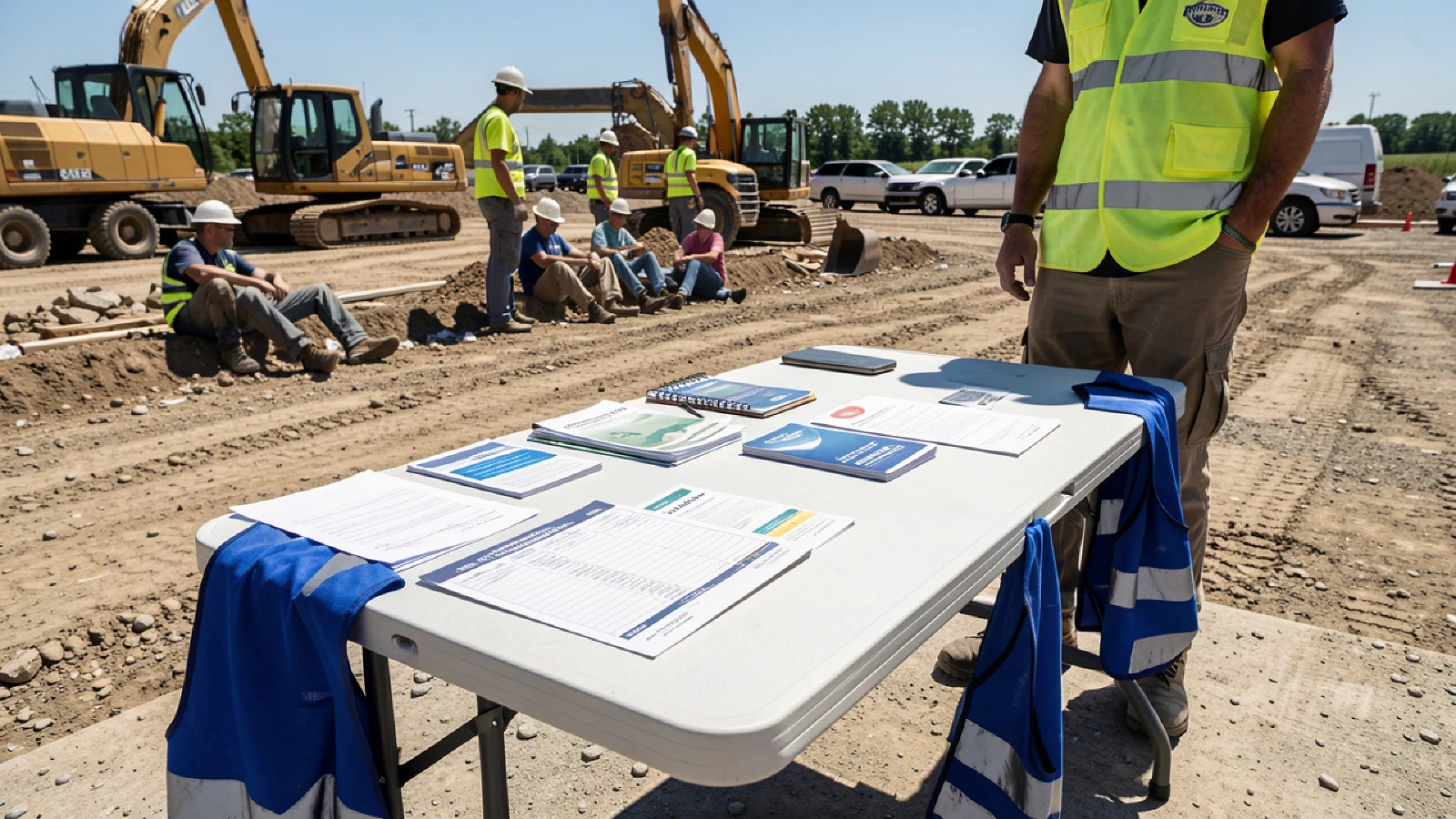
Construction, landscaping, food processing, agriculture, and hospitality are industries where level funded adoption is growing and where undocumented workers represent a significant share of the labor force. These workers are ineligible for ACA marketplace coverage, ineligible for Medicaid in most states, and excluded from employer plans by documentation requirements that are partly statutory, partly employer policy, and partly administrative practice. This is an analytic map of the boundary, not a policy argument.
The Pew Research Center’s August 2025 report found that the unauthorized immigrant population reached a record 14 million in 2023, with approximately 10 million participating in the U.S. labor force. The industries with the highest shares of unauthorized workers were construction at 15%, agriculture at 14%, leisure and hospitality at 8%, and other services at 7% — the same industries where level funded adoption is accelerating. Pew research also finds that immigrants account for approximately 43% of home health care aides nationally.
The legal boundary is clear at multiple levels. Section 1312(f)(3) of the ACA excludes unauthorized immigrants from marketplace coverage entirely; they may not purchase plans on-exchange even without subsidies. The Personal Responsibility and Work Opportunity Reconciliation Act of 1996 restricts Medicaid eligibility at the federal level; Emergency Medicaid covers emergency stabilization only. California, New York, Washington, Colorado, Illinois, and Oregon have expanded eligibility to some unauthorized adults, but the majority of states provide no pathway outside emergency Medicaid. For employer-sponsored plans, enrollment typically requires a Social Security number for claims processing, effectively excluding workers who cannot provide one regardless of formal eligibility language.
The economic consequence is externalized to the hospital system. The American Hospital Association reports that U.S. hospitals provided nearly $745 billion in uncompensated care between 2000 and 2022. America’s Essential Hospitals reported total uncompensated care of $41.4 billion in 2023. A landscaping company with 30 employees, 10 of whom are unauthorized, pays level funded premiums covering the 20 documented workers. The healthcare costs of the remaining 10 are borne elsewhere. The employer’s labor cost structure is built on that externalization whether or not the employer has analyzed it as such.
What the boundary reveals for the series is a sixth assumption embedded in level funded plan design: that the workforce the plan covers is the entire relevant workforce. In industries where unauthorized workers represent a material share of employment, this assumption fails. The coverage map for a level funded employer in construction or agriculture is a map of a portion of the workforce, and the healthcare needs of the portion outside the map do not disappear because the plan does not cover them.