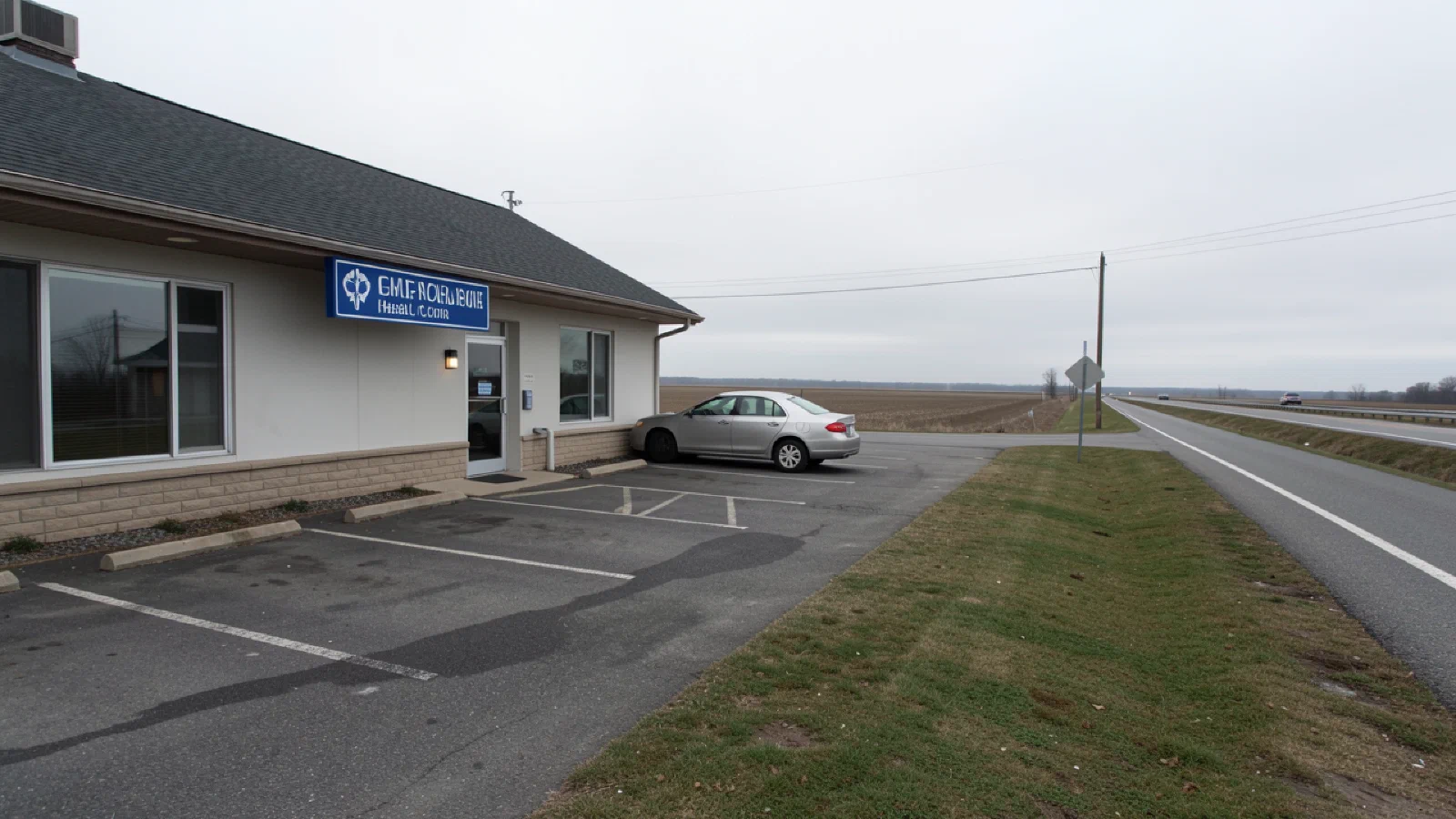
Access Barriers: Rural Networks, Language, and the Members the System Was Not Built For
LFP-06.07 | Human Story | Series 06: The Populations
Maria works for a home health agency in the Rio Grande Valley. Her employer offers a level funded health plan. The monthly premium contribution is deducted from her paycheck. She has an insurance card in her wallet. She has not used it in two years.
The last time she tried, she called the number on the back of the card. The automated system offered English and Spanish. She pressed two for Spanish. The hold time was 23 minutes. When a representative answered, Maria asked for help finding a doctor who speaks Spanish in her area. The representative searched the provider directory. The nearest in-network primary care physician accepting new patients was in McAllen, 47 miles from her home. The office hours were 8 a.m. to 5 p.m. Maria works the 7 a.m. to 3 p.m. shift. Taking a half day off would cost her $48 in lost wages plus the cost of 94 miles of driving. She asked if there was anyone closer. The representative offered a list of three providers within 20 miles. Maria called each one. Two had disconnected numbers. The third was not accepting new patients and had not updated the directory.
Maria has coverage. She does not have access.
The Network That Does Not Exist#
The leased PPO network that Maria’s employer purchases through its TPA was built for metropolitan areas. The network contracts aggregate provider relationships across thousands of physicians in Houston, Dallas, San Antonio, and Austin. Extended to rural counties, the same network thins dramatically.
The Health Resources and Services Administration designates Health Professional Shortage Areas based on population-to-primary-care-physician ratios. The Rio Grande Valley counties, including Starr and Hidalgo, are designated as HPSAs for primary care, with population-to-physician ratios that can exceed 3,500 to 1 against a national average of approximately 1,320 to 1. The shortage is structural and documented. A level funded plan’s leased PPO network cannot create providers who are not there.
The provider directory can list names that no longer match reality. An AMA and CAQH joint study found, based on calls to a sample of 120 provider listings across 12 different health plans, that approximately one-third of those listings contained inaccuracies — including providers listed as accepting new patients who were not, disconnected phone numbers, and incorrect specialty information. A 2022 Health Affairs study on provider directory accuracy found that patients who encountered directory inaccuracies were four times more likely to end up with a surprise out-of-network bill, because they did not know the listed provider was inaccurate before arriving for care. The TPA that leases a PPO network relies on network administrator data that relies on provider submissions to update. The chain has multiple failure points, and no federal standard requires employer self-funded plans to meet the network adequacy time-and-distance standards that apply to ACA marketplace plans under 45 C.F.R. § 156.230.
CMS requires qualified health plans on the marketplace to meet specific network adequacy standards: 30 minutes or 15 miles to primary care in urban areas, 60 minutes or 40 miles in rural areas. Level funded plans operating under ERISA face no equivalent requirement. The plan document may promise network access. No regulator tests the promise.
The Language Barrier#
Maria speaks Spanish at home. Her English is functional for work but not adequate for navigating a healthcare bureaucracy. The plan documents she received at enrollment were in English. The Summary of Benefits and Coverage was in English. The explanation of benefits notices that arrive after any service are in English. The appeals process described in the plan document is in English.
The Census Bureau’s American Community Survey shows that 26.4% of workers in the home health care industry report speaking a language other than English at home. In food services, 23.1%. In agriculture, 31.7%. These are industries where level funded adoption is growing. They are industries whose workforces include substantial limited-English-proficiency populations. The product designed for a worker who reads English and understands plan documents is not a product that works the same way for a worker who does not.
ERISA requires that summary plan descriptions be written in a manner calculated to be understood by the average plan participant. For plans where a significant portion of participants are literate only in a language other than English, DOL guidance calls for materials in that language. The guidance is not enforceable as a mandate in the way that other ERISA requirements are. Most small employer plans provide materials exclusively in English.
The member navigation systems TPAs build assume English literacy. The prior authorization forms that trigger access to specialty care are in English. The appeal letter templates are in English. The denial notices that start the appeals clock are in English. A member who cannot read the denial notice cannot effectively appeal it, and the appeals clock runs regardless of whether she understood the notice.
The Human Experience of Exclusion#
Maria’s daughter, Sofia, is three years old and has been having ear infections. The first one, Maria took her to an urgent care clinic, paid the $75 copay with money she had been saving, and received antibiotics. The second one, a month later, she went back. The urgent care physician said Sofia needed to see an ENT specialist and wrote a referral.
Maria called member services. After 18 minutes on hold, she asked about ENT specialists. The representative found one accepting new patients in Brownsville, 62 miles away. The appointment was three weeks out. Maria asked about prior authorization. The representative said the plan requires prior authorization for specialty visits. Maria asked how to get prior authorization. The representative said the referring physician needs to submit the request. Maria asked if she could submit it herself. The representative said no.
Maria went back to the urgent care clinic. The physician said they do not handle prior authorization for specialists; the primary care physician does that. Maria explained she does not have a primary care physician. The urgent care physician said she should establish care with a PCP who could then manage the referral. The nearest PCP accepting new patients was the one 47 miles away.
Sofia’s ear infections continued. Maria gave her children’s ibuprofen when she cried at night. The infections seemed to clear and return. Maria did not take Sofia to see a specialist.
This is what happens when the system’s assumptions do not match the member’s reality. The system assumes an established primary care relationship. Maria does not have one. The system assumes the member can navigate the prior authorization process. Maria cannot. The system assumes schedule flexibility to attend appointments during business hours. Maria works a fixed shift. The system assumes the member can travel to network providers. The providers are 47 to 62 miles away.
The system was built for a different member.
What Adequate Access Would Require#
The gap between what exists and what adequate access would require is not marginal.
Multilingual member navigation means materials in Spanish, Vietnamese, Mandarin, and other languages prevalent in the level funded workforce. It means member services representatives who speak those languages, not automated phone trees that offer language selection before routing to English-speaking staff. The investment is substantial. The TPAs serving the small group market have not made it.
Telehealth as primary access for network-deficient areas means virtual visits with providers who do not need to be physically present in the member’s county. Telehealth adoption accelerated during the pandemic and remains elevated. The infrastructure exists. Network contracts that include telehealth providers specifically for rural access are not standard in the leased PPO networks small employer plans use.
Provider directory accuracy standards that reflect real-time verification of whether listed providers are accepting new patients, honoring the network contract, and practicing at the listed location represent achievable improvements. The technology to verify this exists. The contractual requirements to mandate it for employer self-funded plans do not.
Care coordination that accounts for transportation barriers, language barriers, and fixed work schedules is not a feature of standard level funded administration. It exists in some direct primary care integrations and in some high-touch TPA products designed for specific industries. It is not standard.
The distance between the system Maria encounters and the system that would provide adequate access measures the design assumptions the system was built on. The employer offers coverage. The compliance report registers the coverage. The system does not register Maria, waiting with Sofia in an urgent care lobby, trying to find a path to a specialist she cannot reach.
How this article connects to others in Blue Gray Matters.
Sources cited in this article.
- American Medical Association and CAQH. "The Hidden Causes of Inaccurate Provider Directories." CAQH, 2022, www.caqh.org/hubfs/43908627/drupal/explorations/CAQH-hidden-causes-provider-directories-whitepaper.pdf.
- Census Bureau. "American Community Survey: Language Spoken at Home by Industry." U.S. Department of Commerce, 2023.
- CMS. "Network Adequacy Standards for Qualified Health Plans." 45 C.F.R. § 156.230.
- Department of Labor. "Meeting Your Fiduciary Responsibilities: Plan Administration Responsibilities." Employee Benefits Security Administration, 2021.
- Health Resources and Services Administration. "Health Professional Shortage Area Designations." U.S. Department of Health and Human Services, 2024, data.hrsa.gov/topics/health-workforce/shortage-areas.
- Hwang, Andrew S., et al. "Incorrect Provider Directories Associated With Out-of-Network Mental Health Care and Outpatient Surprise Bills." *Health Affairs*, vol. 39, no. 6, 2020, pp. 975-83.